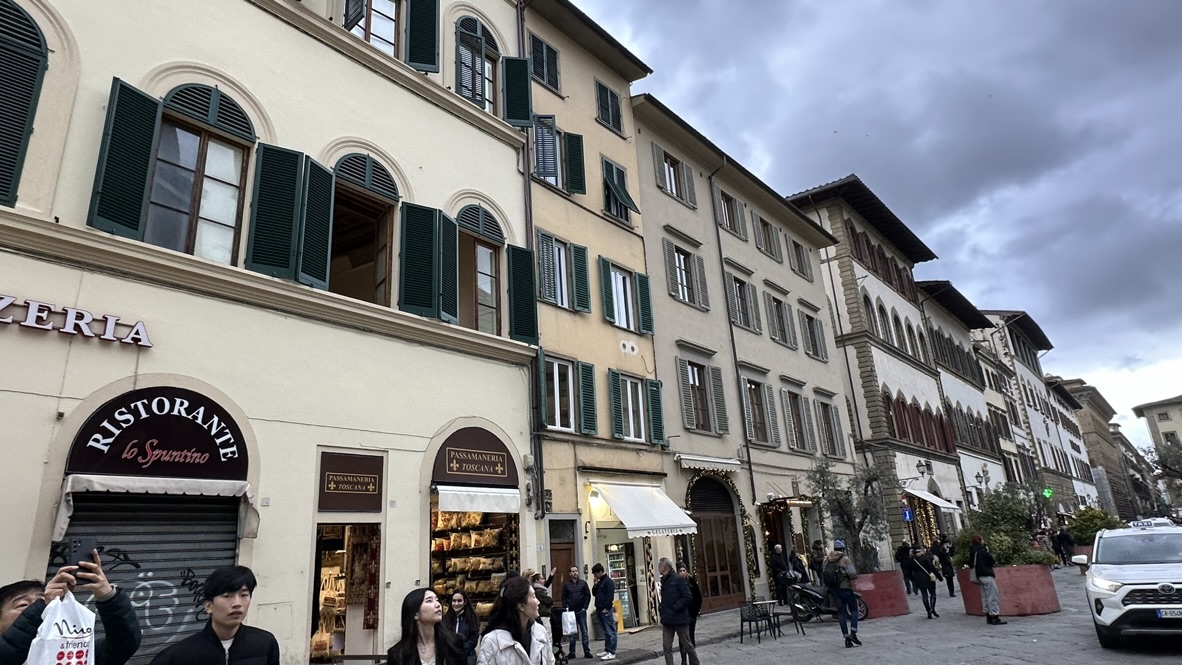
All restaurants charge for water. They usually bring a bottle of still or sparkling water; they don’t serve tap water for drinking.
Some restaurants add a cover charge for each person at the table (about 1–2 euros per person).
Tipping is not required.
Most restaurants had English menus if we asked. The ones without English menus tend to be more authentic, catering mostly to locals.
Most local restaurants don’t have a waiting culture. Several times we were turned away because a restaurant was full, and waiting for a table was not offered as an option. We would just keep walking and find another place.
Restaurants a couple of blocks away from the tourist sights served better food for a better price.
Breakfast is not usually a big meal in Italy. The most common breakfast is a brioche bun or croissant with coffee.
Coffee
Coffee is pretty affordable in Italy. Most coffees come in much smaller sizes, usually just a few sips.
It is cheapest to drink your coffee standing at the bar rather than sitting down.
To order, tell the person at the register what you want and pay. Keep the receipt. Show it to the barista at the coffee bar, say whether you want it to go (takeaway), and they will hand it to you when it’s ready.
Money
Pretty much all restaurants, cafes, grocery stores, souvenir shops and train stations accepted our American credit cards without any problems.
Tap-to-pay (contactless) credit cards are preferred.
We needed cash, mostly coins, to pay for restrooms (usually 1 euro each) at many places on this trip. Always have some on hand.
ATMs are widely available if you need cash in an emergency.
Trains
We bought all our train tickets on the Omio app. The process was super smooth with no issues. The tickets were in the app, and that’s what we showed the ticket checker on the trains.
Arrive at the station at least 15 minutes before your train, to find your platform on the departure screens. In most cases, the train was ready to board 15 minutes before departure.
Arrive early, too, to get space for your luggage on the racks, as they can fill up.
The trains offer only a small selection of dry snacks and basic coffee, so we recommend buying food and drinks at the station before boarding.
We chose first class: the seats were more comfortable, snacks, drinks and water were free, and it cost only a few dollars more.
Restrooms
Count on most restrooms and public bathrooms charging 1 euro, even at train stations and monuments.
Some have an attendant who can make change; others have a vending-machine-style gate that needs exact change.