Day 1 Lima to Cusco and Ollantaytambo
On our way to Peru, our flight from Miami to Lima was diverted to Panama City, Panama, because of a problem with the runway lights at Lima airport. This disrupted our plans: we had to spend the night in Panama City, rebook our flight to Cusco for later in the day (paying significantly more) and change our transport. We were lucky that we changed our Cusco flight in the LATAM app as soon as we reached our hotel in Panama City. That let us follow the rest of our itinerary with only small changes.
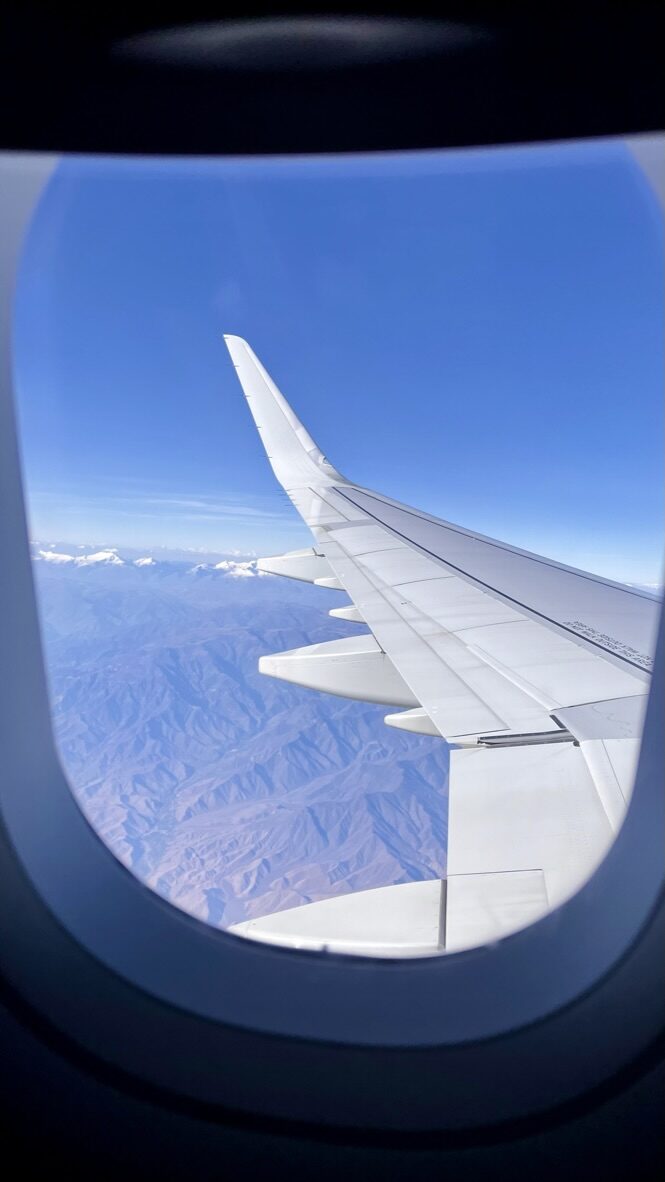
Flying into Peru.
We arrived in Lima around 4 pm. After clearing customs and immigration, we made our way back to the domestic terminal. We already had boarding passes in the LATAM app and only cabin bags, so we went straight to security. The airport was incredibly crowded near the gates because of the flight cancellations the day before. We grabbed a sandwich from a small cart for a snack and dinner, and boarded. We were still too nervous about how the rest of our plans would work out, and stayed on edge all day until we finally made it to Cusco.
The flight was short and comfortable, and we felt a great sense of relief when we landed in Cusco. I had messaged our transport company on WhatsApp about the change in plans. They were flexible and arranged private transport from the airport to our hotel in Ollantaytambo instead of our sightseeing day.
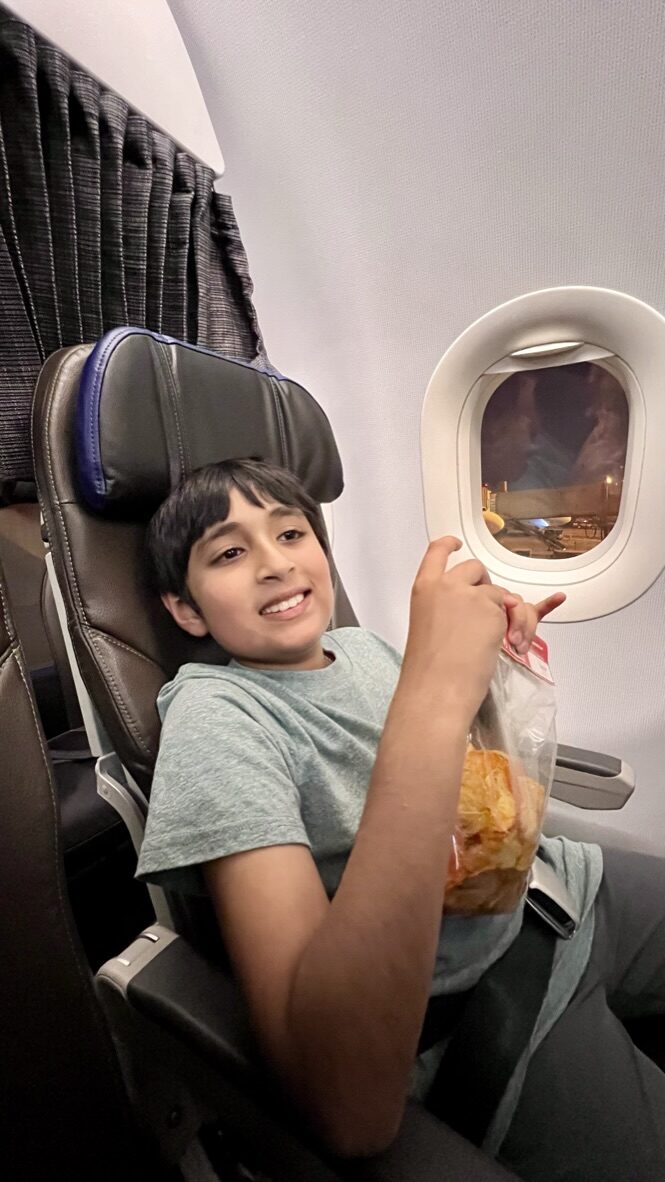
Finally on our way to Cusco.
It was about 9 pm when we arrived in Cusco. The taxi service had someone waiting for us and sent a comfortable minivan to take us to Ollantaytambo, about 90 minutes away. The drive was bumpy, as the roads were unpaved in places. It was completely dark, but in places the road wound around cliffs and through small towns and villages, following the train tracks most of the way.
In Ollantaytambo, we stayed at El Albergue. The hotel is right on the train station platform, which was incredibly useful, as we had to catch the train early the next morning. This quaint boutique hotel has an organic farm, a farm-to-table restaurant and the coziest rooms. The beds, bathroom, breakfast, location and staff were all excellent.
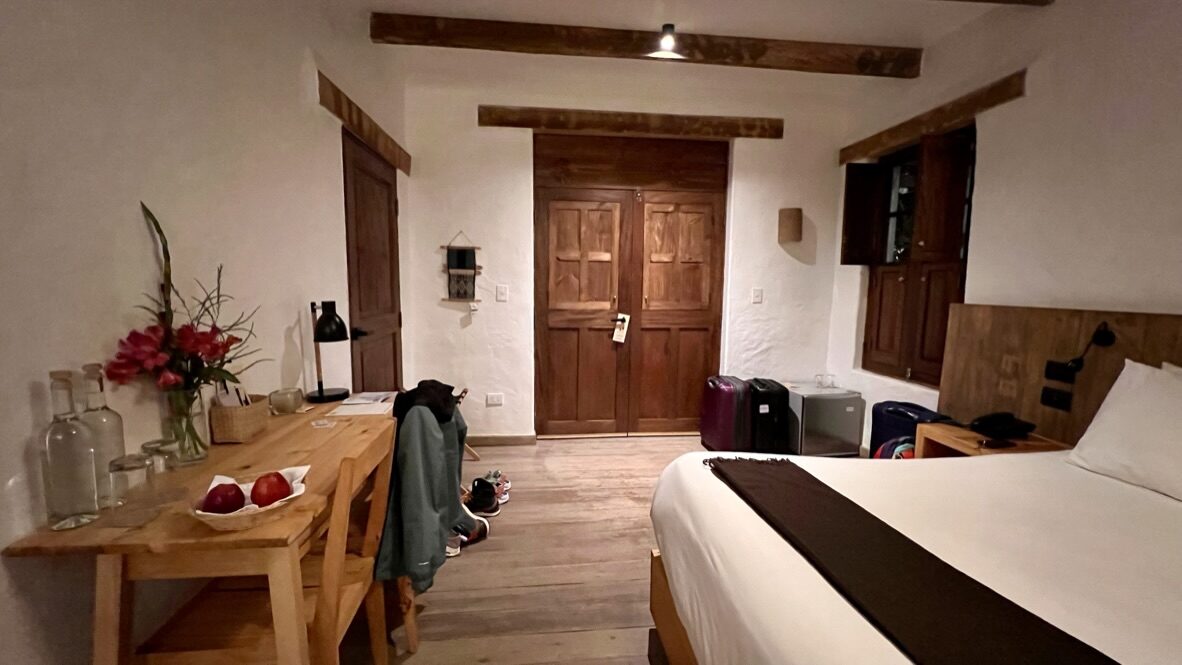
Our room at El Albergue.
When we arrived, we were given details about the property and shown to our rooms by the resident dog, Chaska. The cute dog seemed to stay outside our room for a while, making sure we were settled. We took hot showers and ate some potato chips, which was all the food we had with us. We packed passports, camera and rain gear for Machu Picchu the next morning and went to bed.
I had started my altitude sickness medication, but breathing was a bit harder than normal during the night. It felt more like dry nasal passages.
Day 2 Machu Picchu
We woke up early for what promised to be the most epic day of our trip, and enjoyed a made-to-order breakfast of pancakes, omelets and roasted garden vegetables on toast.
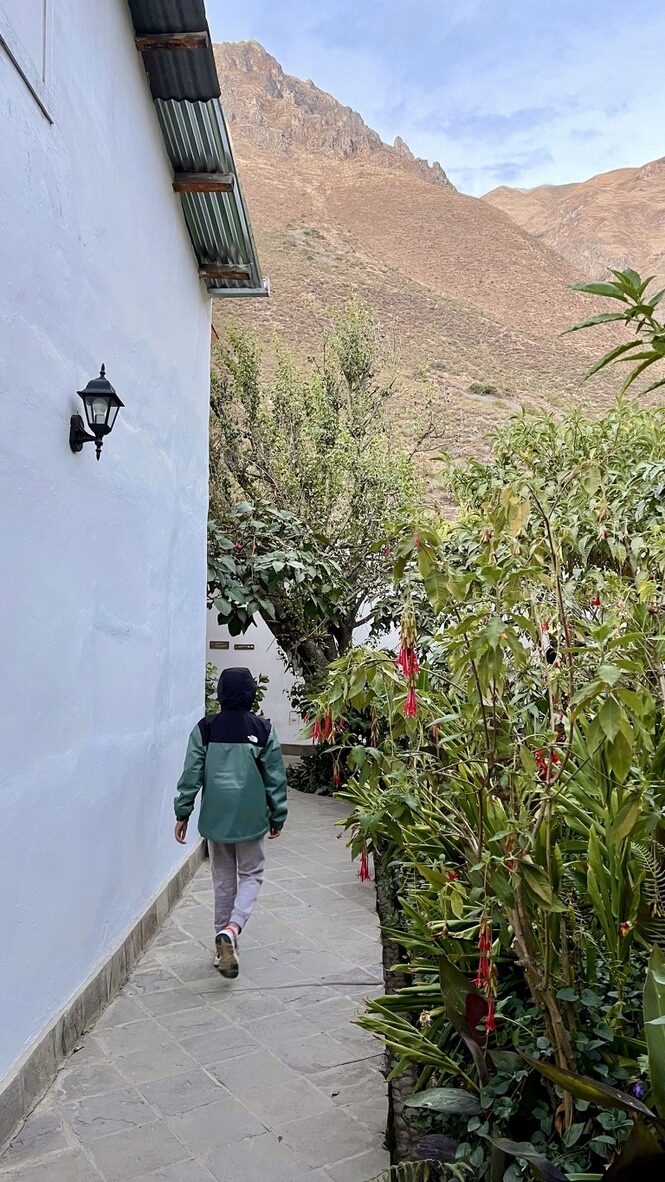
The path from El Albergue to the platform.
After the nourishing breakfast, we stepped out of our hotel and (literally) onto the platform. We checked our train’s platform and time with the PeruRail representative and waited for it to arrive. Our train left at 7:30 am. Be at the station 30 minutes before departure, and keep your passports with you: they are checked before you board the train and again before you enter Machu Picchu.

Boarding PeruRail at Ollantaytambo.
We chose the Vistadome carriage to Aguas Calientes, with comfortable seats around a table, and snacks and a warm drink included. The windows wrap around the whole carriage, so we could see the gorgeous mountains, farmland, villages and the rushing river alongside us. The hour and a half passed too quickly. There are restrooms on board.
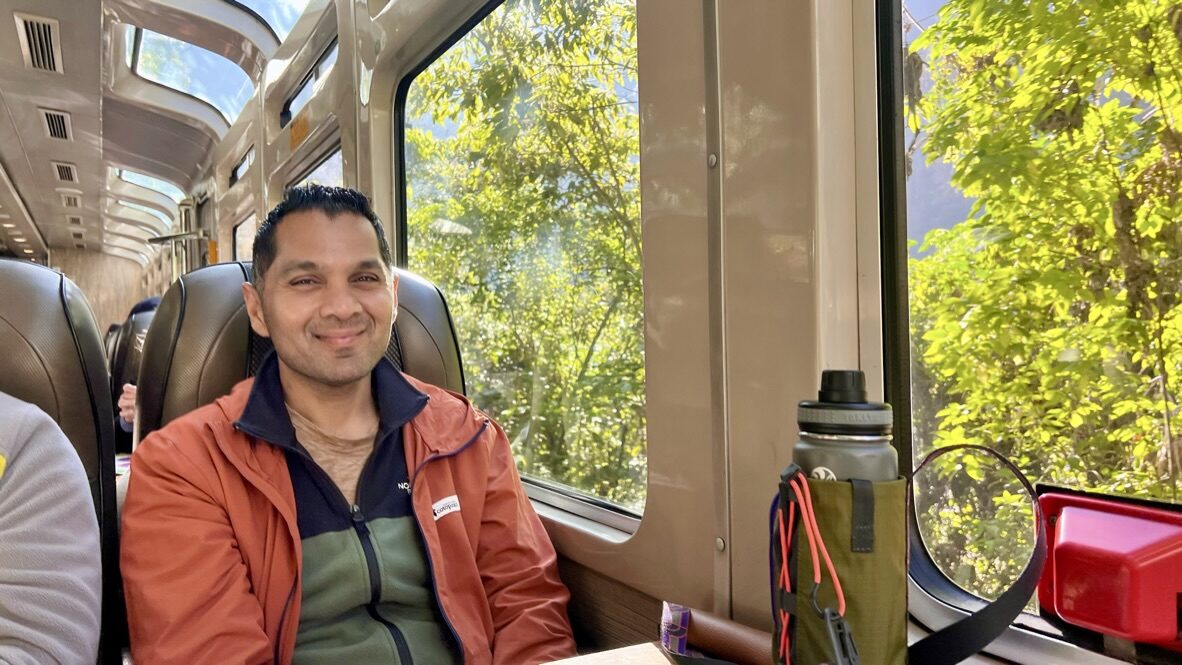
On the Vistadome to Aguas Calientes.
We reached Aguas Calientes by 9 am. Leaving the station, we walked left to a bridge across the river, then followed signs to the bus ticket office, in an alley just off the main road. The office was empty. We bought tickets for $25 round trip per adult and paid by credit card without any issues. Next, lots of guides offered their services. We picked a gentleman who gave us a good price ($80 cash for our group of three), spoke good English and seemed friendly. He checked our tickets to make sure we had the right day, time and circuit, and told us to meet him by the bus line 30 minutes before our bus.
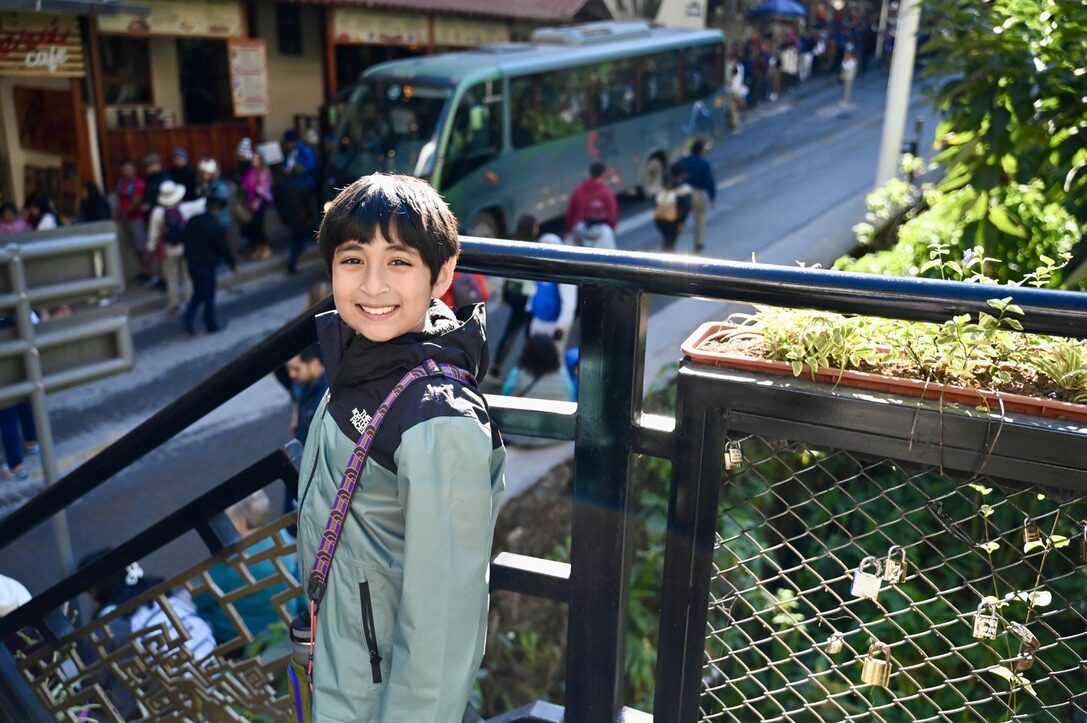
Near the bus stop in Aguas Calientes.
Machu Picchu tickets are sold in one-hour slots. Ours was 11 am, so we joined the bus line at about 10:15. The bus takes 25 to 30 minutes to reach the site. There is also a trail up, mostly staircases, which would probably take about 90 minutes to walk.
With about an hour before our bus, we went to a cafe on the main street for coffee, waffles and croissants, a refreshing snack before heading up the mountain. We did some shopping at the market stalls. We had jackets for the cold and rain gear, but we got perfectly clear skies and a warm 70-degree day. We were lucky to have such a perfect day. We chose this time hoping the morning fog and clouds would clear, the temperature would be pleasant, and the sun would be in a good position for photos. Sunscreen and sun hats help, as there is little to no shade on most of the circuits. We didn’t see any mosquitoes but used bug spray anyway.
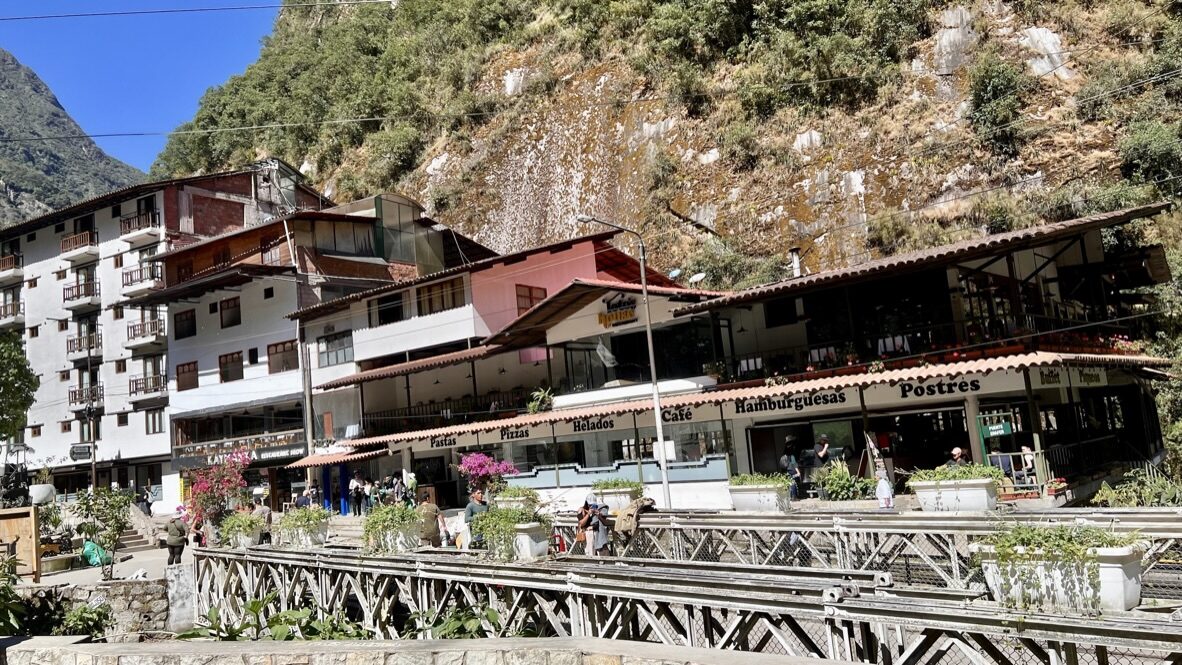
Aguas Calientes.
After the snack, we met our guide in the bus line. The bus climbed switchback after switchback until Aguas Calientes was a speck below us. We arrived just a few minutes before our time slot. There are paid restrooms (2 soles) and a shop selling snacks and water. We recommend carrying plenty of water in a small backpack. Large backpacks, food, snacks and tripods aren’t allowed inside the site; paid lockers are available if needed. We lined up at 10:55 am, and at 11:00 sharp they checked our passports and tickets and let us in.

The mountains around Machu Picchu.
Entry is allowed during the hour printed on your ticket. Our guide said they allow entry for about 45 minutes after that in case of emergencies or delays, but we didn’t test this ourselves.
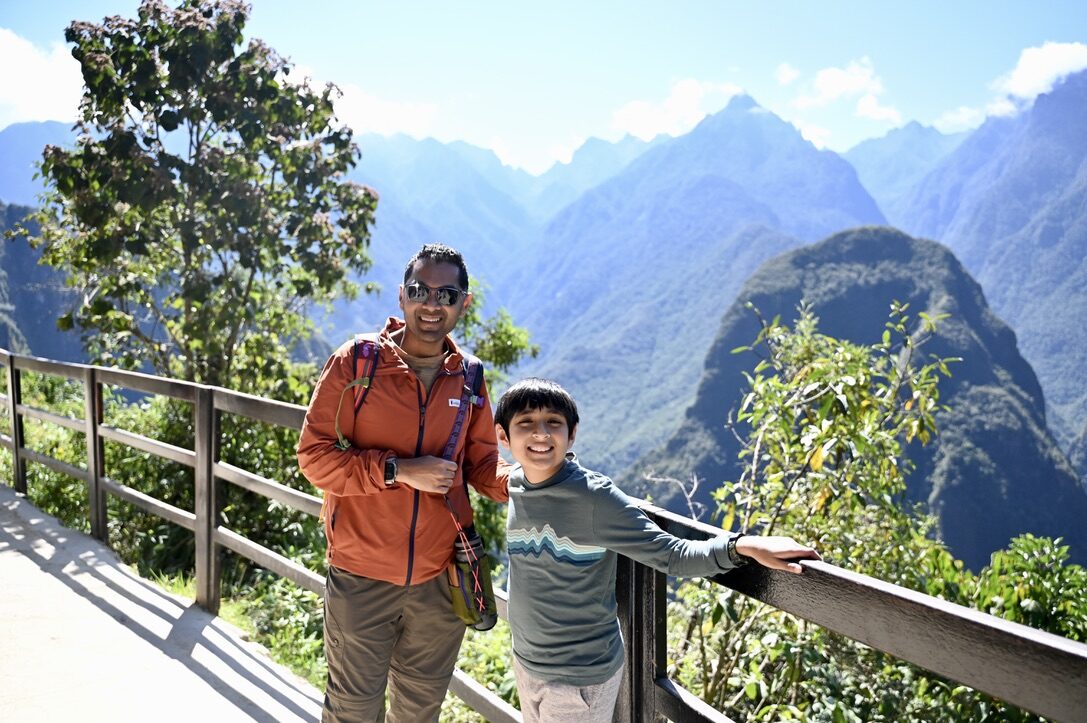
Almost there.
Once inside, we followed the path with amazing views all around. Our guide told us Machu Picchu’s location is so special because it is where the rainforest meets the Andes, so its plants and animals draw on both environments. It was sunny and clear, in the mid-70s, which is about as cold as it gets during the day in the winter months (lows after dark are in the 50s). The path went uphill for about 30 minutes. We stopped every few steps to take it all in, and took plenty of pictures. At the panoramic photo spot, we were in awe of the spectacular beauty of Machu Picchu. At a few spots we waited behind other groups for our iconic photos, and our guide helped us find the best spots and take pictures of all three of us.
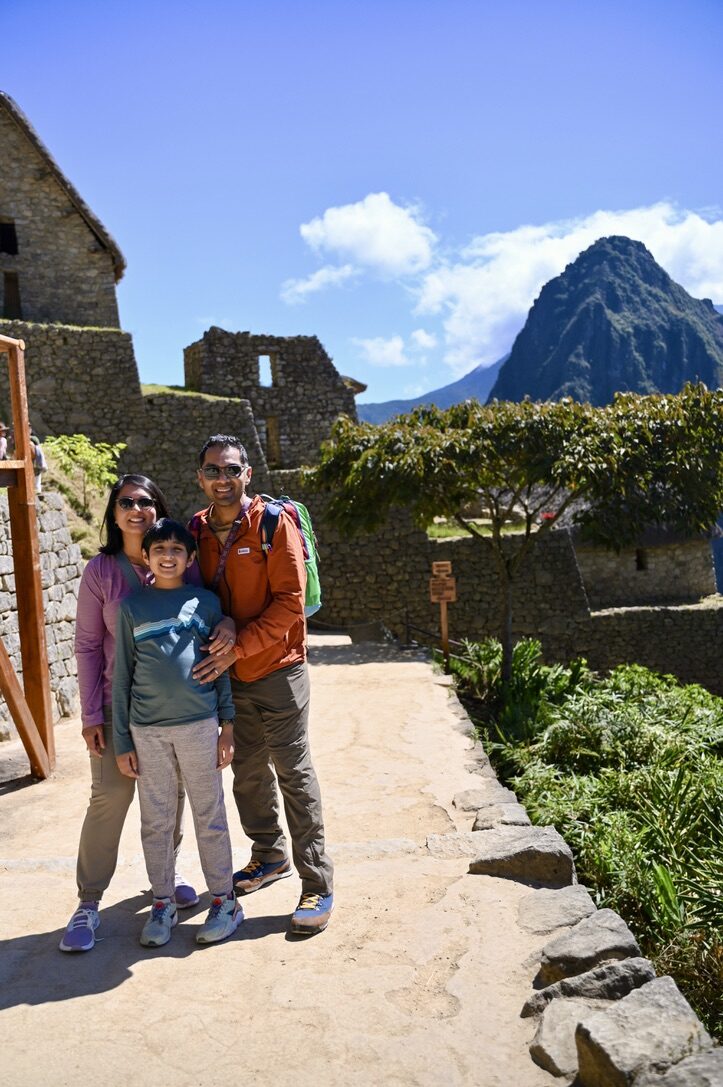
Just inside the site.
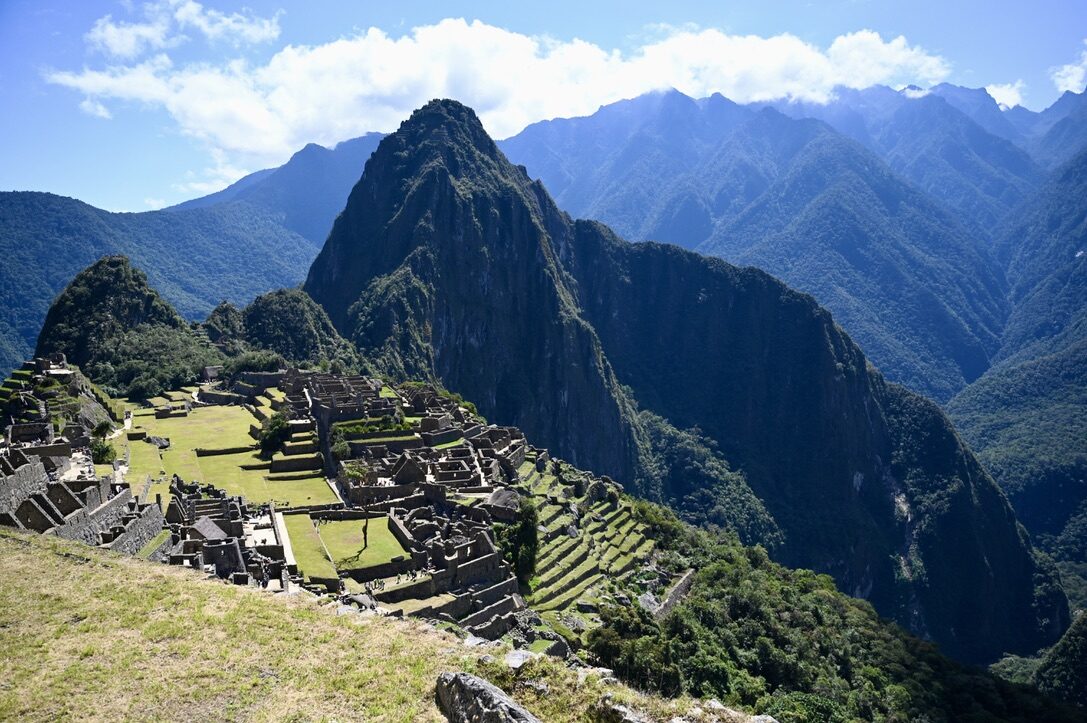
Machu Picchu from the panoramic photo spot.
After the panoramic spots, the trail goes downhill along steps and then flattens out; there is no more uphill walking after the first half hour. Some grazing llamas crossed the path right in front of us, which felt incredibly authentic. We walked on past the buildings, farming terraces and animal enclosures. No pictures we have ever seen do justice to the beauty in every direction. Our guide explained many aspects of Inca culture, food, agriculture, finance and education. We learned that Machu Picchu was a religious or educational retreat for royalty and high-born members of Inca society.
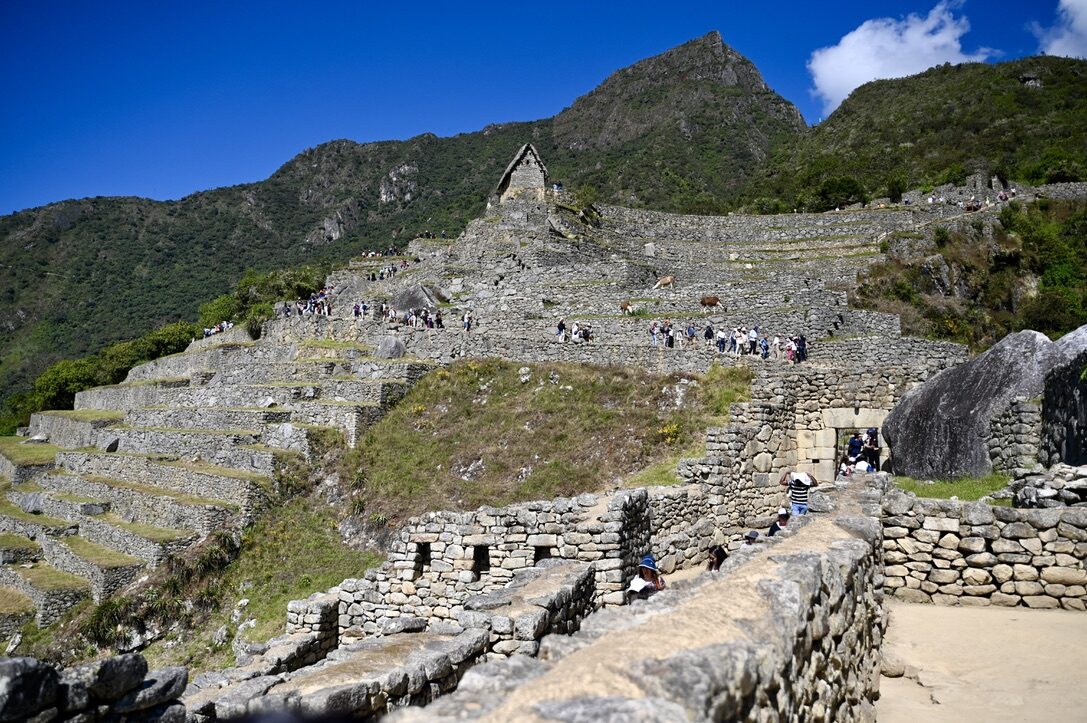
Walking among the ruins.
It took us about two and a half hours to finish the circuit at a leisurely pace with plenty of photo stops; it was probably around 3 miles. Many sections have stairs, and we didn’t notice any ramps, so the trail may not be wheelchair accessible. The mountain hikes have two different start times, so it’s important to be at the right gate at the right time. Circuits 1 and 2 don’t include a mountain, but they are the only ones with the iconic photo spots and the most access to the heart of the ancient site. It would be spectacular to do several of the trails.
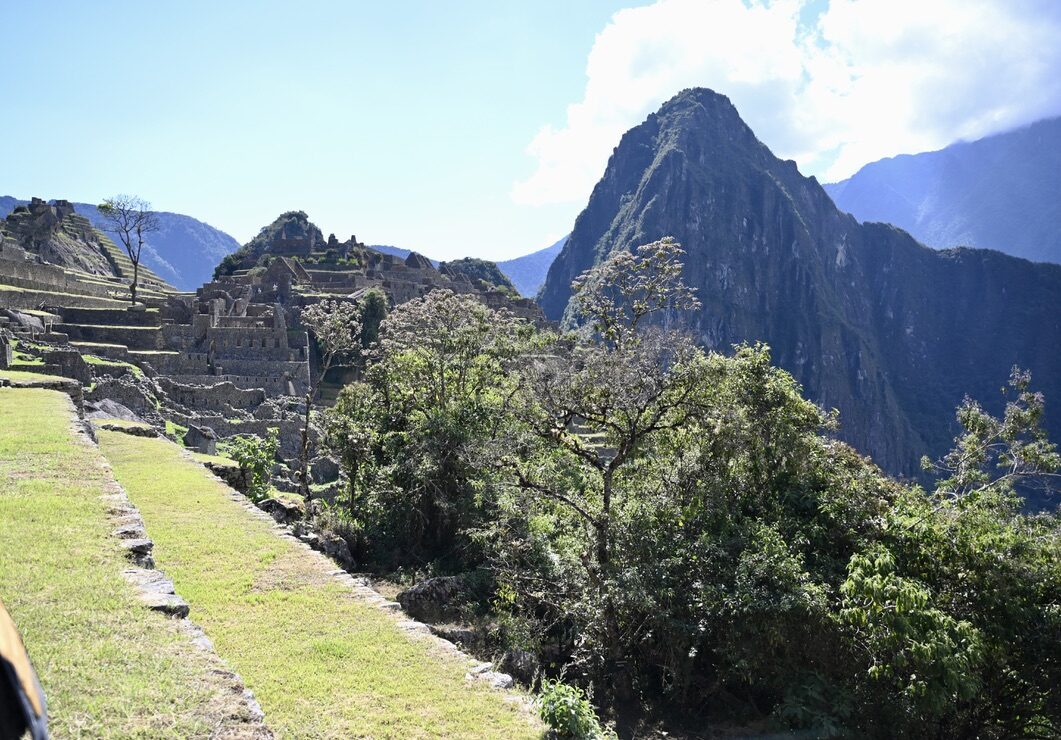
Huayna Picchu above the terraces.
We drank all the water we had brought, as it was hot in the direct sun with little shade. When we finished, we bought cold bottled water from local vendors by the staircase trail down to Aguas Calientes, then took the bus back down. We couldn’t believe we had finally done something we’d dreamed of for over a decade.
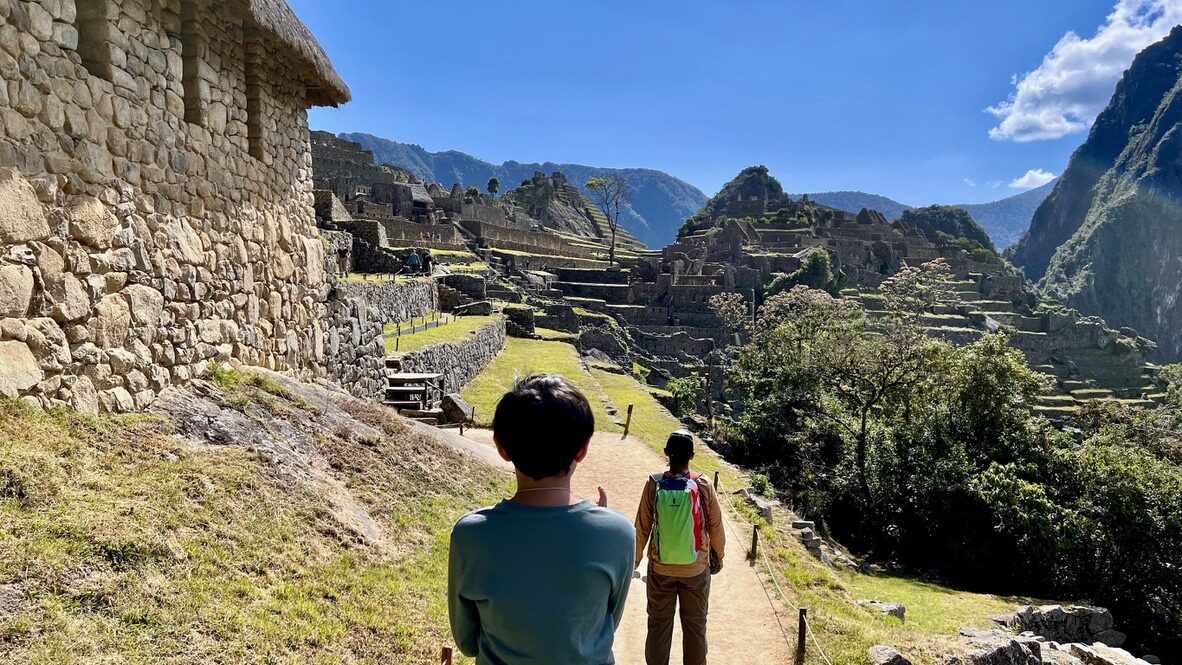
With our guide.
By now we were famished. Our guide offered to recommend some great Peruvian restaurants, but we had a vegan restaurant in mind: Govinda’s cafe. We had an eggplant curry, some pakoras and, on the server’s recommendation, a vegan lomo saltado. The food was great, and tasted even better after all the challenges of getting here.
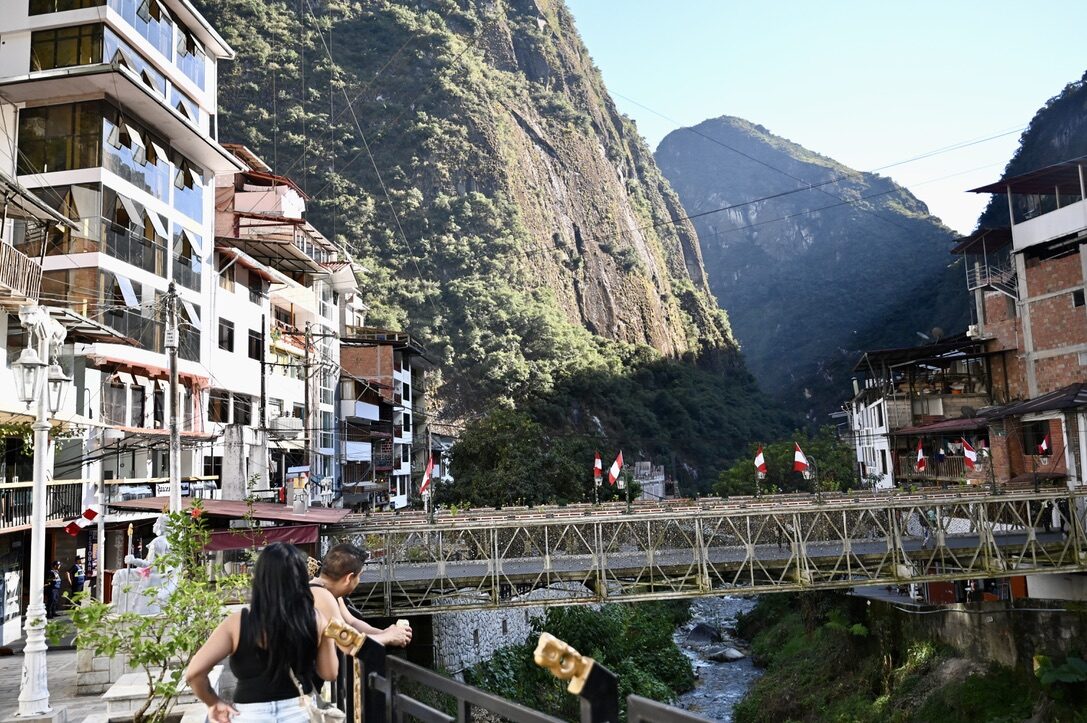
The river through Aguas Calientes.
After lunch, we had a few hours before our 5:30 pm train back to Ollantaytambo. Aguas Calientes is full of amazing markets, and we bought a rug and some other things. Having also shopped in Cusco and Puno, we found the markets in Aguas Calientes slightly cheaper, and silver jewelry much cheaper than anywhere else. If you’re interested in souvenirs or local specialties, this is a great place to spend some time.
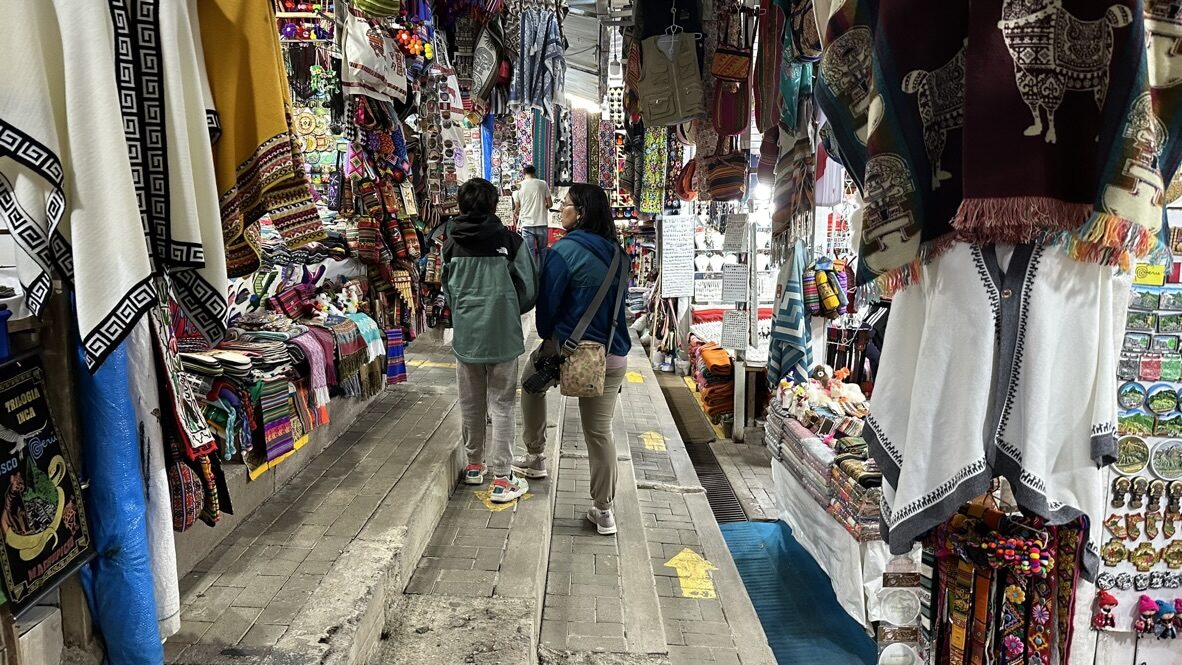
The markets in Aguas Calientes.
A note on wool: vendors will claim nearly everything you touch is baby alpaca rather than adult alpaca or a blend. Baby alpaca is softer, lighter and warmer than adult alpaca, and there are several ways online to tell them apart. We didn’t focus on this much and just bought what felt soft and comfortable and looked beautiful. The range of colors and patterns is astounding. Negotiating is a normal part of buying anything in these markets. Keep cash in soles, start at about 40–50% of the quoted price, and work up depending on the item and how much you like it.
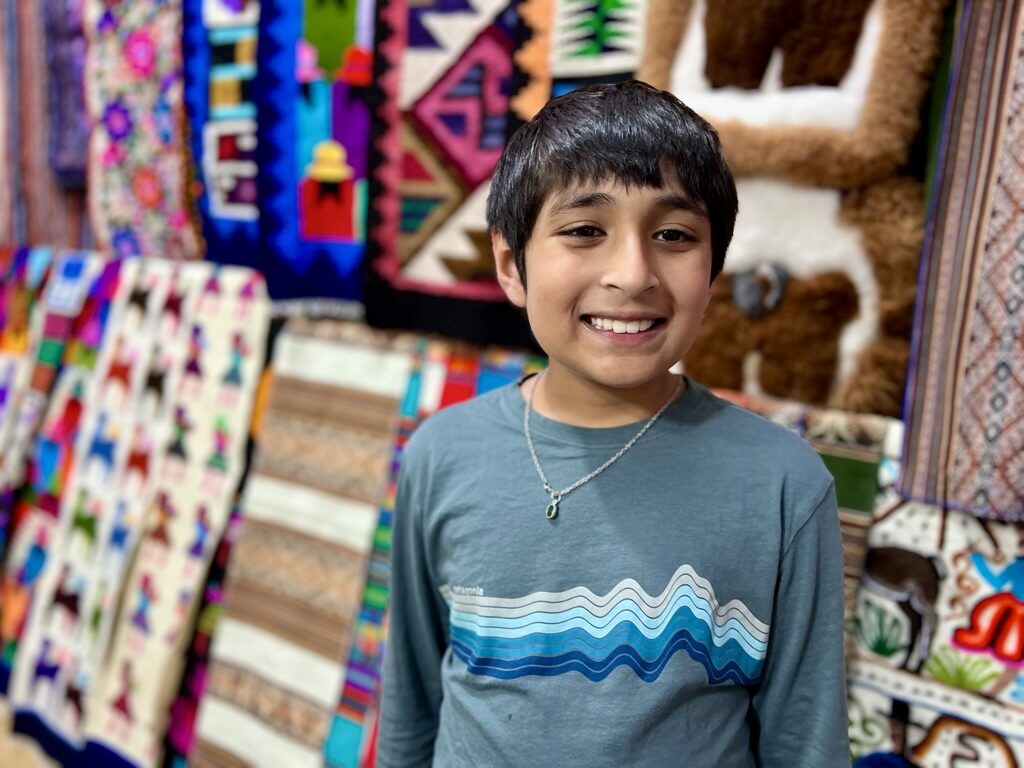
So many colors and patterns.
When we’d had our fill of shopping, we went to the station, quite early, and found seats just outside the platform. There is a cafe at the station for snacks and coffee. The station gets very full with tourists, hiking groups and locals waiting for trains. The lines are confusing, as Inca Rail, PeruRail and the Hiram Bingham trains all use the same station and leave within minutes of each other. We had to ask several PeruRail staff before we found the right line and got on the right train.
It was completely dark by the time our train left. We spent the next 90 minutes reflecting on our amazing day and napping. Back at Ollantaytambo, it was ten steps from the train into our hotel. We had a dinner reservation at the hotel’s farm-to-table restaurant, and it was probably one of the best meals of our trip: two kinds of fresh pasta with farm vegetables, quinoa and vegetable soup with local bread, and chocolate cake for dessert. After that spectacular dinner, we showered and went straight to bed.
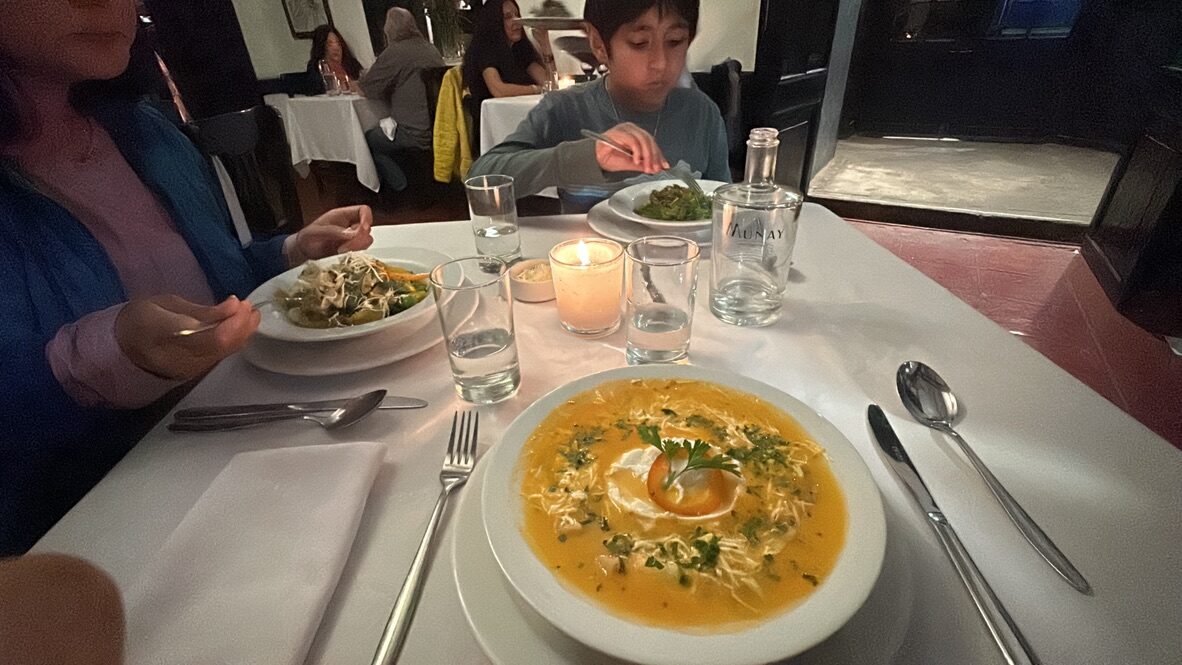
Dinner at El Albergue.
Day 3 Ollantaytambo, Maras, Pisac and the animal sanctuary
After our exceptional day at Machu Picchu, we were ready to see what else the Sacred Valley had to offer. After another wonderful farm-to-table breakfast, we walked to the Ollantaytambo ruins along the back pedestrian path from our hotel. It took us through farmland and the backyards of other properties, past kids walking to school, people going to work and locals going about their day. The walk took about 20 minutes. Even with very little climbing, we felt the altitude.
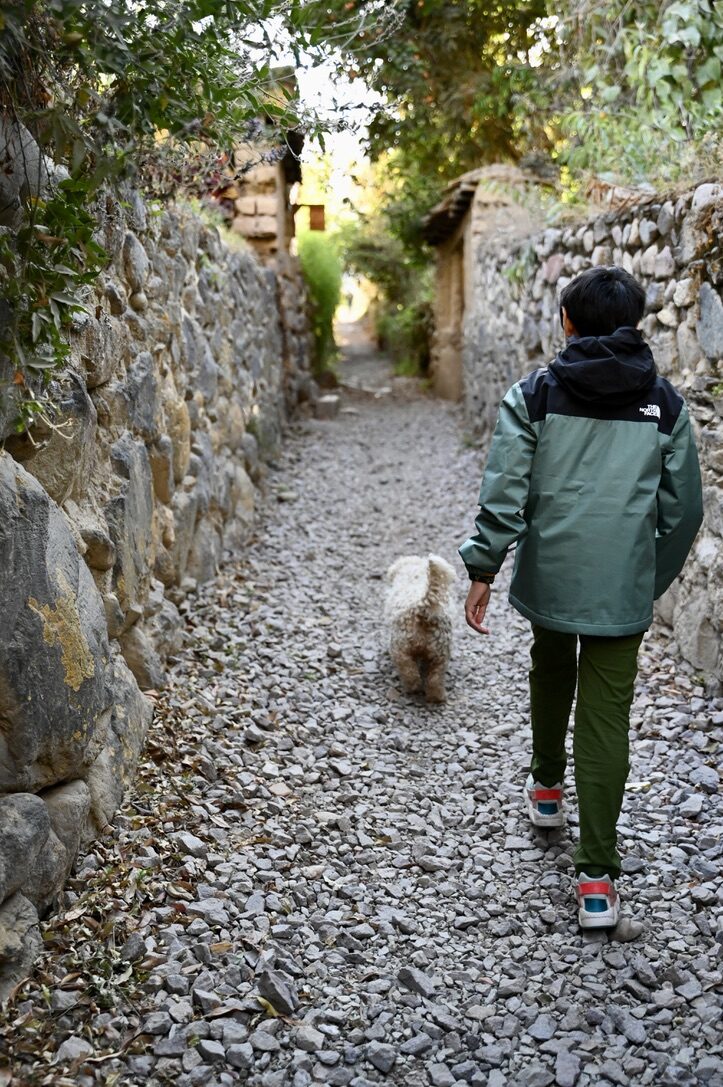
The walk to the Ollantaytambo ruins.
We reached the ruins around 8 am. Tickets are cash only, in soles, and we only had enough cash for a one-day ticket, which covers as many Sacred Valley sites as you can visit in one day. It was around 70 soles per adult for one day and 140 soles for a multi-day pass. We seemed to be among only a handful of people there that early.
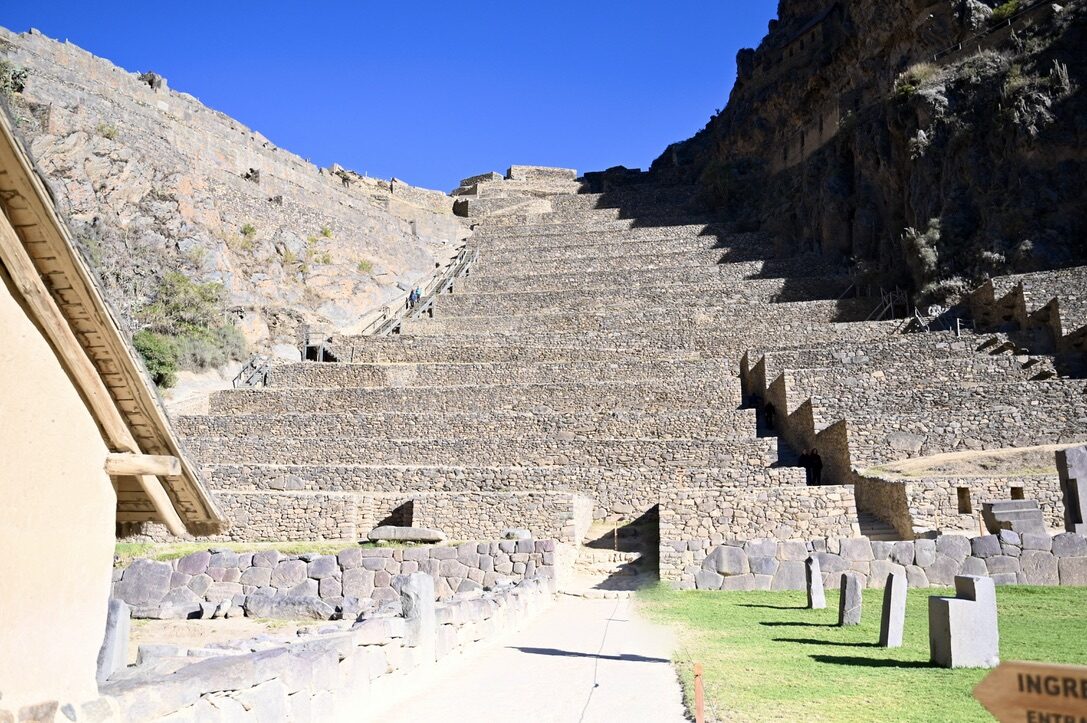
The Ollantaytambo ruins.
We were in awe of the grand terraces stepping all the way up the hill. Guides offer their services here too, but with only about 90 minutes, we explored on our own. We climbed to the top of the terraces, looked out over the Sacred Valley, spotted the granaries on the mountain opposite, went through the sun gate and past the sacrificial altar, and saw the majestic mountains around the site. We turned back at the top, though we read later that a trail continues higher to more ruins, and another runs along the side of the mountain to some buildings. Short on time, we climbed down and went back to the hotel to wait for our taxi.
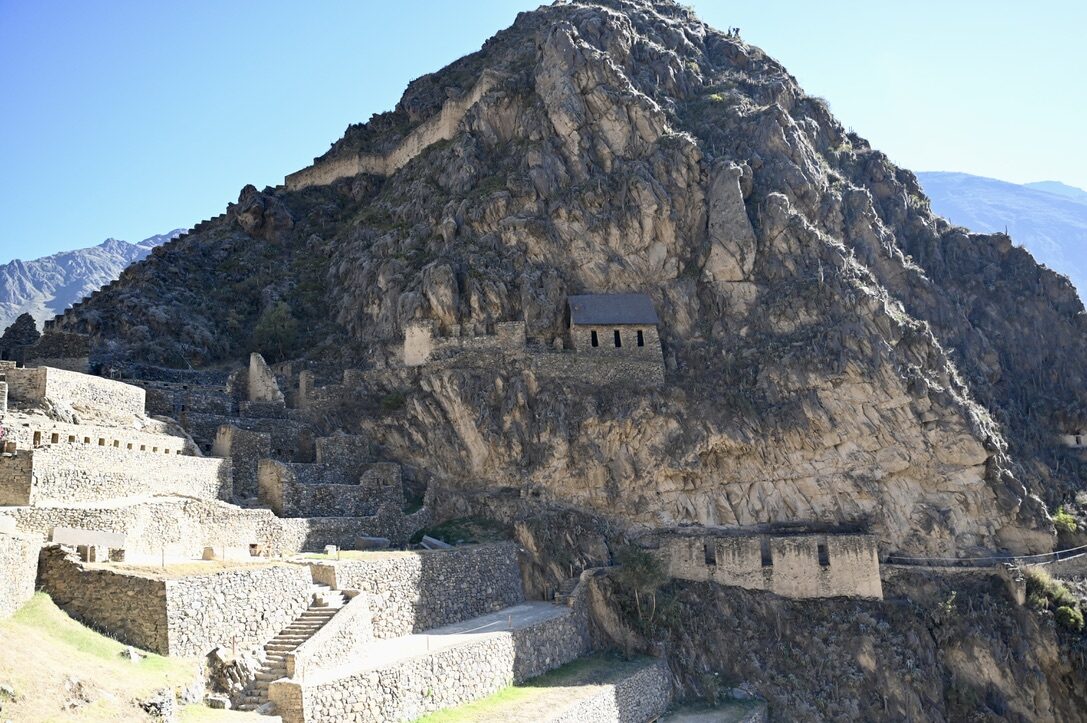
The mountain above the ruins.
The stairs are a bit steep, but we had no problems taking them slowly. Every few steps we stopped to take photos and look at the view. Climbing higher gave us a unique perspective on the ruins. We could see far into the valley, just as the ancient Incas may have done to spot invaders approaching.
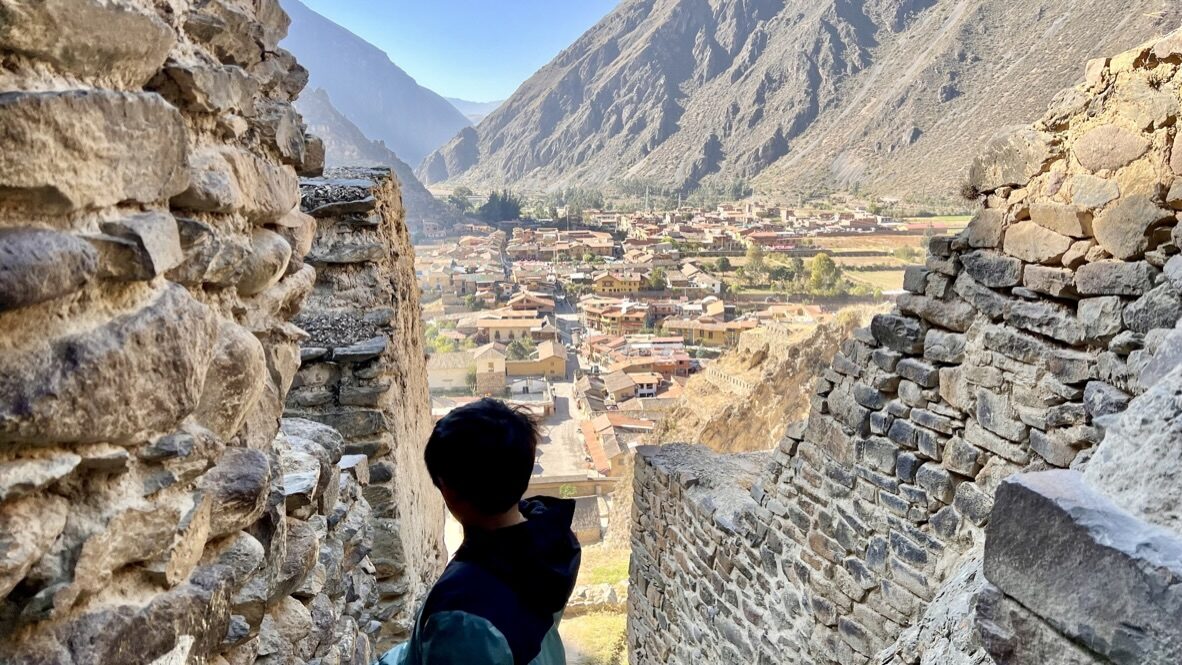
Looking down at Ollantaytambo.
We walked back to the hotel along the same path. Our pre-booked taxi texted that they were stuck in traffic, so we used the time to visit the hotel’s organic farm. We saw guinea pigs, sheep and pigs, a coffee roaster and a traditional in-ground oven, and met some more friendly dogs. After about 20 minutes, we collected our bags and waited at reception. When our taxi arrived, we set off for the Maras salt mines.
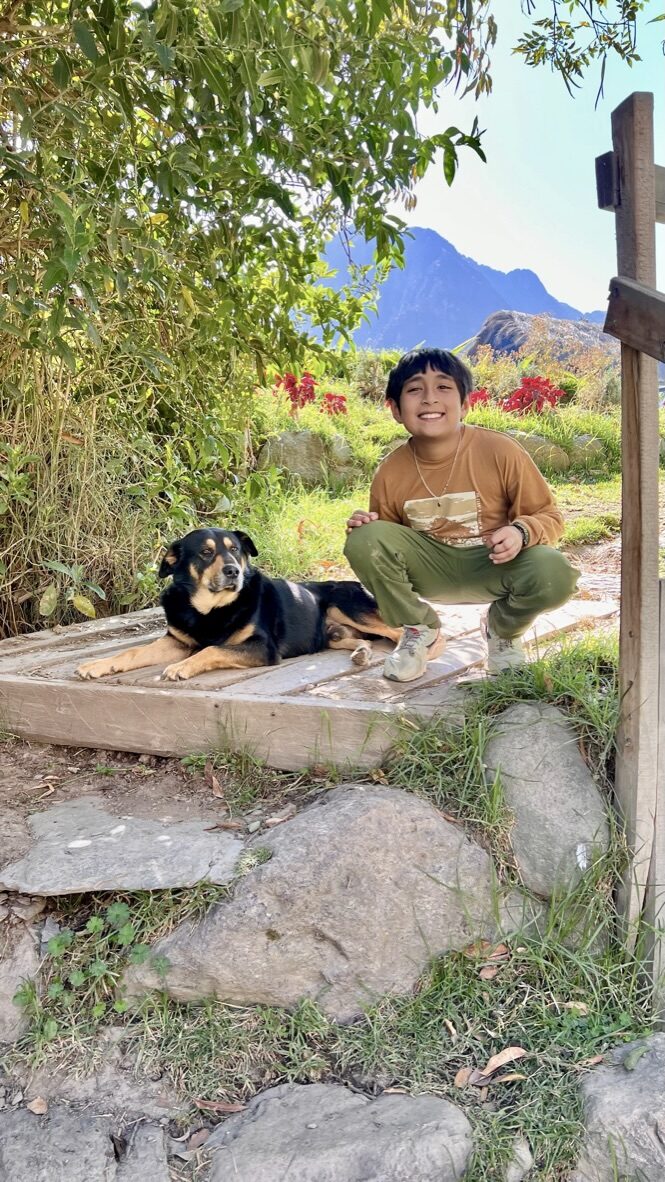
At El Albergue’s farm.
The drive to Maras took about an hour. Our driver paid for our entrance tickets and took us to the scenic viewpoint, where we saw the whole mountainside covered in every shade between white and light brown. We then drove deeper into the valley, closer to the salt pans. From the parking lot, a path gave us several different viewpoints over the huge salt mines. You can no longer walk among the salt pans; visitors must stay behind the barriers on the marked path. We spent about an hour walking the path and taking photos. After the viewpoints, the path runs through a small market, a great place to buy authentic Maras salt in various flavors and sizes. We bought chocolate and potato chips for a snack too. Everything cost 2–5 soles, incredibly affordable. The salt made great souvenirs for family; we liked the floral, black and chili flavors.
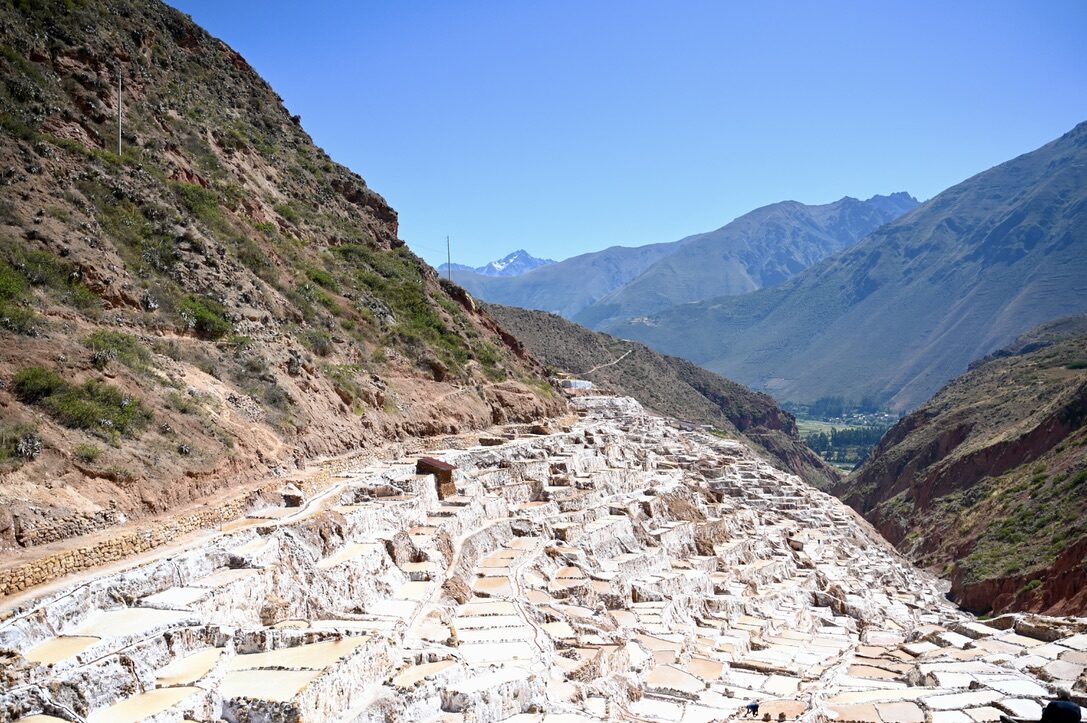
The Maras salt mines.
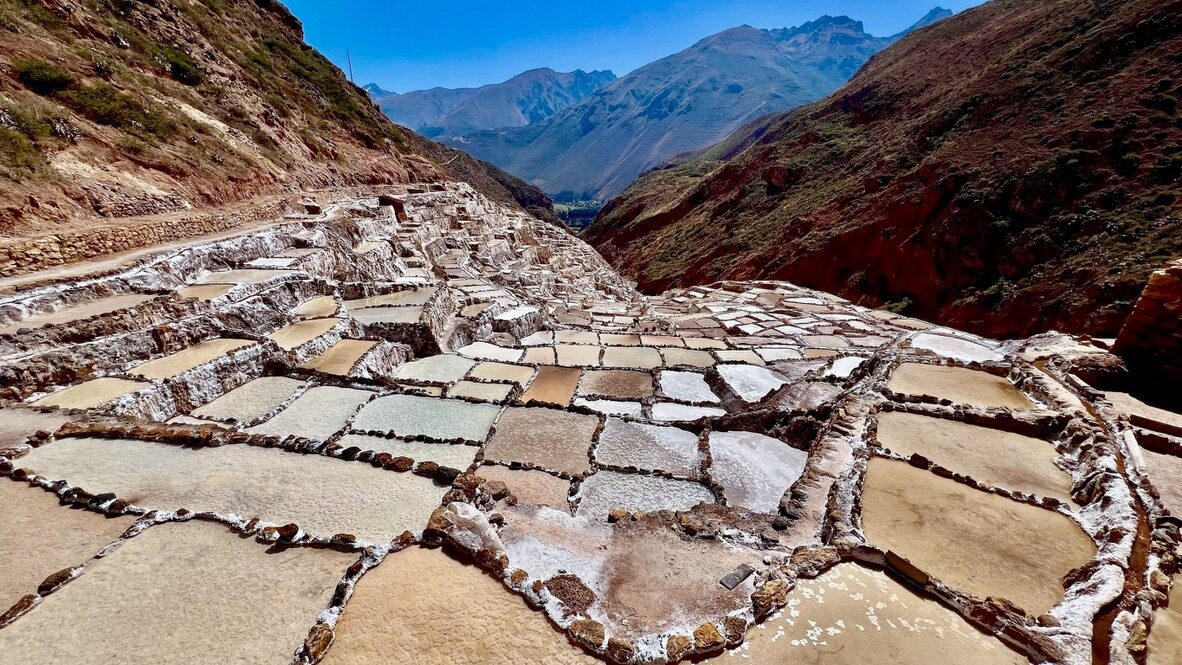
The salt pans up close.
Back in the car, we enjoyed our road trip snacks. We had to pack this day with the sights we missed on our first day because of the flight delay, so we skipped Moray, the ancient Inca agricultural laboratory. It is included in the one-day ticket if you have time.
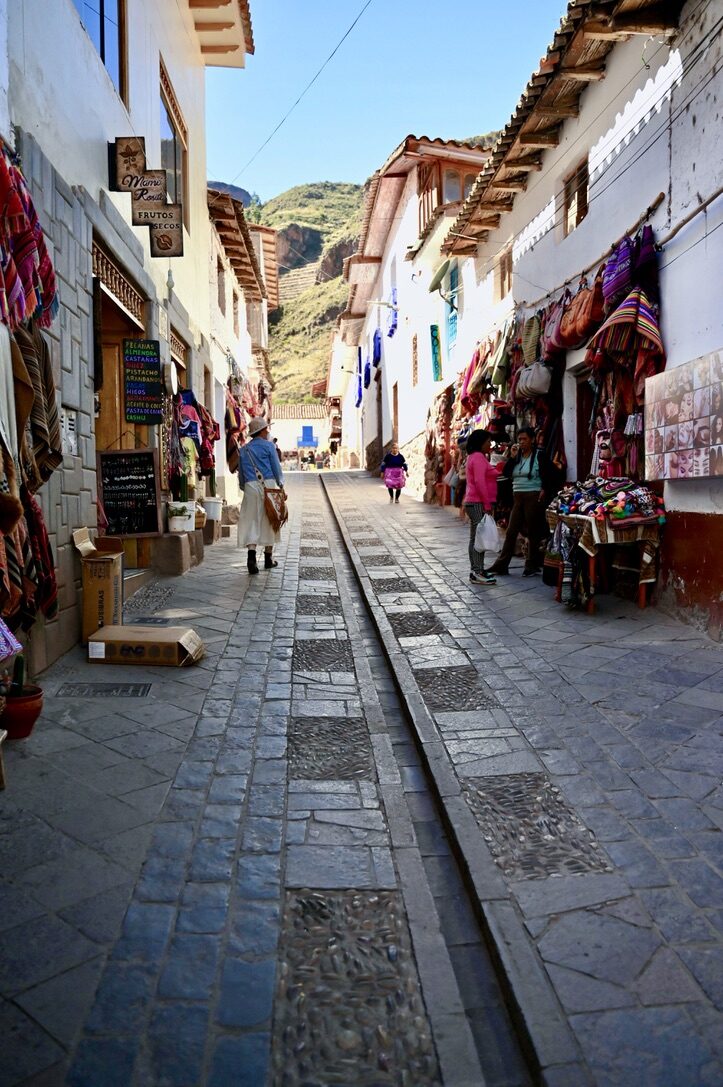
A street in old town Pisac.
We were hungry, so we asked our driver to stop in Pisac, about an hour away. The town has a few vegan- and vegetarian-friendly restaurants. We tried El Café Feliz, right off the main square. The food was freshly made and incredibly delicious. Our favorite was the coconut curry; the burger was a bit too mushy.
After lunch we got a souvenir photo with a lamb and an alpaca. I simply love llamas and alpacas, and this was one of the highlights of the day for me. It may seem wrong to pay for a posed photo with an animal, but we always felt the animals were more like family to their handlers, most likely farmers, and the money from these photos of well-cared-for animals helps support their families.
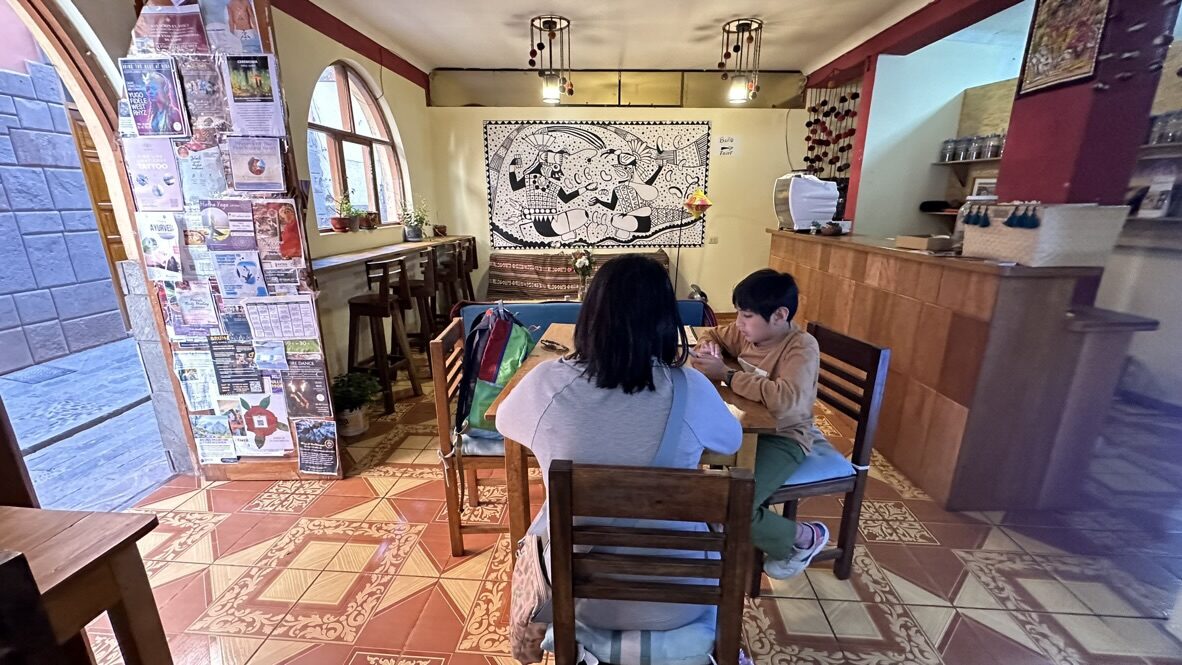
El Café Feliz.
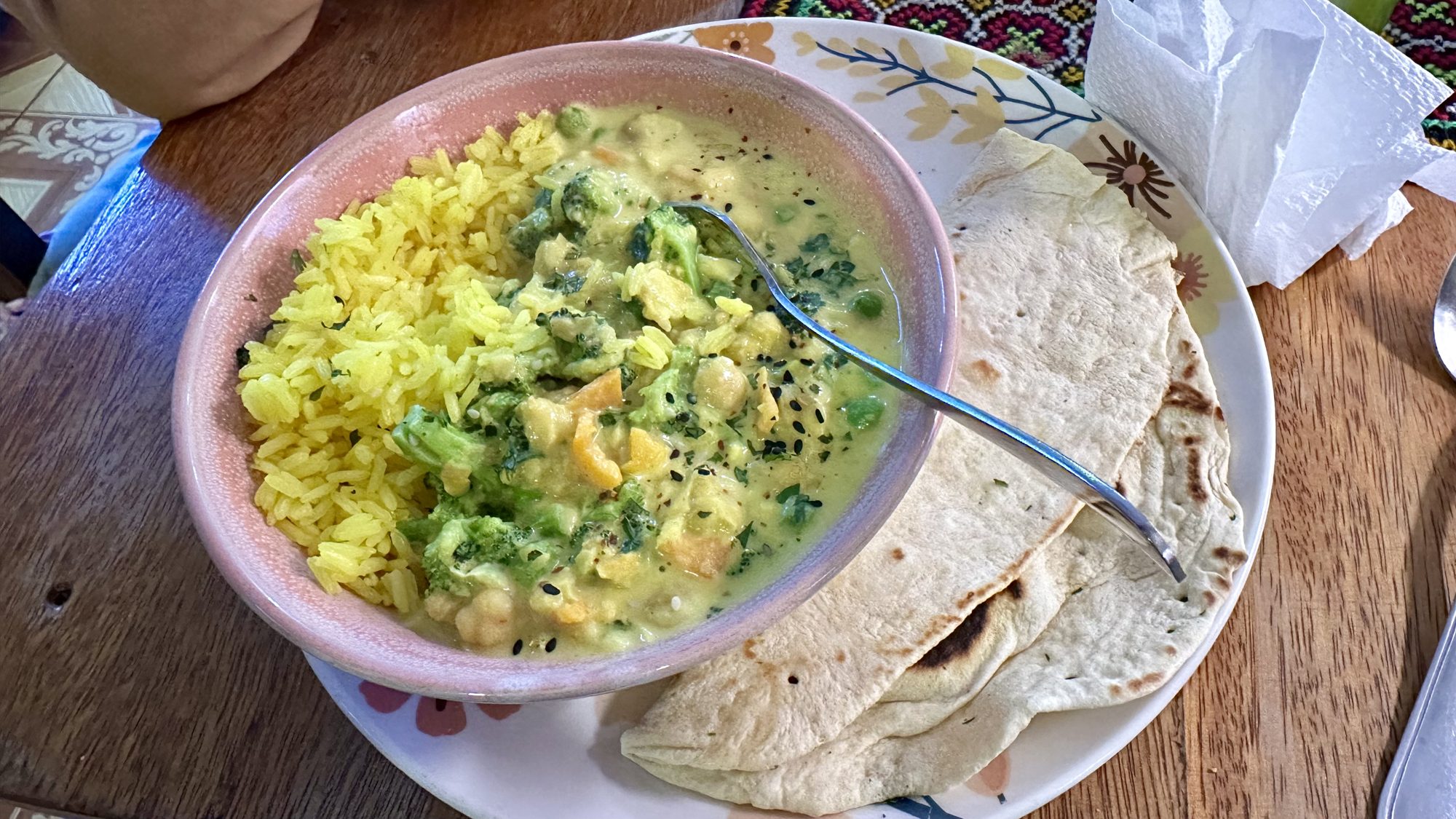
Turmeric coconut curry.
Next, we drove to the Pisac ruins, high in the mountains about 20 minutes from town. The drive was incredibly beautiful. It was just after 1 pm, and there were only a handful of people at the ruins. Parking was easy right outside the entrance, and we used our ticket from that morning to get in. We explored a little to the left of the entrance, then followed the trail to the right toward the ruins on the hill. We were blown away by the agricultural terraces stepping all the way down the mountain, a village in the distance, and mountains on every side. Following the trail around the mountain, we climbed higher to the ruins.
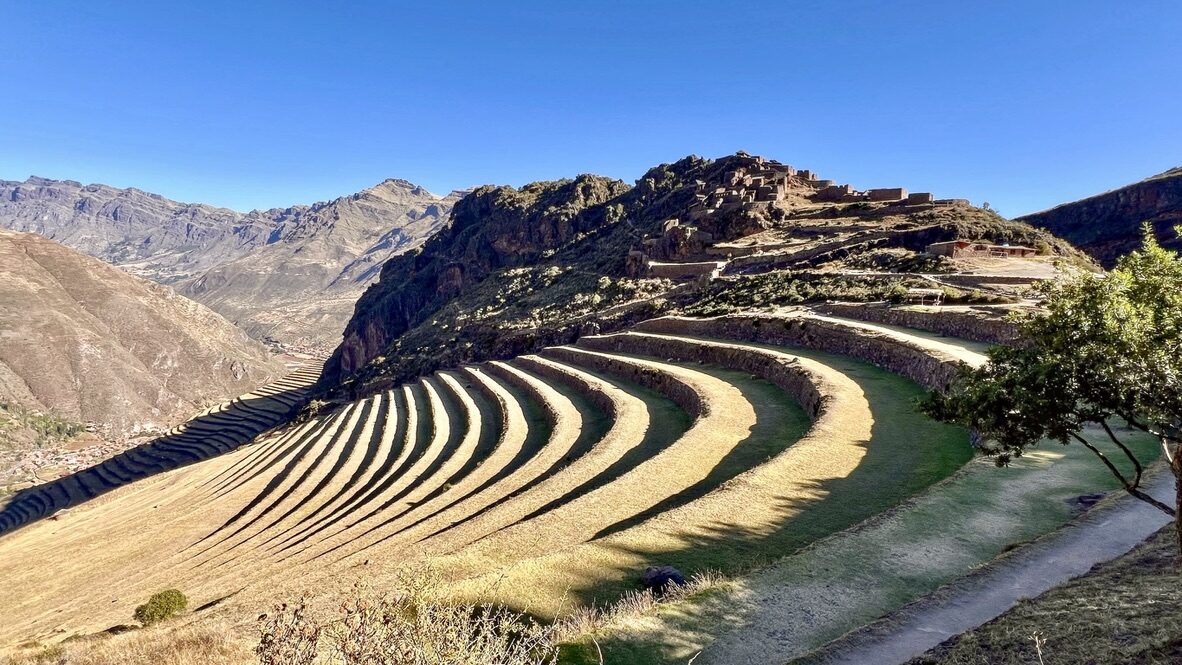
The Pisac ruins.
The ruins were several rooms with a terrace for soaking in the views. The climb felt strenuous at around 12,000 feet; we were all out of breath every few steps, but made it up slowly. The path down went through the ruins and was steep in places, with nothing to hold on to and a drop-off on one side in some areas. At the bottom, we saw a lush valley on one side of the mountain. After about ninety minutes of hiking and exploring, we were back at the car. There is a small market in the parking lot.
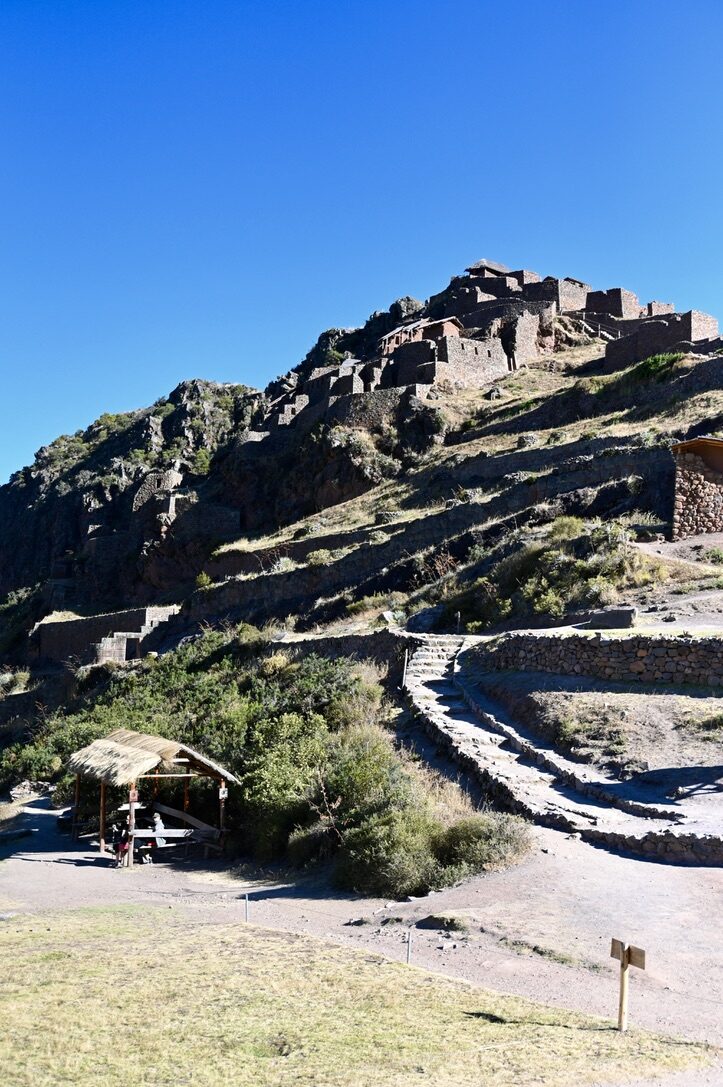
The ruins on the hilltop.
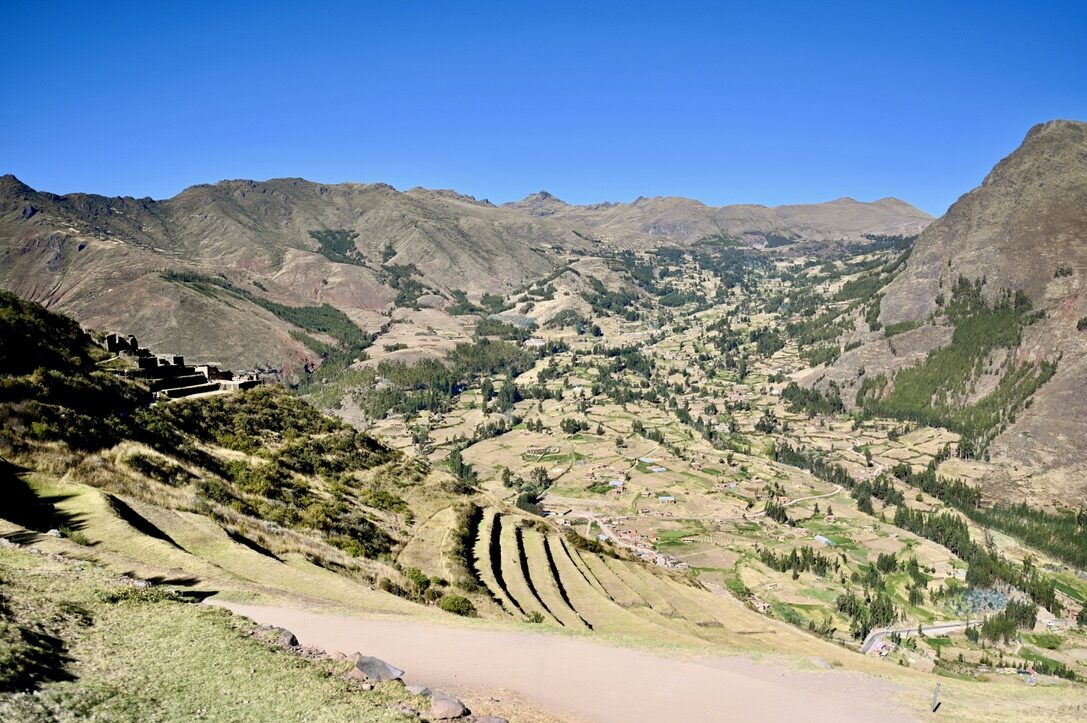
The view of the valley.
Our last stop before Cusco was the Cochahuasi Animal Sanctuary. It’s small. Once we bought tickets, a guide showed us around. We met several rescued llamas, alpacas and vicuñas, and got to pet the friendly alpacas and llamas. Many Andean condors have been rescued and rehabilitated here, and we saw them both in flight and up close. We weren’t going to the Colca Canyon on this trip, so this was a great chance to see Andean condors. They are magnificent, intelligent and graceful fliers. We also saw a bear, owls and foxes. All the animals here were rescued from dangerous situations, are being rehabilitated, and will hopefully one day return to the wild. The sanctuary’s mission resonated with our animal-loving hearts, and we bought some souvenirs at the gift shop to support it a little more.
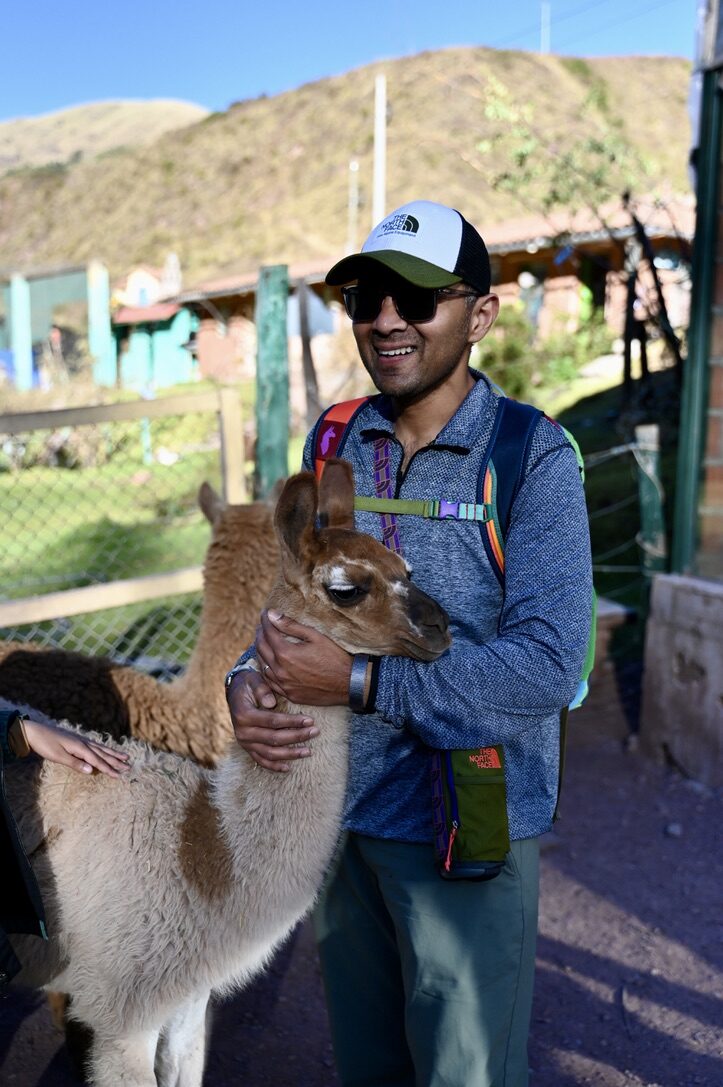
Super friendly llamas at the Cochahuasi Animal Sanctuary.
We finished just after 4 pm and headed to Cusco, past the Sacsayhuamán ruins, hillsides full of light-colored roofs, and busy, narrow streets of traditional architecture. Traffic grew heavier near the center of the old town. We reached our hotel, Abittare, just around the corner from a cathedral. Once checked in, we had coca tea in our room while we settled in. The hotel was once an old Spanish mansion, and we loved its old-world floors, ceilings and furniture.
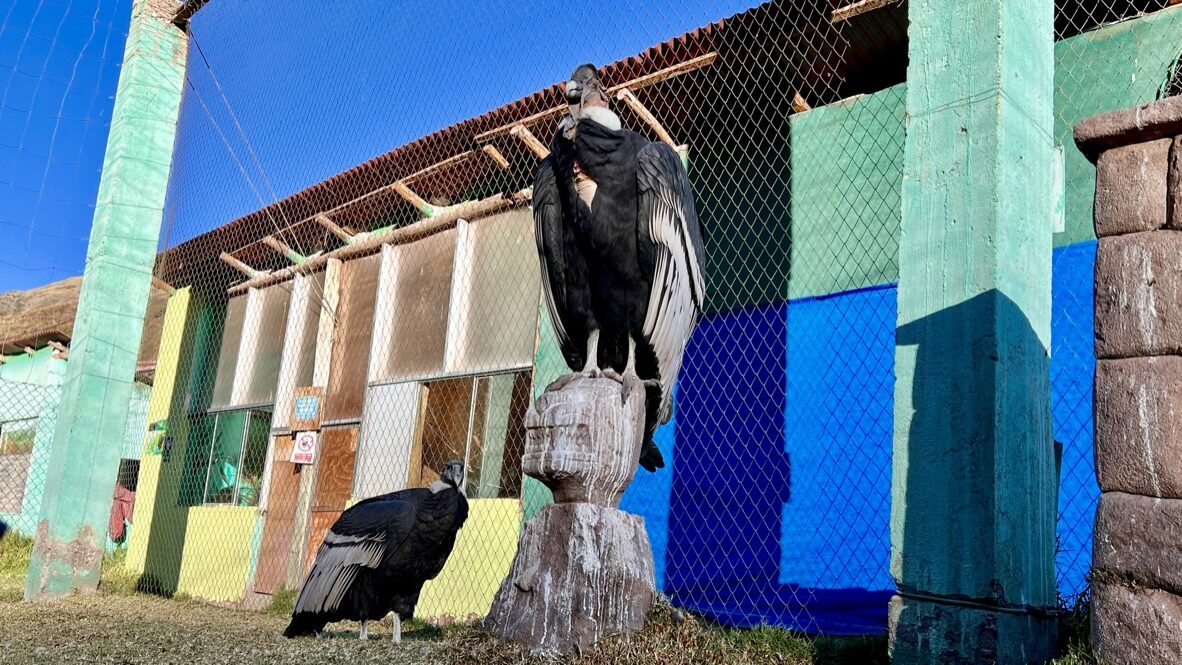
Rescued Andean condors at the sanctuary.
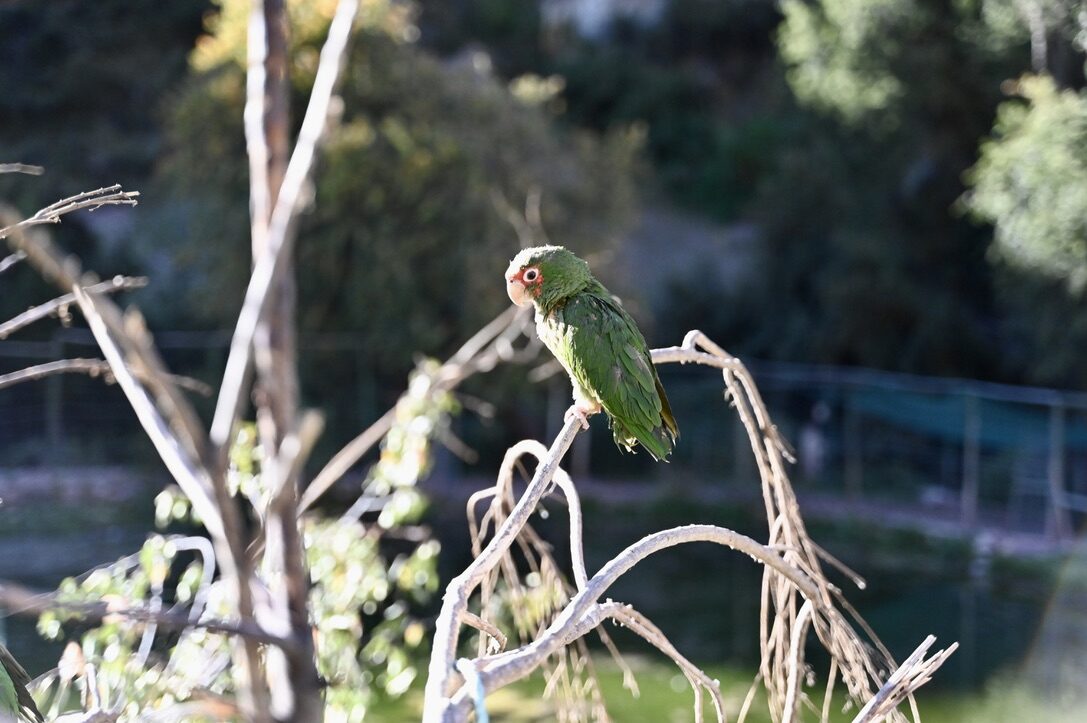
A parrot at the sanctuary.
We were tired from the hikes and the altitude. After showering, we relaxed before heading out to dinner. The streets lined with colorful shops were a shopper’s dream. Reading reviews, we found Pizzeria Trattoria Casa Grande, about a 10-minute walk from the hotel. It was busy with locals, and we waited a few minutes for a table. The staff were rushing around. We ordered a pizza and some garlic bread and waited quite a long time, as they made a mistake on the pizza the first time.
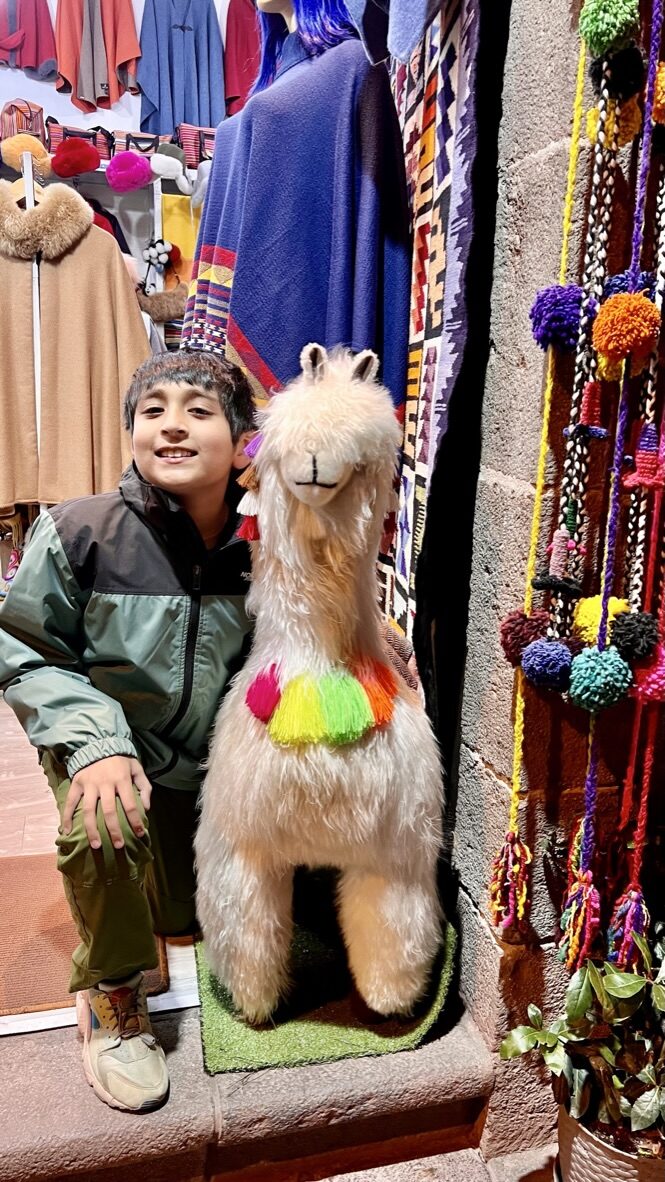
In one of the shops near our hotel.
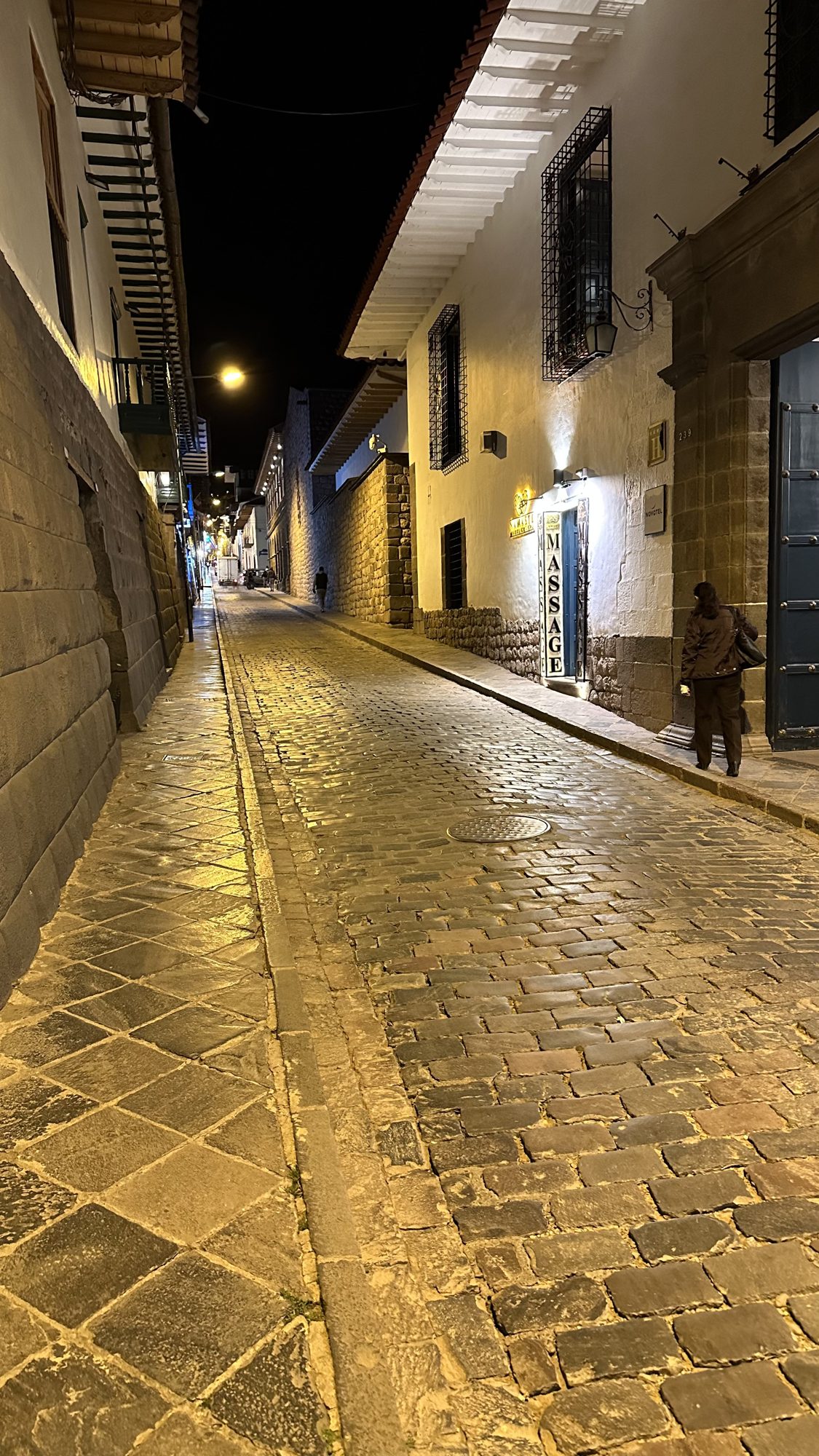
The streets of Cusco at night.
After dinner, we walked back to the hotel, looking in a few shops along the way, and went to bed early, with a 3 am wake-up for the next day’s tour.
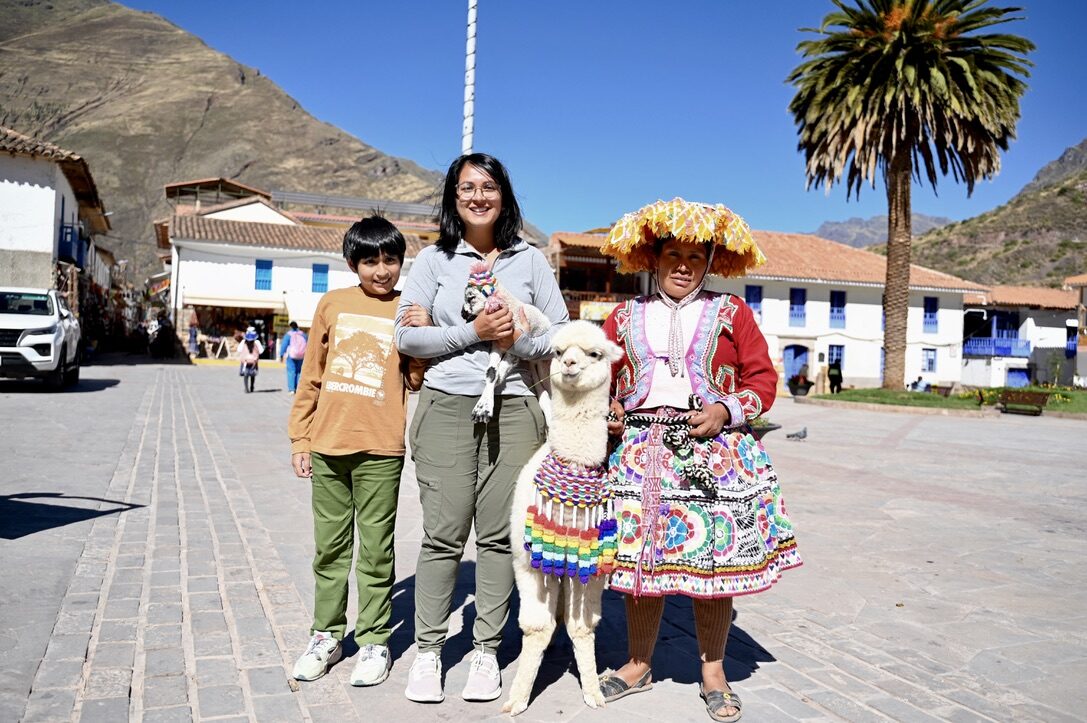
Our souvenir photo with an alpaca.
Day 4 Humantay Lake
We woke up around 3 am. Our hotel had offered us a boxed breakfast, but our tour included a breakfast stop. We were in the lobby by about 3:30 am, and the tour company picked us up around 3:50 am. All the tour companies and taxi services we used communicated on WhatsApp, which worked really well everywhere on the trip. They usually call the front desk and ask you to come outside. After picking up a few more passengers, we had everyone on board by about 4:45 and set off for Humantay Lake.
It was almost freezing in the morning. It doesn’t seem common to use heating or air conditioning in cars in Peru, even though the cars and vans are fairly new. We were glad of all our layers: hats, gloves and warm jackets are essential on these early tours to high altitude. It took an hour or so before the van warmed up. The guide collected the Humantay Lake entrance fee in cash, about 20 soles per person.
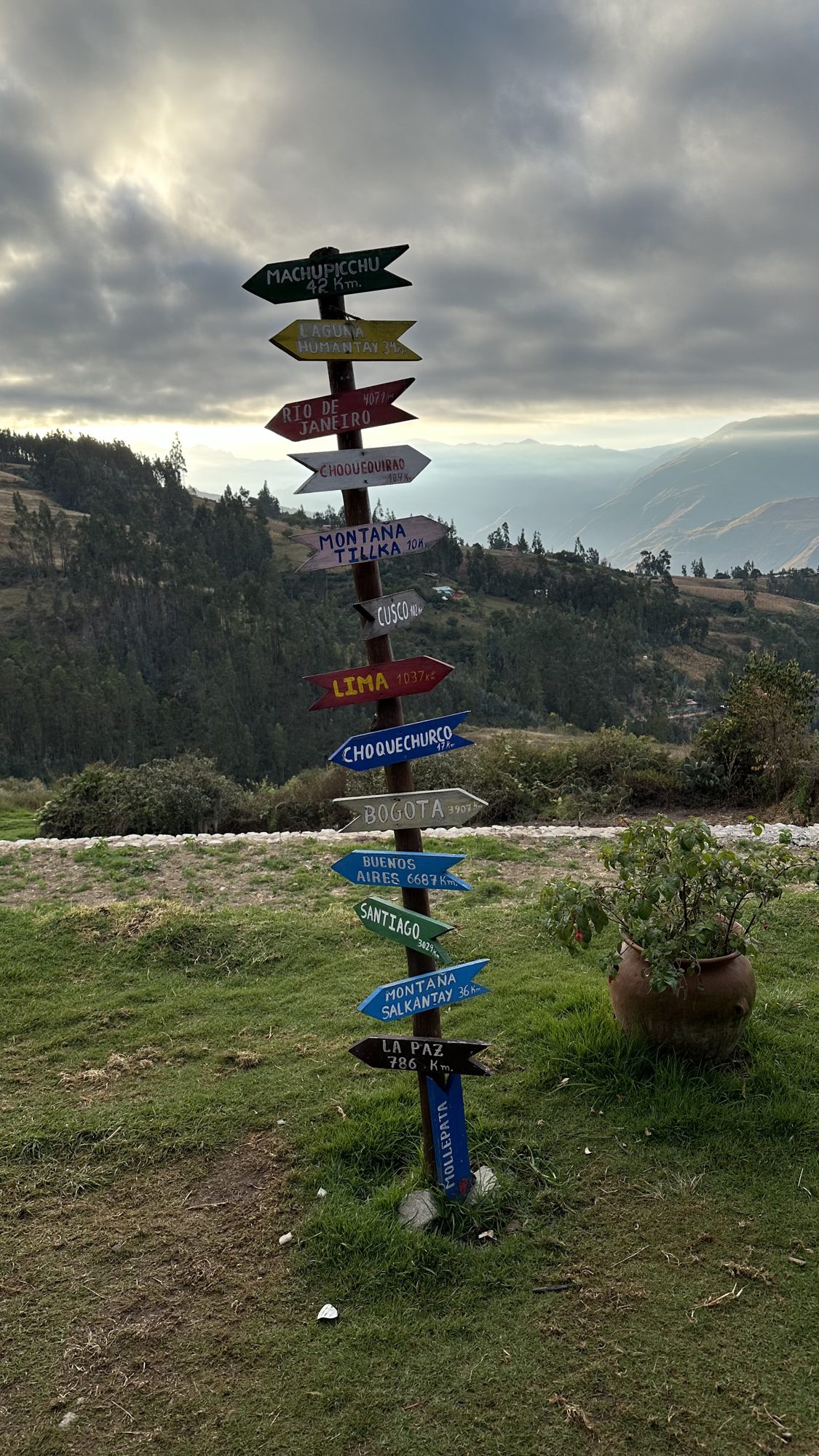
Outside the breakfast restaurant.
We stopped in a village around 6:30 for breakfast. The quaint restaurant was rustic and open-air, with communal benches and a glorious view. The buffet offered fresh fruit, juice, coffee, pancakes and eggs. The spread was just okay, but we were satisfied. There are restrooms too.
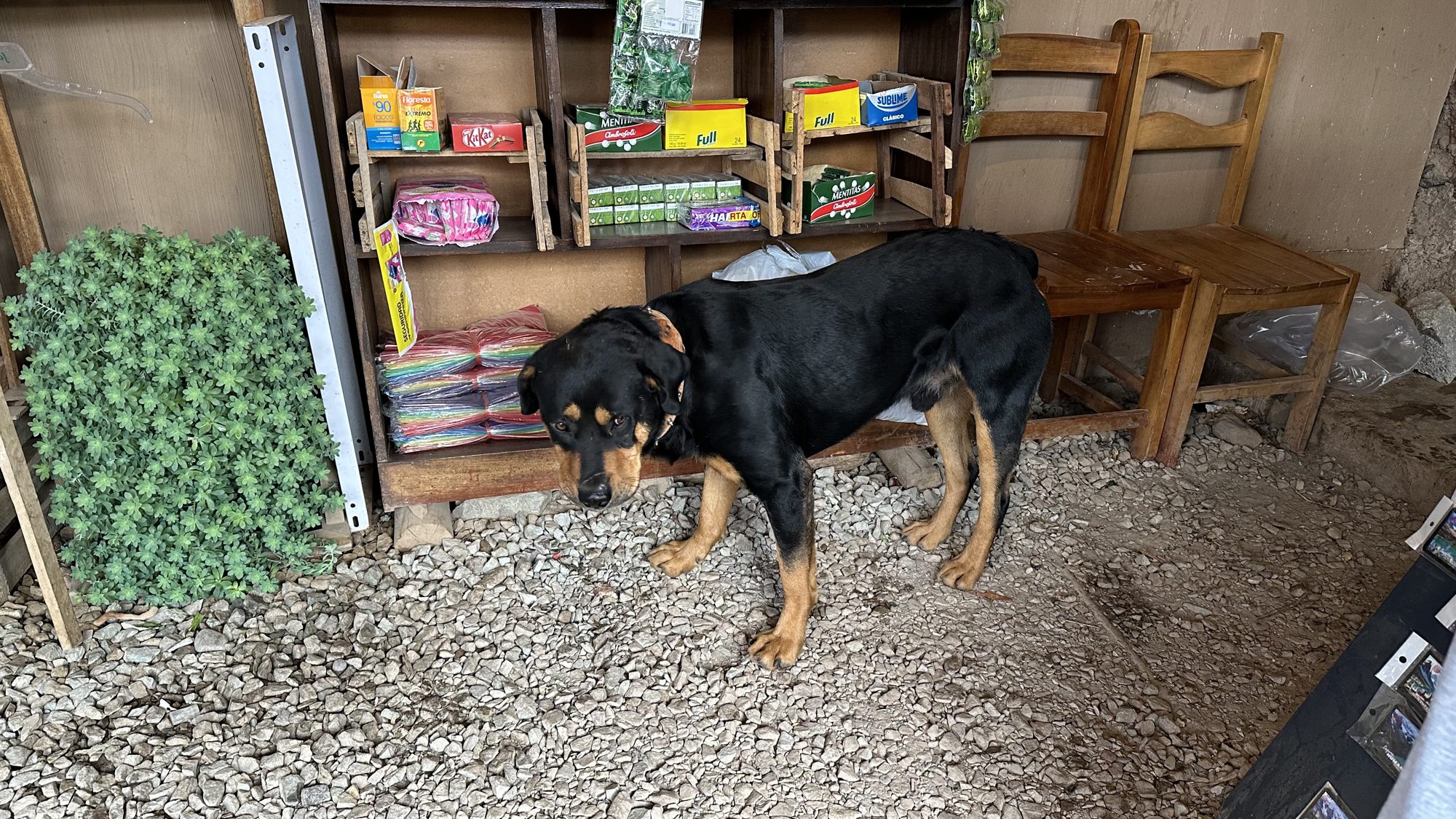
A friendly local at breakfast.
Once the whole group had finished, we headed for the trailhead. After the village, the road was extremely winding, rocky, bumpy and uncomfortable for at least an hour. We tried to sleep to stay as comfortable as possible. The road passed farmland, homes and villages along the side of a mountain.
At the parking area, we were all feeling the altitude. The trailhead is over 12,500 feet, and the lake is roughly another 1,500 feet higher. As soon as he stepped out of the van, my son threw up, then went to the locally built aluminum restrooms in the parking lot and threw up again. (The restrooms are kept clean by locals who live in the mountains and cost 2 soles each, in cash.) We think it was car sickness from the winding roads combined with mild altitude sickness. Luckily I had some nausea medicine with me, and he took some. He wasn’t feeling his best, so we decided to go only as far as we could, keeping a close eye on him. We gave him a preventive puff of his asthma inhaler to help open his lungs, and a few puffs from the oxygen canister we had bought at a pharmacy in Cusco. Overall, he had no asthma symptoms at any of the high-altitude places we visited. Everyone on the tour was having some trouble breathing. Just the 30-minute walk from the parking lot to the horses, surrounded by magnificent peaks and glaciers, was hard enough for my son and me. We would not have made it to the lake without the horses.
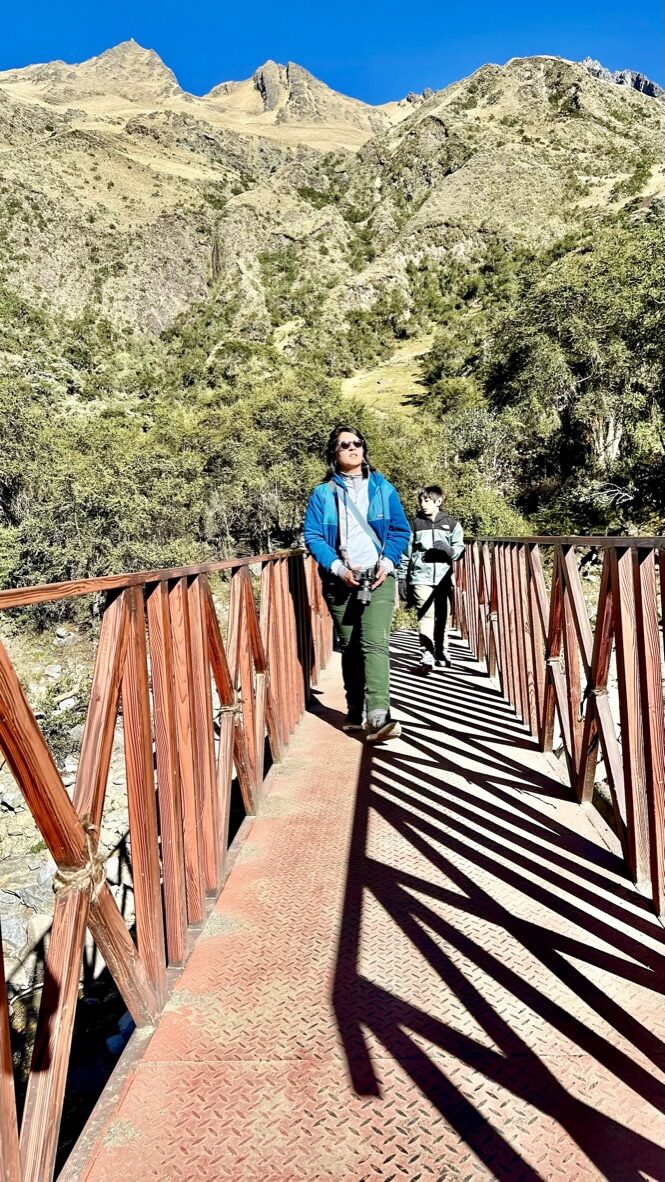
Beginning the trail to Humantay Lake.
In June, the mornings were really cold, but it got quite warm as soon as the sun rose above the mountains, at about 8 am. We had insulated boots, two layers of pants and three or four layers of shirts and jackets. We wanted to take off almost all of them but couldn’t carry everything we’d shed. We were incredibly hot walking in the sun, working hard to breathe at altitude. The trail has no shade at all, so sunscreen is highly recommended. We suggest one layer on your legs, maybe two on top, plus sunglasses and a sun hat. Cold-weather gear wasn’t needed at all.
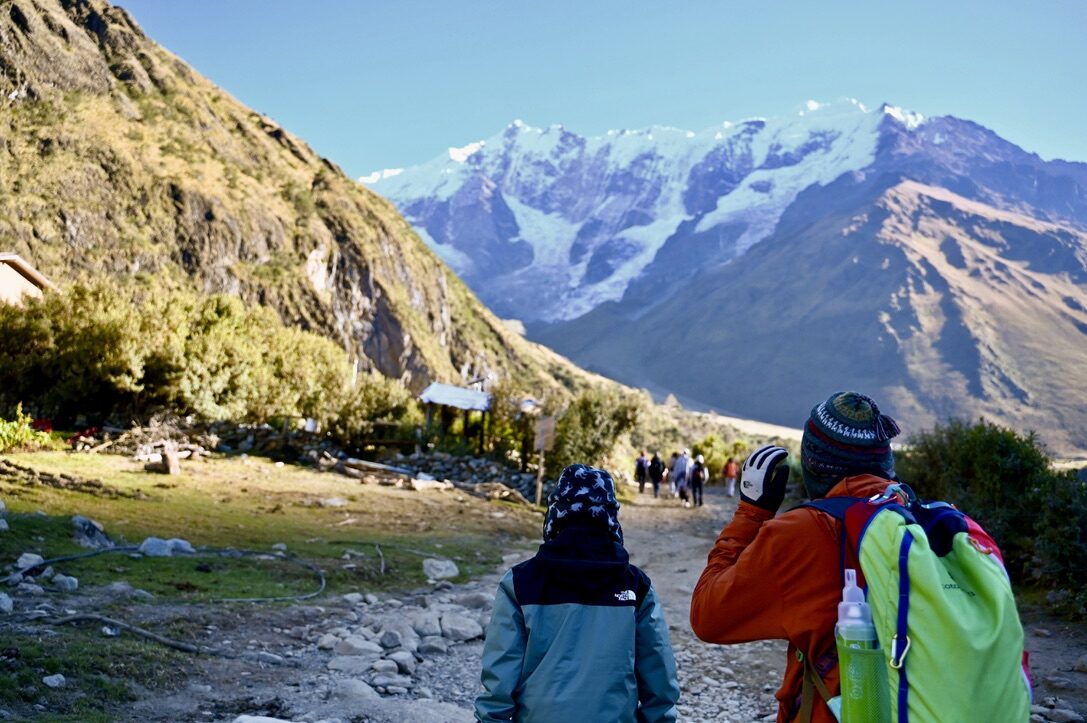
Hiking on.
Because our son wasn’t feeling well, has asthma, and I am not good with elevation gain and altitude, we rented horses for most of the way up. It was about a 30-minute walk to a wide open field with hundreds of horses. You can get a horse earlier, but our guide recommended waiting until this field. We paid 80 soles (about $22) each, one way. The horses were well kept, healthy and seemed at home at high altitude. They only carry riders uphill; you walk down. On the way down, the horses make their own way back to their pastures in large groups, which was lovely to see.
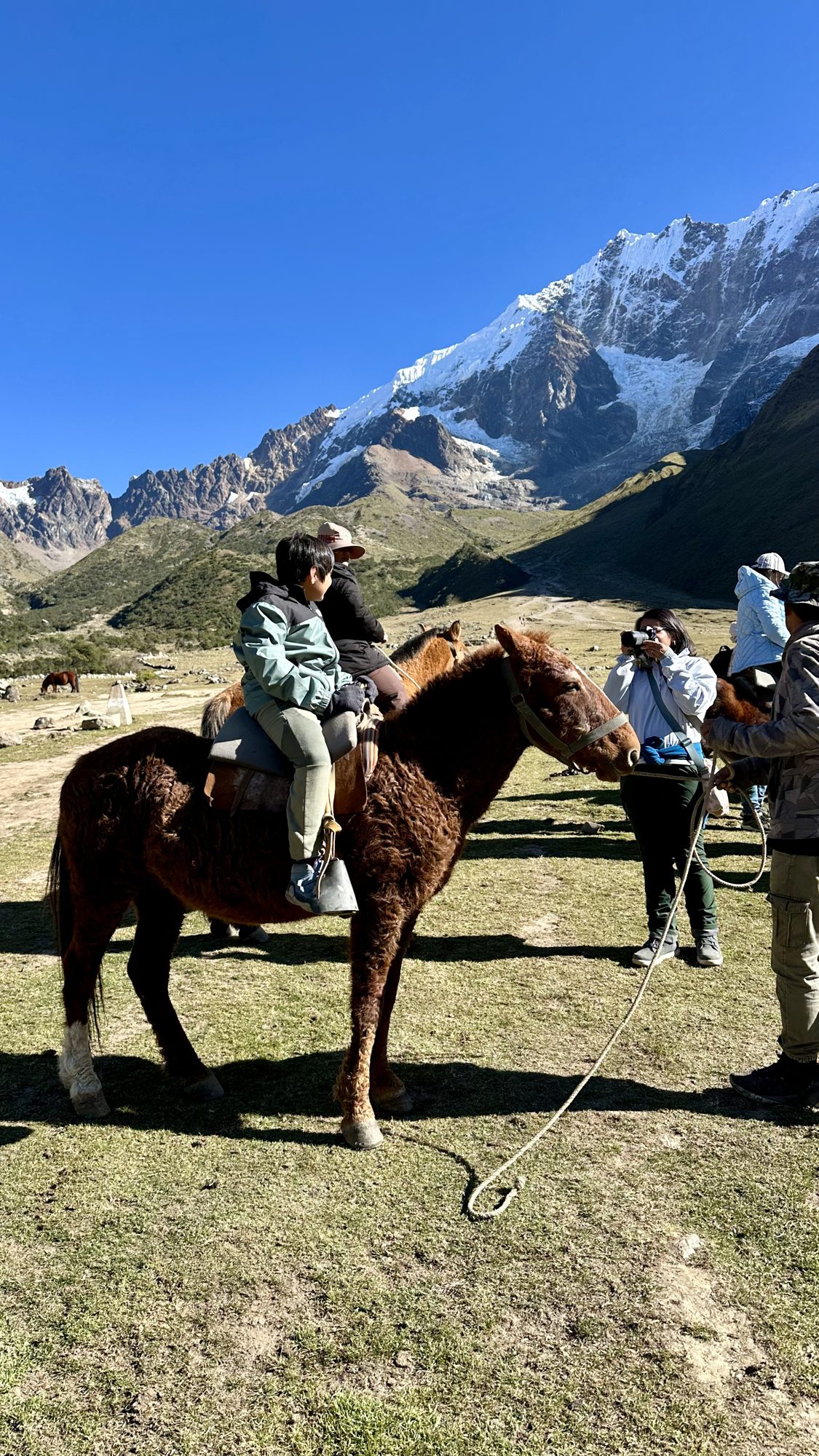
Getting on the horse.
We were each assigned a horse. After waiting for a group of about 20 people, we set off uphill. All the horses in our group were calm and followed the trail perfectly with little guidance. One of the horse handlers stayed with my son’s horse to guide him. The views on the way up were nothing short of magnificent: the glacier and mountain on one side and miles of valley on the other. We used some of our horse-riding experience from Iceland to steer, as we didn’t get much instruction here because of the language barrier.
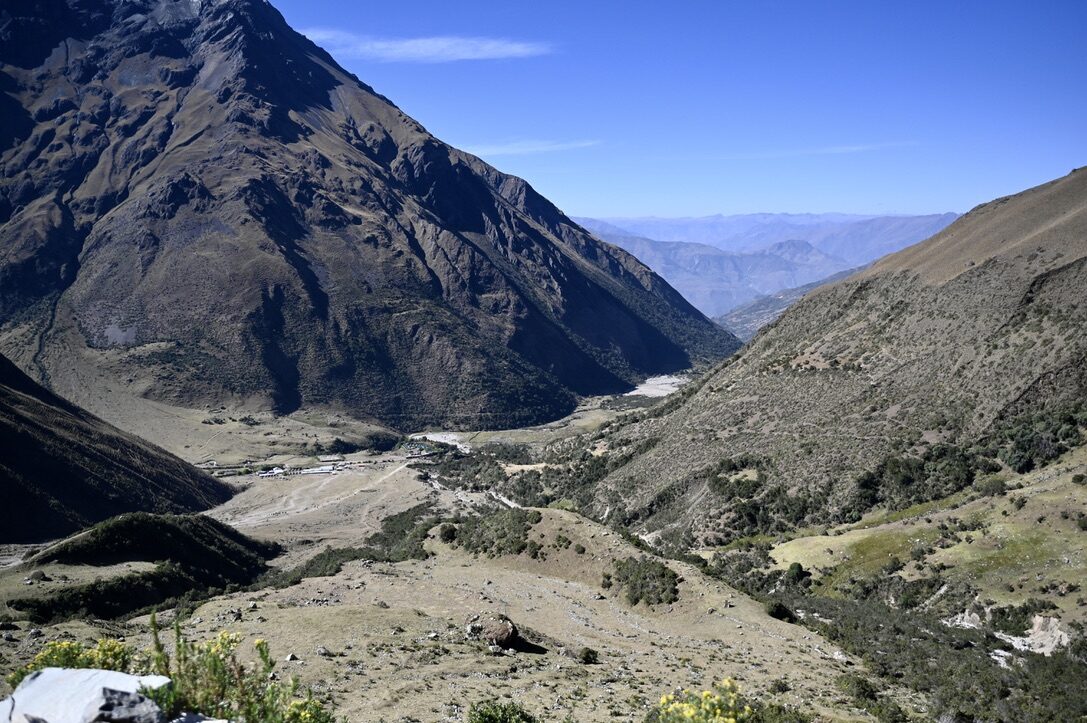
The view of the valley from horseback.
The ride was about 30 to 45 minutes straight uphill, with some tricky sections with a drop-off on one side. The horses didn’t need much guidance; they just followed the one in front. We got off about 10 minutes from the lake. The walk from there was hard but short: up one steep section and across a rocky path, to one of the most beautiful scenes we had ever seen.
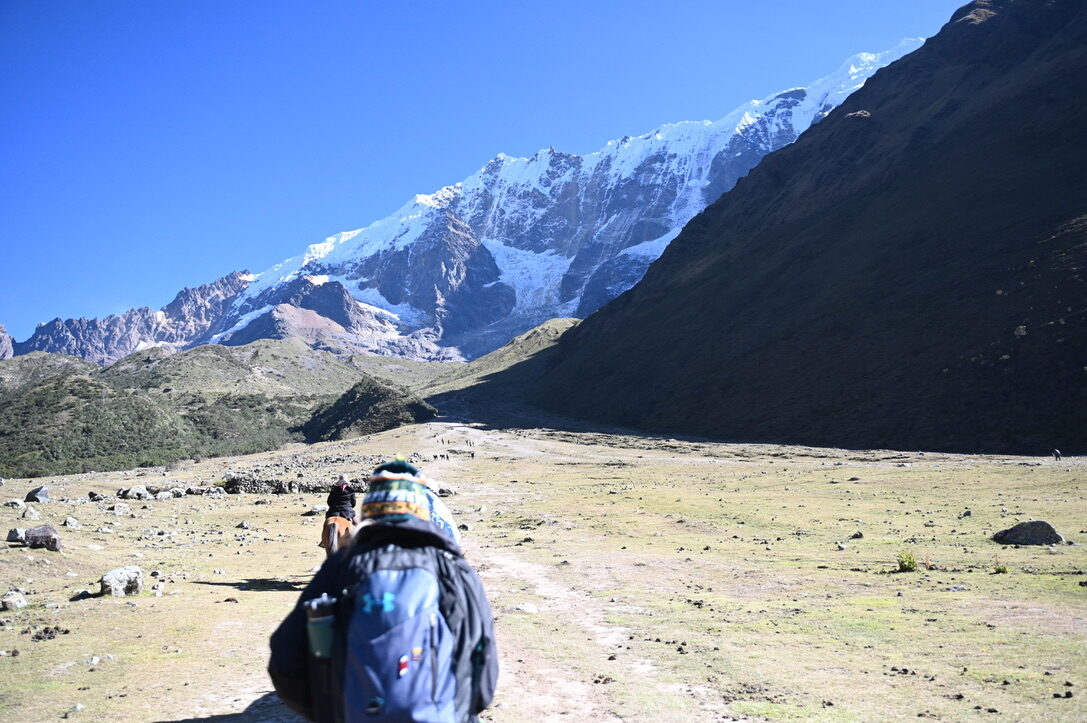
Riding toward the lake.
The lake was crystal clear, in shades from turquoise and cyan to teal. The mountain rose high above it, with a huge, slowly melting glacier feeding the lake. Our guide told us that without global warming, this lake would be unreachable because of snow and ice on the path, and the lake itself might not exist if the glacier weren’t melting. It was bittersweet to see something so beautiful that exists only because of the damage to our climate. We had just over an hour at the lake.
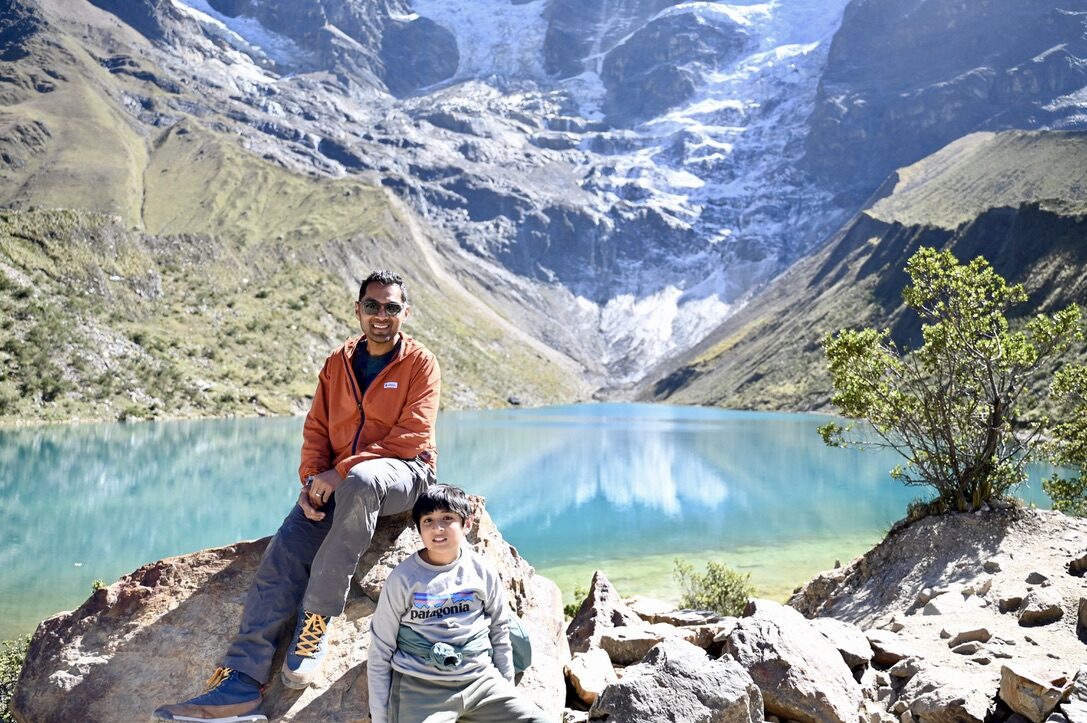
Humantay Lake.
We walked along the front of the lake, took lots of pictures and took in the views. There are two or three photo spots, each a rock with a perfect background, and usually a short line. We waited a few minutes and got some great pictures. The view was unbelievably gorgeous, and we were lucky to have a clear, warm day.

Looking out at the lake.
When it was time to head down, the guide gathered everyone for instructions. The trail is dry dust, small and large rocks, gravel and some grassy patches, and it can be slippery, especially downhill. Shoes or boots with good grip are a must. It’s hard to keep your balance going down; on the incline, our feet kept sliding forward in our shoes. My son was also struggling with the altitude and the heat, so we went down slowly. It took about two hours to get back to the van. Our guide stayed with us, as our son was complaining a lot and going slowly. Past the horse stables, we bought Gatorade and more water at a little snack shack, so keep some cash on hand.
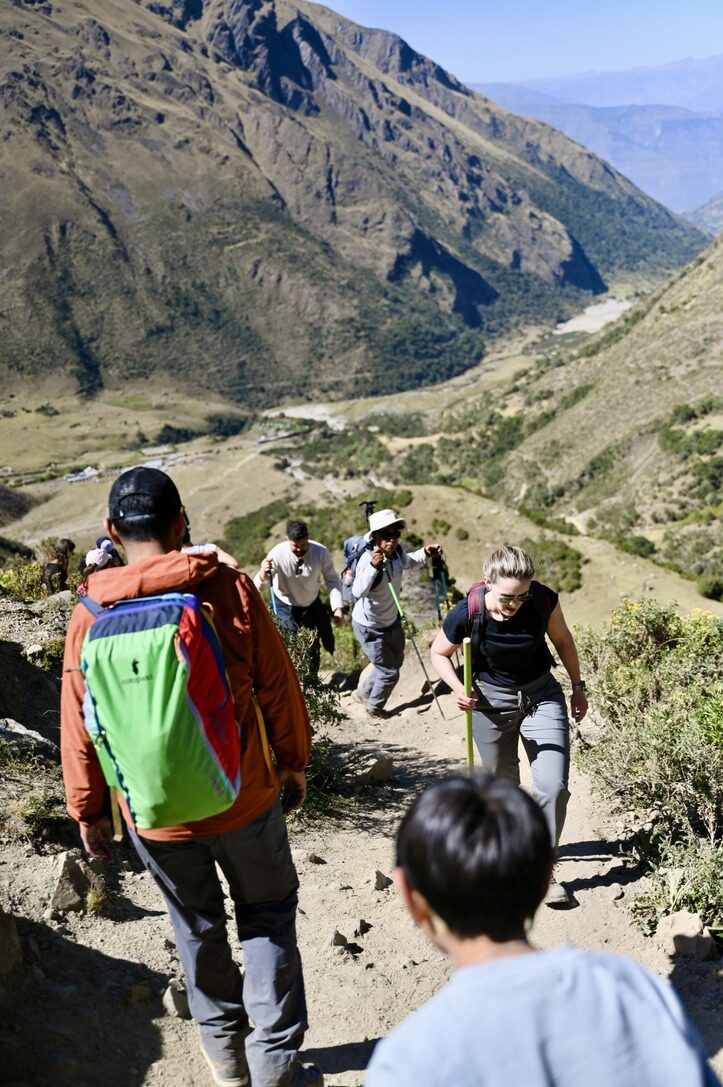
Going downhill.
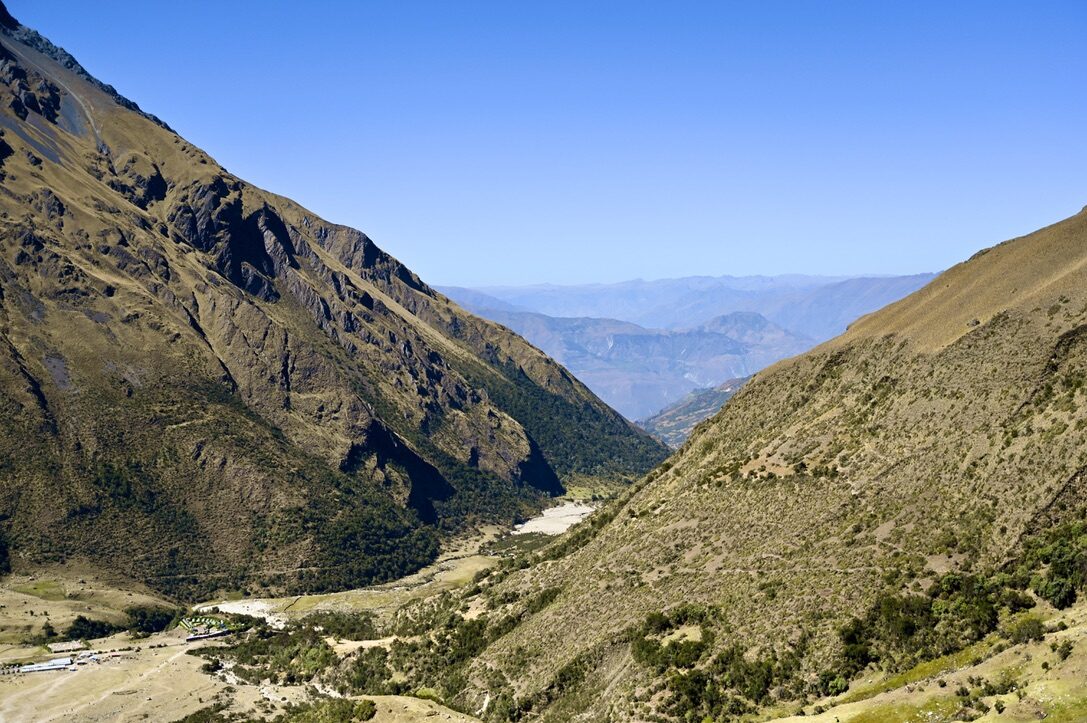
A gorgeous view of the valley.
From there it was another 30 minutes to the parking lot. Either the Gatorade was helping my son, or knowing we were close to the van. Locals were selling hot sugar donuts and meat skewers here; the donuts tasted divine after the hard walk down. Back at the van, we took some nausea medicine to avoid car sickness on the winding road, and, exhausted, we all slept until we reached the same restaurant as that morning.
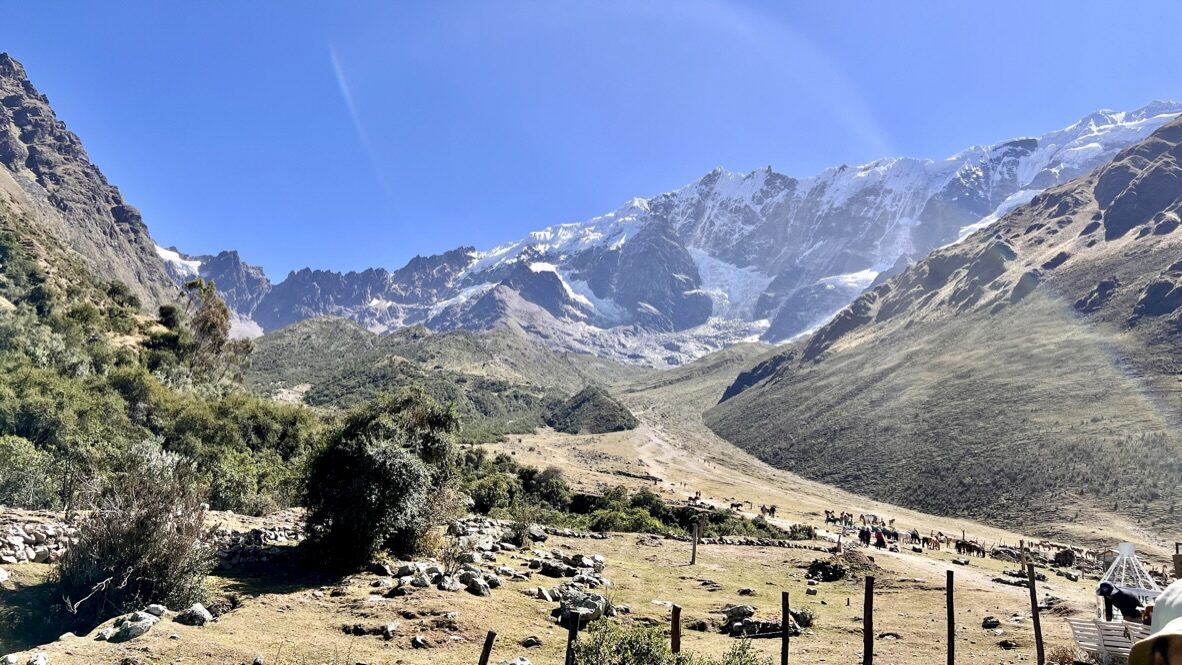
The view from near the horse pastures.
The lunch buffet had pasta with a choice of red or green sauce, fruit, beans, quinoa soup, potatoes and popcorn. The corn and potatoes in Peru are the most authentic and flavorful we have ever tasted. Meat eaters had a few more options. Overall, lunch was simple but satisfying.
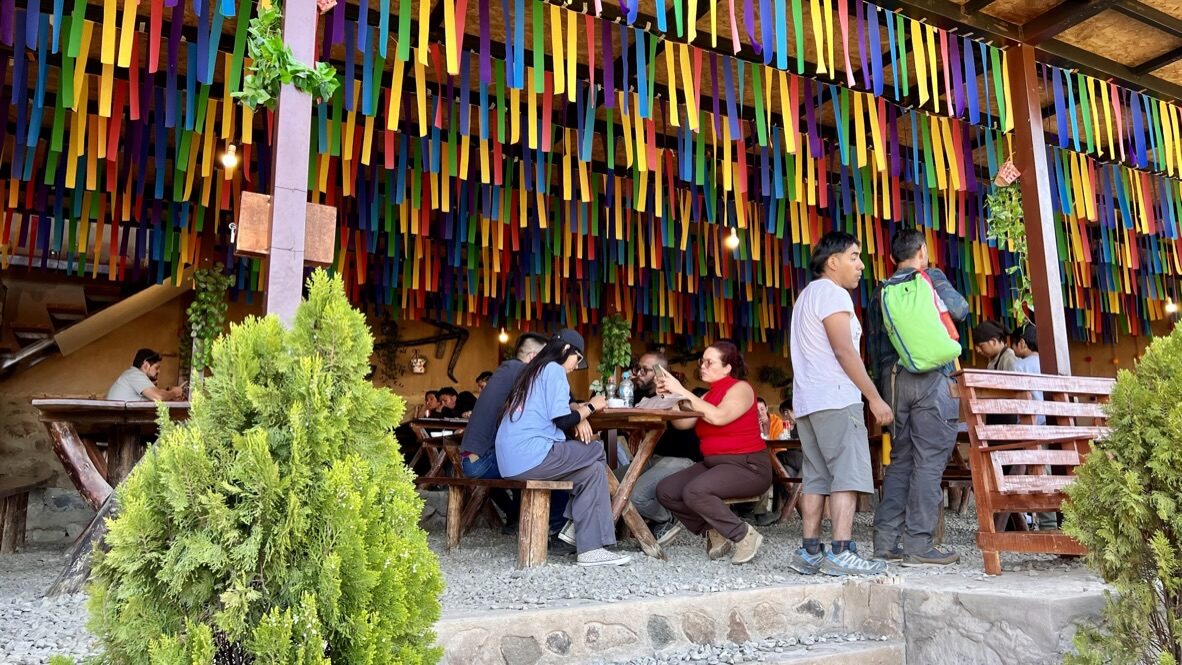
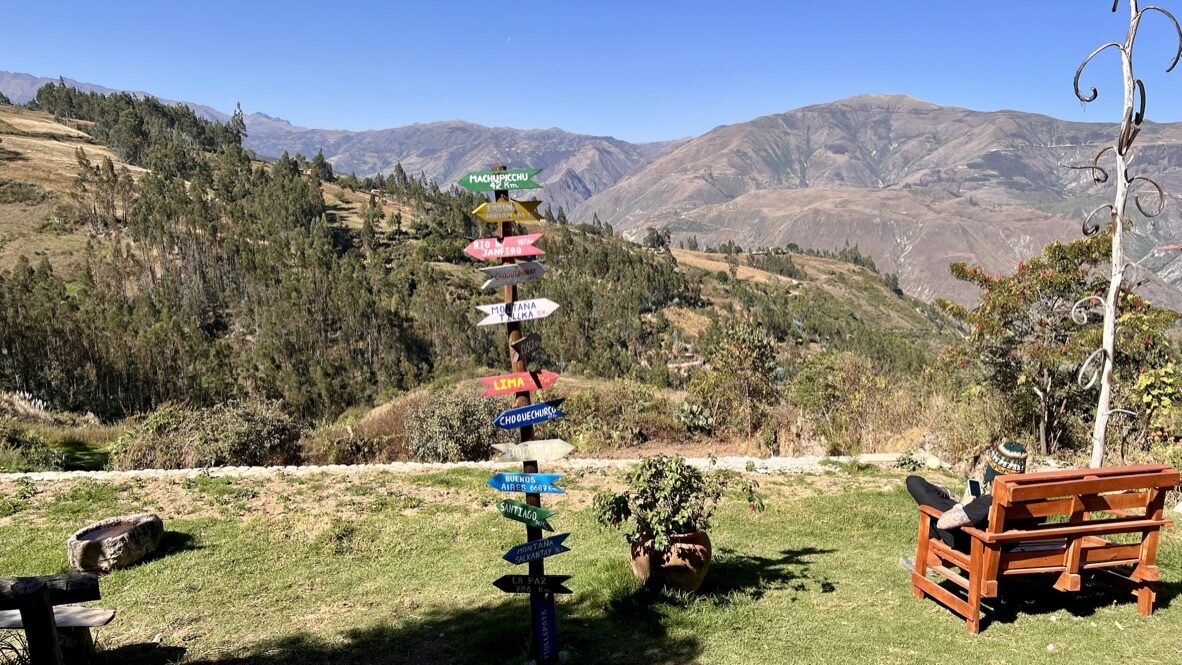
The lunch restaurant.
After lunch, we slept most of the way back to the drop-off point near the Plaza de Armas. The drive was uneventful, on decently paved roads all the way to Cusco. A festival in the Plaza de Armas moved the drop-off a block away, so we walked back to our hotel through the crowds and barricades (probably for a parade). We kept our belongings close and held hands for safety, but never felt unsafe. At the hotel, we cleaned off the dust and grime of the day before dinner.
For dinner we tried Taste of India, which we had passed the day before. The warm, perfectly spiced Indian food was just the comfort we needed after a long day of hiking. We didn’t wander much afterward, as we had another early morning ahead.
Day 5 Palcoyo Rainbow Mountain
We had another early tour this day. We woke at 3:30 am and were picked up right on time, around 4 am. After collecting a few other people, about 10 in all, we set off for the Palcoyo Rainbow Mountain. The van was cold, so all our layers, especially hats and gloves, helped. We stayed bundled up and napped for the first part of the drive, about 90 minutes, to breakfast. The breakfast restaurant was in a small village in the high Andes, in a small building rather than open-air, but with temperatures below freezing, it was hard to feel comfortable.
Breakfast was similar to the day before: pancakes with honey, eggs, fruit and bread. In Peru, pancakes were often served without butter or syrup. Coca tea was available too. During our time in Peru, we had many cups of coca tea and coca leaf candy to help with the altitude. After breakfast and the restrooms, it was so cold outside that we couldn’t wait to get back in the van. The trailhead was another couple of hours away.
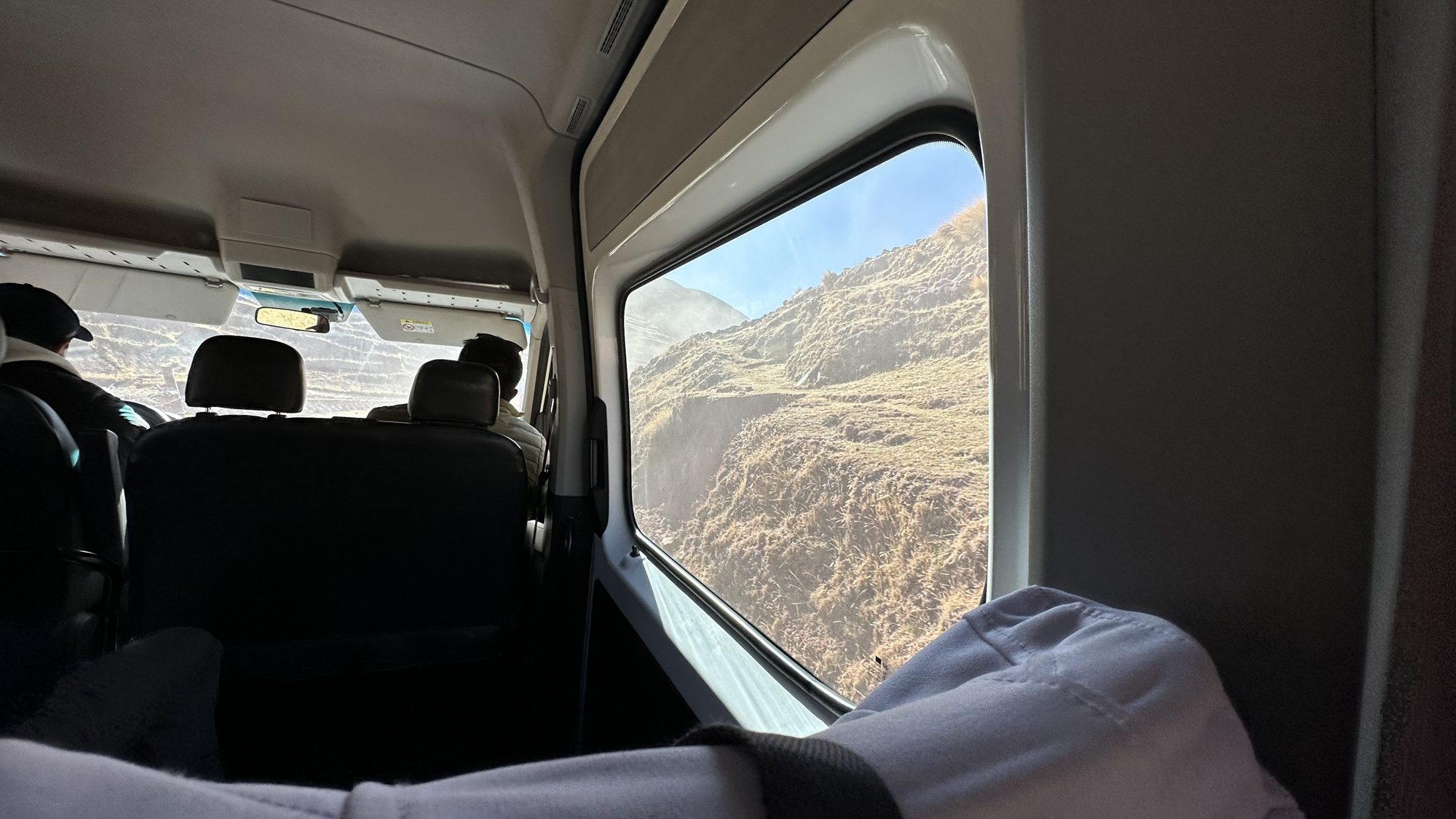
The view out of the van window.
After breakfast, we drove about 20 minutes to the village of Checacupe to visit one of the few remaining Inca rope bridges. This ancient marvel is still maintained by the villagers today. Built from materials like alpaca hair, tree bark and other local materials, it is incredibly sturdy. We could walk on it and to many vantage points around it for great photos, and our guide told us its history. It was a lovely side trip and a glimpse into village life in the Andes.
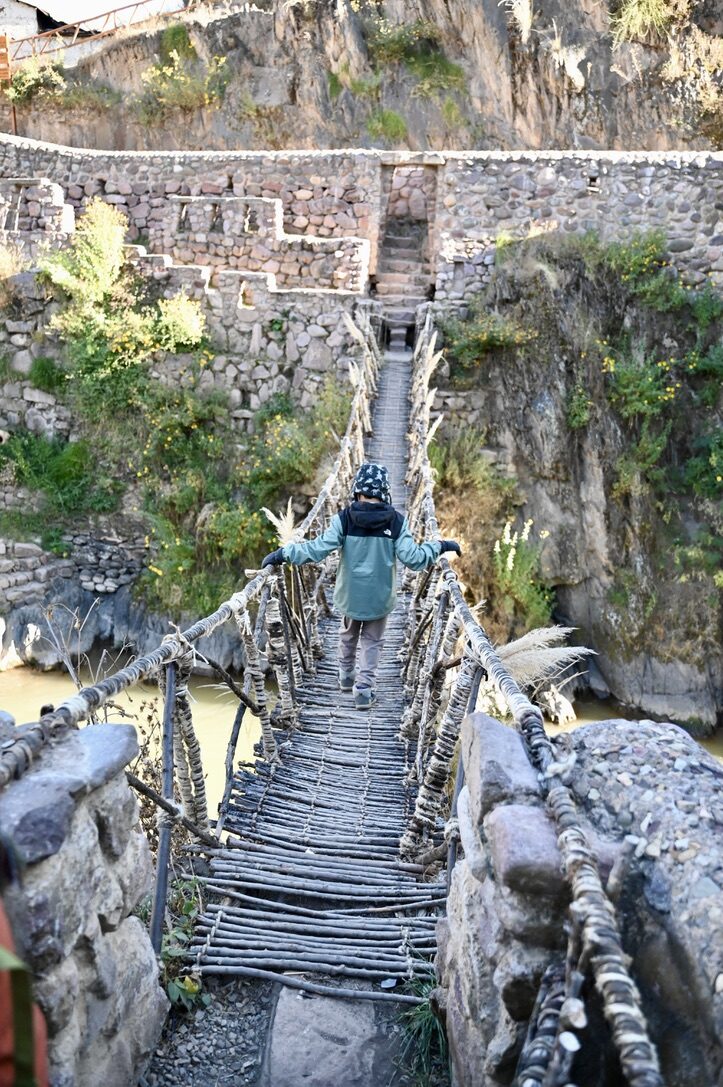
The Inca bridge near Checacupe.
The dry, dusty road was paved most of the way. We drove through mountain villages and farmland, past grazing llamas and alpacas, with magnificent views of the Andes. There are a couple of checkpoints in villages before the trailhead, with restrooms; entrance tickets are bought here. Tour operators also give locals rides if there are empty seats. Restrooms at these tourist spots are always paid.
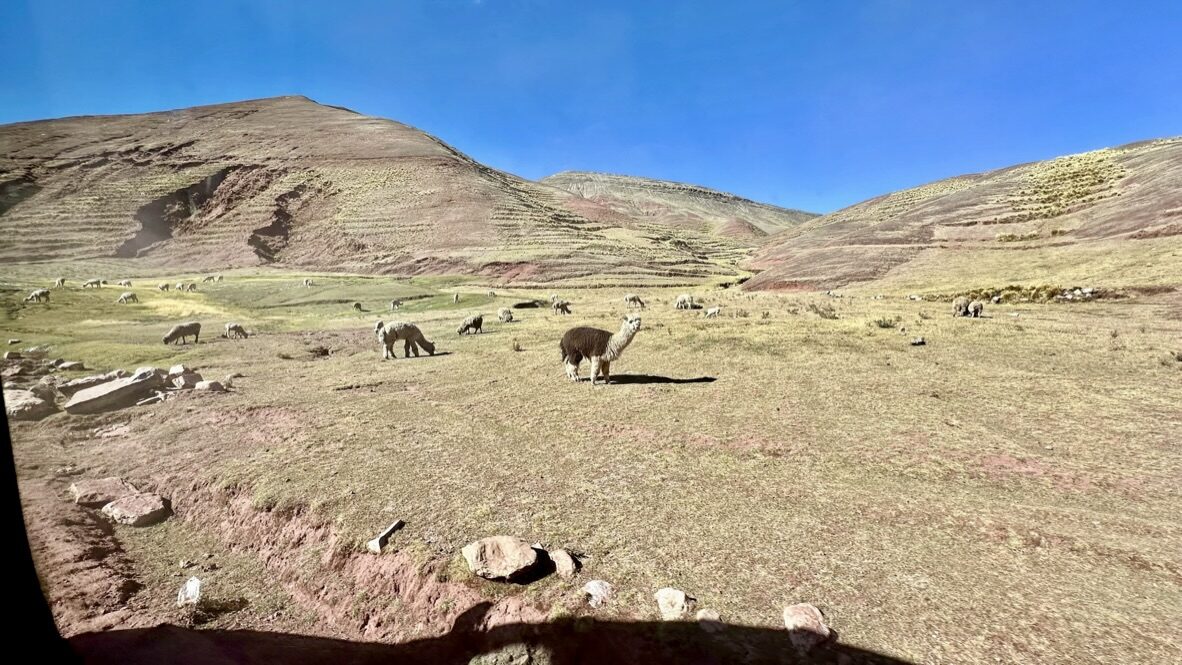
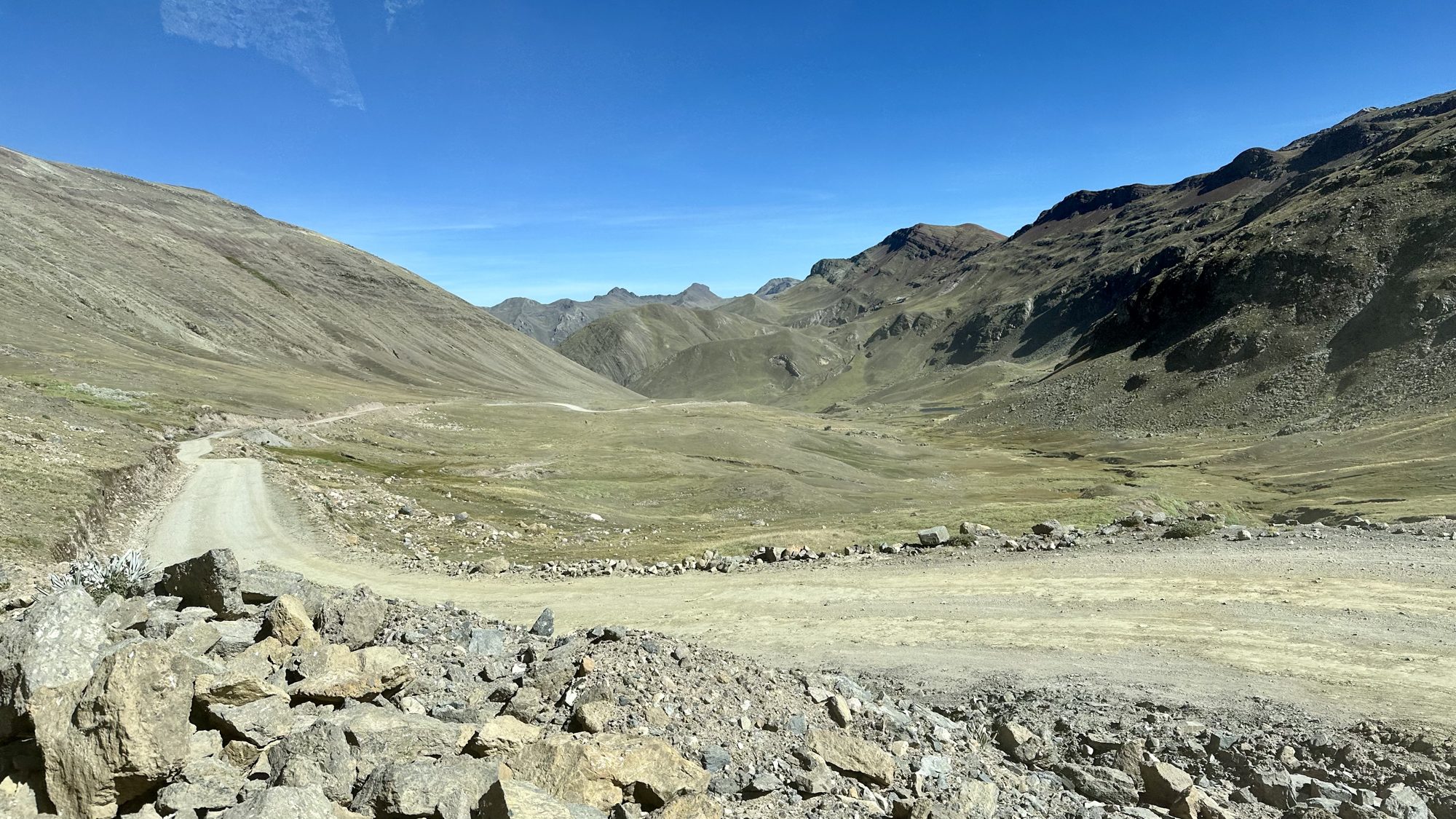
Views along the drive.
We arrived at the Palcoyo trailhead parking lot, at around 15,500 feet. The trail to the last (and closest) rainbow mountain climbs roughly another 500 feet, to around 16,100 feet, and is about 2 miles round trip according to AllTrails. We expected weather like Humantay Lake: warm, sunny and still. We got something completely different. We had left some heavy jackets in the van but kept our hats and gloves; my son insisted he didn’t need his jacket and wore only a sweatshirt and hat. It turns out Palcoyo stays windy most of the time and tends to feel chilly. Mid-June to July is also when it can snow in these mountains, hiding the rainbow colors, and we were lucky to arrive just before any chance of snow. We were quite cold in our three layers in the rough, constant wind, and my son was cold every time we stopped for pictures.
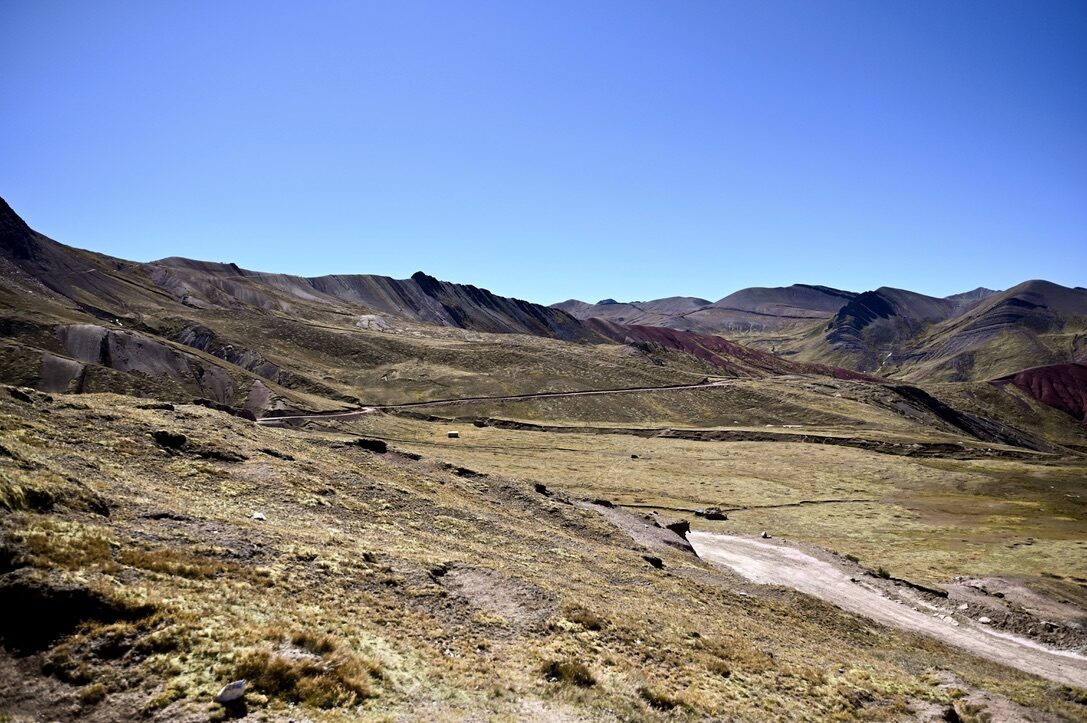
Rounding the first bend of the hike.
The guide stayed with the last people in the group. My son was complaining about the wind and the distance, and I was worried about his breathing at this altitude. We sucked on coca candy as we learned about the gorgeous multicolored mountains around us. Our guide said Palcoyo has three to five rainbow mountains around it, a shorter hike at a lower elevation, and a calmer vibe. Vinicunca, the other rainbow mountain, is more crowded, with foot traffic, horses and ATVs, while Palcoyo allows no horses or vehicles. We met several farmers selling small handicrafts and bringing their llamas and alpacas for photos. We indulged in more photos with these lovely animals against the iconic rainbow mountains. It always felt like we were supporting the local villagers.
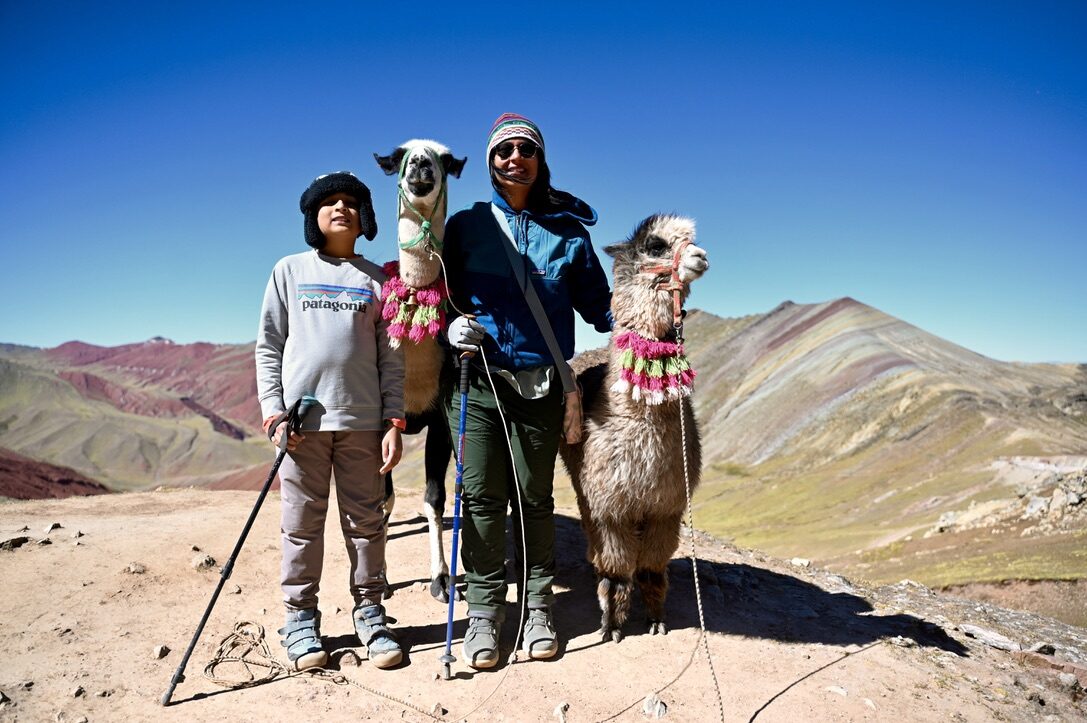
Literally the cutest creatures on the planet!
Overall, I found this trail much easier, as the climb was slow and steady. My husband found it harder, since we were already starting above 15,000 feet. We saw several rainbow mountains from the gorgeous viewpoints along the trail. At every turn, we found ourselves stopping to take in all the colors and textures around us: deep red, pale green, purple, yellow and shades in between. It almost felt like a painting. There are three lookout points along the way with views of the distant colorful peaks, but the whole hike is gorgeous. Our guide gave us hiking poles. My son wasn’t keen on his, but I felt they made the walk easier. The trail is dusty, with scattered rocks and loose soil, and I would expect it to get muddy in the rainy season.
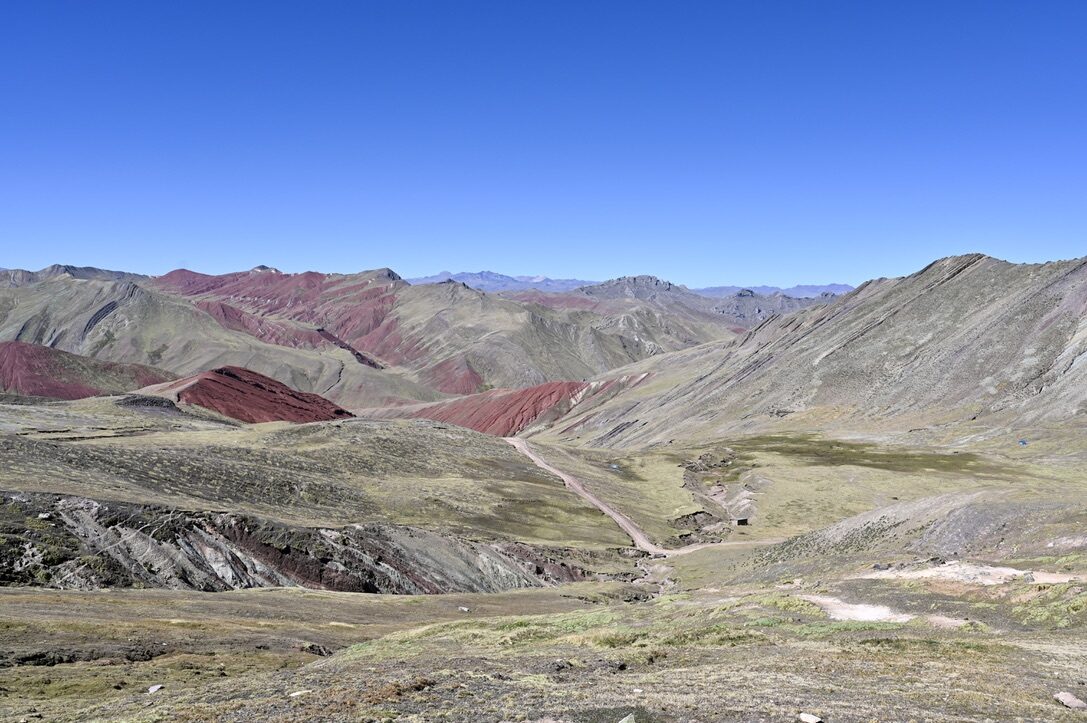
Mountains with so many colors.
The guide checked on everyone often to make sure no one needed medical attention. He carried an oxygen tank and some medicines, but suggested using oxygen only as a last resort: the best thing is to go back down to a lower altitude and take a nap to recover faster. Thankfully, we were all doing much better than the day before. My son complained about being tired and not wanting to walk, but nothing serious.
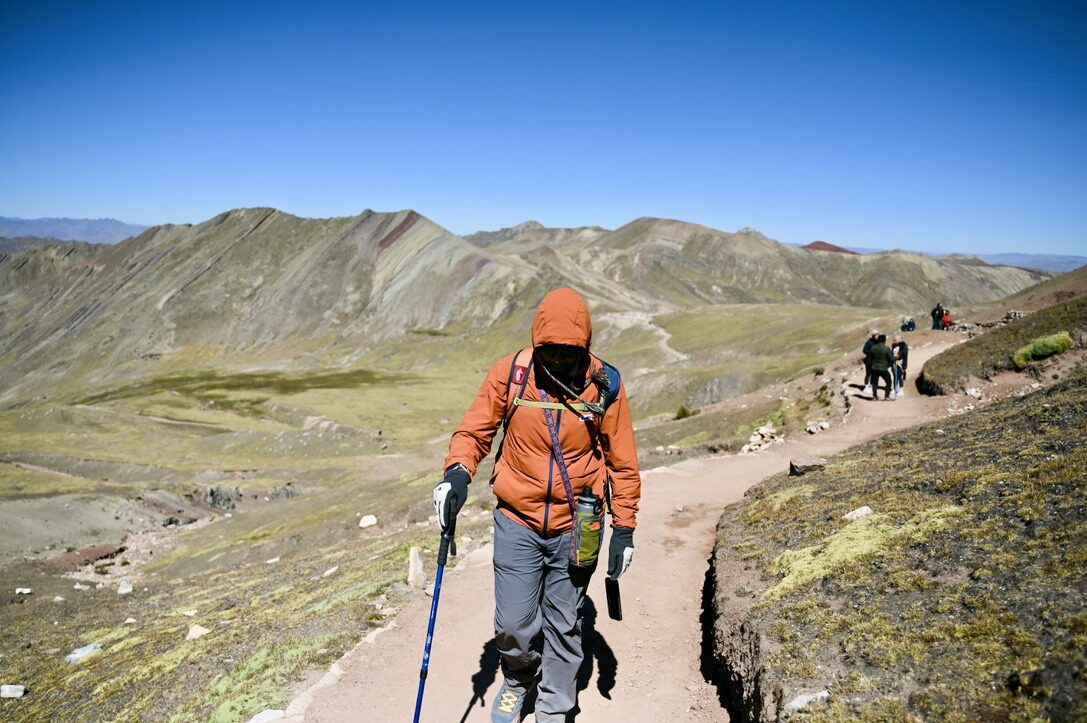
The view of the trail.
At the end of the trail, we could see the closest rainbow mountain, tall snow-covered peaks in the distance to the left, and a few rainbow mountains to the right. The variety of natural beauty we had seen in the last few days blew us away. From here, the guide took the group on to the stone forest, but that meant another 500 to 600 feet of climbing, so we skipped it. We didn’t want to take chances with my son’s asthma, and he was already tired.
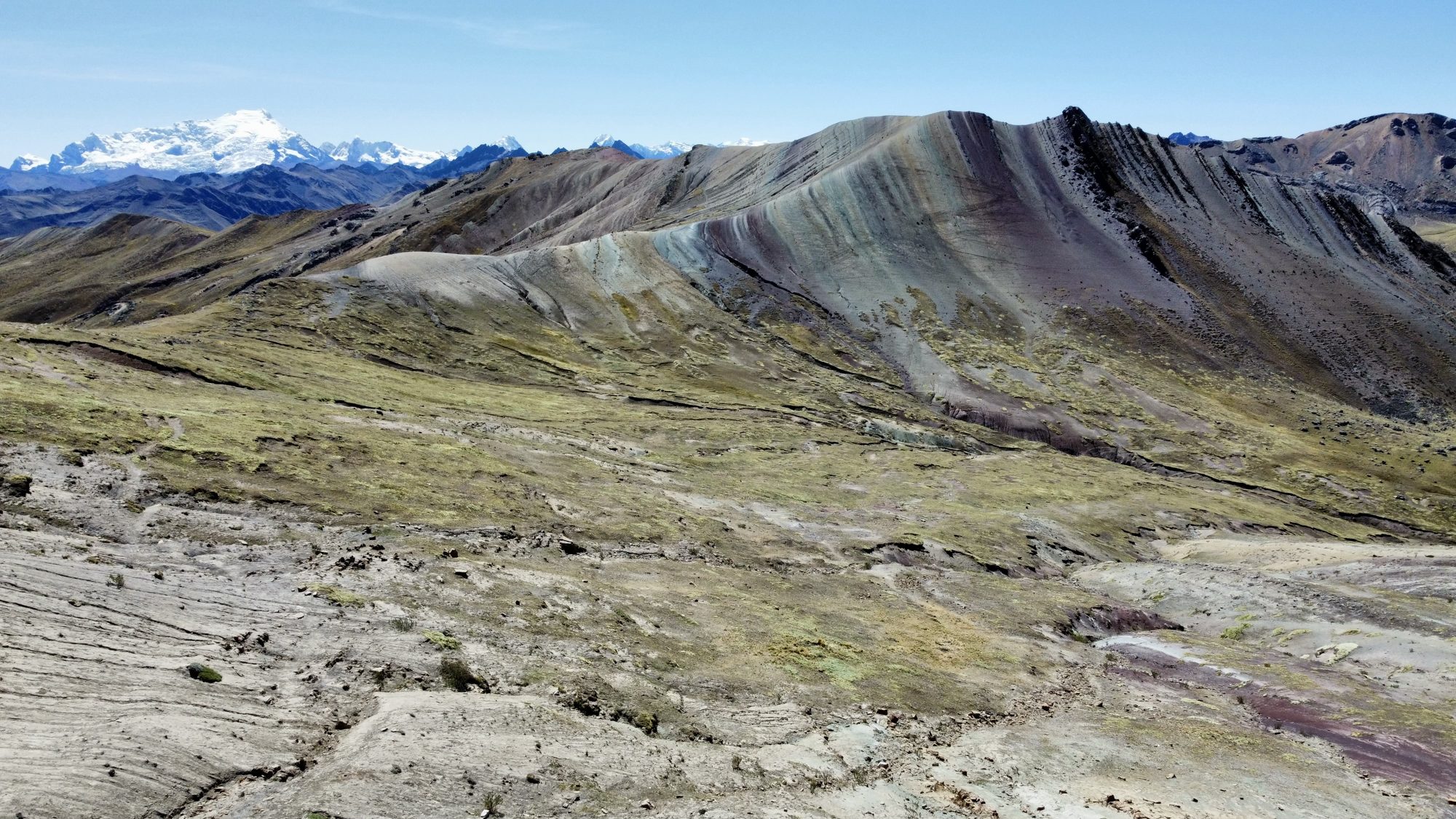
Snow-covered peaks in the distance, and the rainbow mountain at the end of the trail.
Since we’d have to wait for the rest of the group anyway, we walked back down slowly, taking in more of the views than on the way up. My husband flew his drone at the end of the trail (after asking permission and paying a fee), though the wind was too strong to fly for more than a few minutes. With so few people around, this was one of the best places to feel close to nature. At many points on the trail, we were the only ones there.
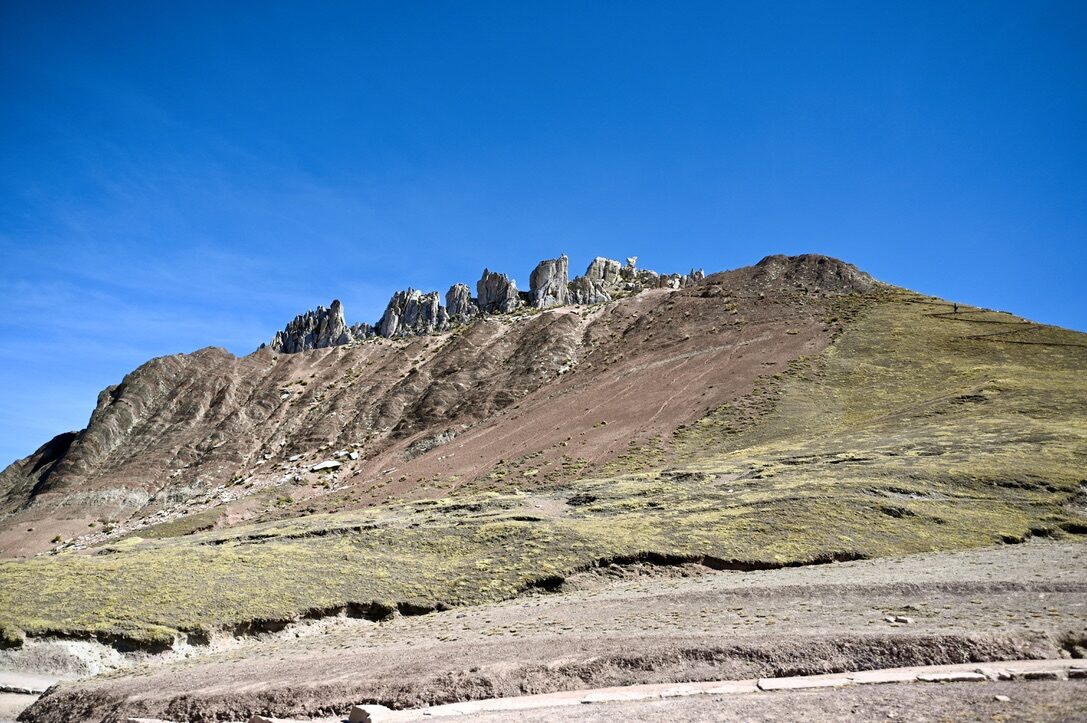
The stone forest trail.
Back at the trailhead, we used the restrooms and bought snacks at a small shop. We recommend wearing or carrying extra layers for this trail, as it was chilly with a strong wind the whole time. When the group was back, we drove to the village for lunch: a buffet of pasta with red or green sauce, quinoa soup, salads, rice, beans and coca tea. Then we were back in the van looking forward to a nap. Note that cars and vans in Peru tend not to use air conditioning or heating, and people usually keep the windows down. On dusty mountain roads, that means dust on your skin and clothes, and in the air you breathe.
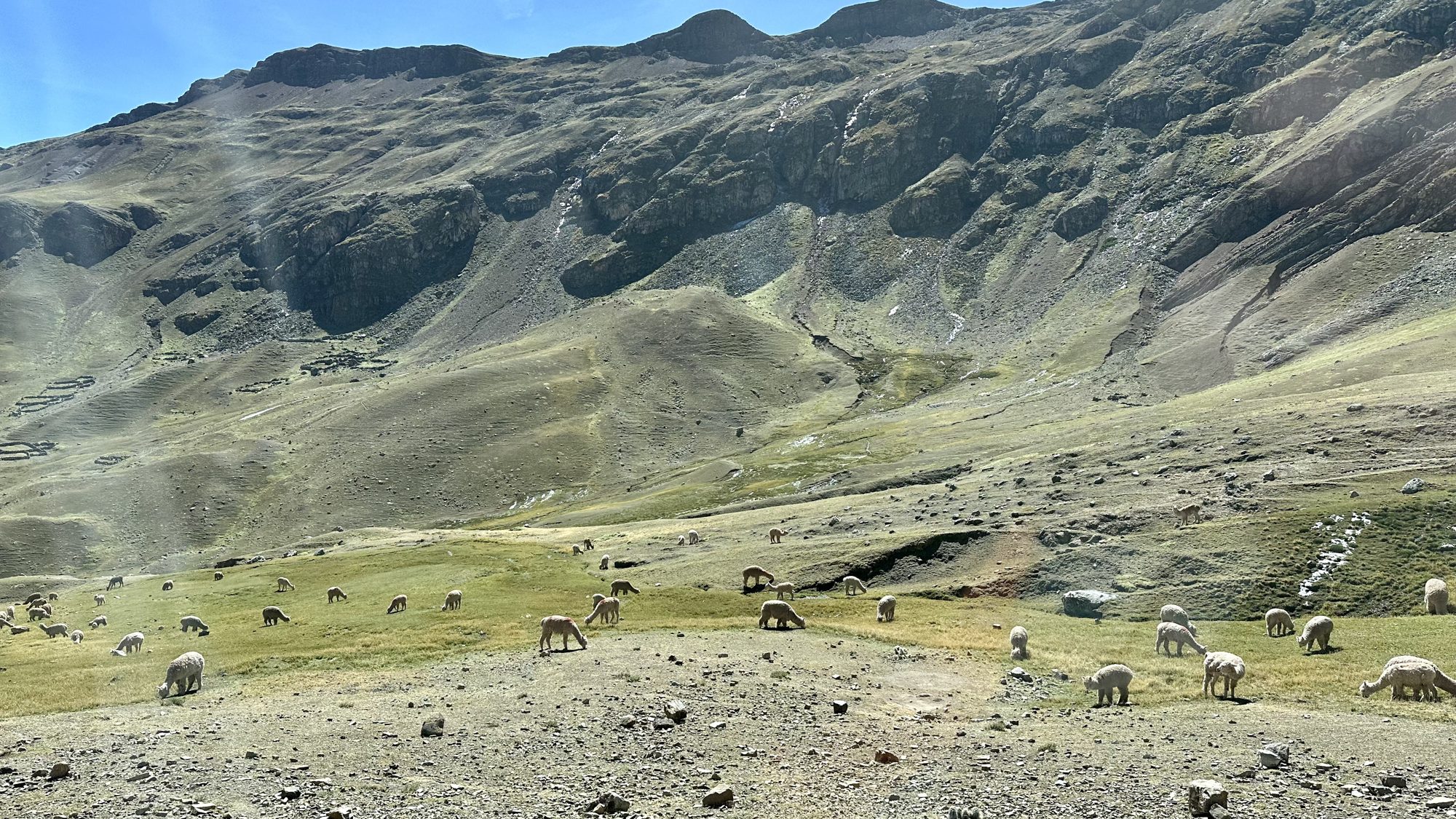
The view along the drive.
We got back to Cusco a little earlier than the day before, as this trip is a bit closer. We walked back to the hotel, showered off the dust and relaxed. Dinner was at Vida Vegan Bistro, a 10-minute walk away; the city’s ups and downs felt extra hard after a long day hiking at altitude. We had veggie pizza, quinoa soup and vegan lomo saltado. The restaurant was quite empty, and the food was only okay; it could have been more flavorful. On the way back, we checked out shops for sweaters and hats. It was extremely hard to stop at one or two items. Everything in the markets seemed beautiful, and we sometimes forgot we had to carry it all home.
Day 6 Cusco, San Pedro market and a chocolate workshop
We started with breakfast at our hotel. It was nice to sleep in a bit. Then we walked about 15 minutes to the artisan market for souvenirs. Google said it opened at 8 am, but when we arrived around 8:45, everything was closed. Some police officers nearby said it should open around 9, but nothing had opened by 9:15, and no one could tell us when it would. We were pointed to some smaller markets nearby, which were slowly opening around 9:30, and bought sweaters, bags and more there. By 10 am the artisan market was still closed, so we headed to the famous San Pedro Market.
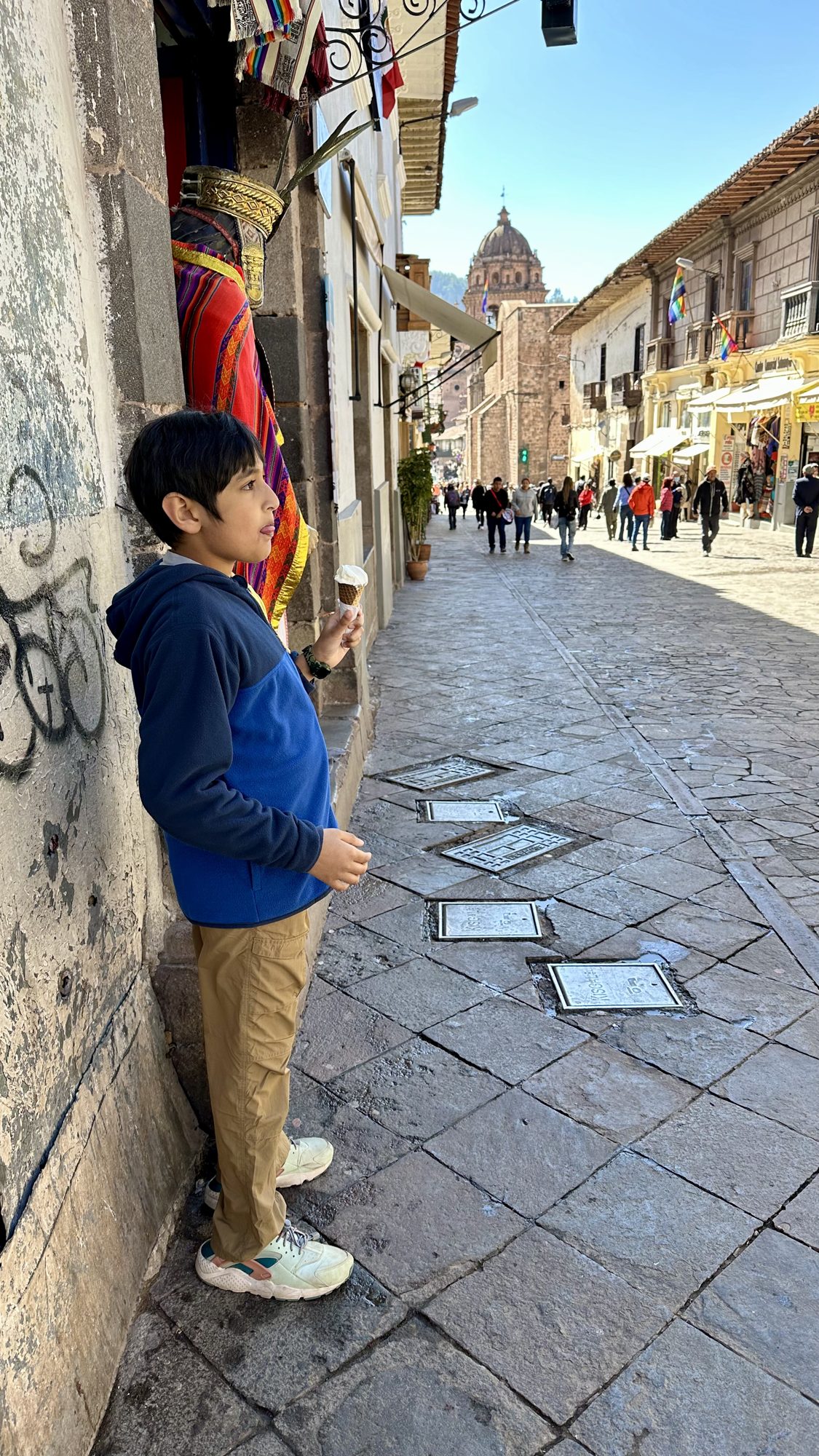
Markets along the streets of Cusco.
The walk took about 20 minutes in pleasant weather, through traffic and the heart of Cusco: around the Plaza de Armas, under the arches and through some traditional neighborhoods. This huge market sells housewares, clothes, souvenirs, dry goods, meat, fruit, vegetables and much more.
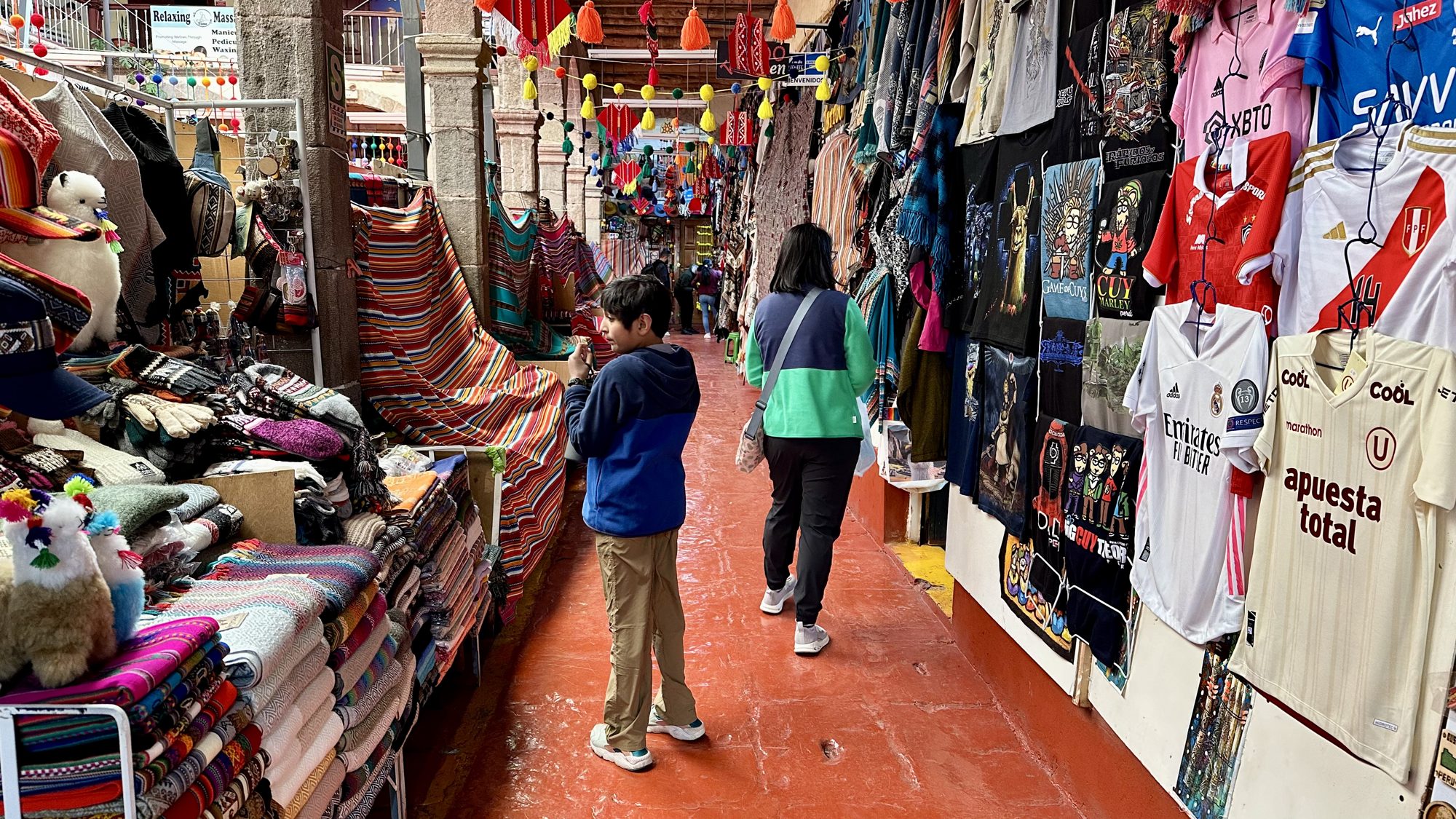
The markets of Cusco.
Negotiating is expected in Peru in general, but in this market, vendors were more likely to stick to their price or negotiate only a little. Still, chocolate and other food like quinoa, coffee, snacks, nuts and spices were quite reasonable. For clothing and jewelry, San Pedro was a bit pricier than other markets. The meat section was hard for us to walk through, with the smell and the sight of dead animals everywhere. Apart from that, the market was a pleasant experience, even with the crowds.
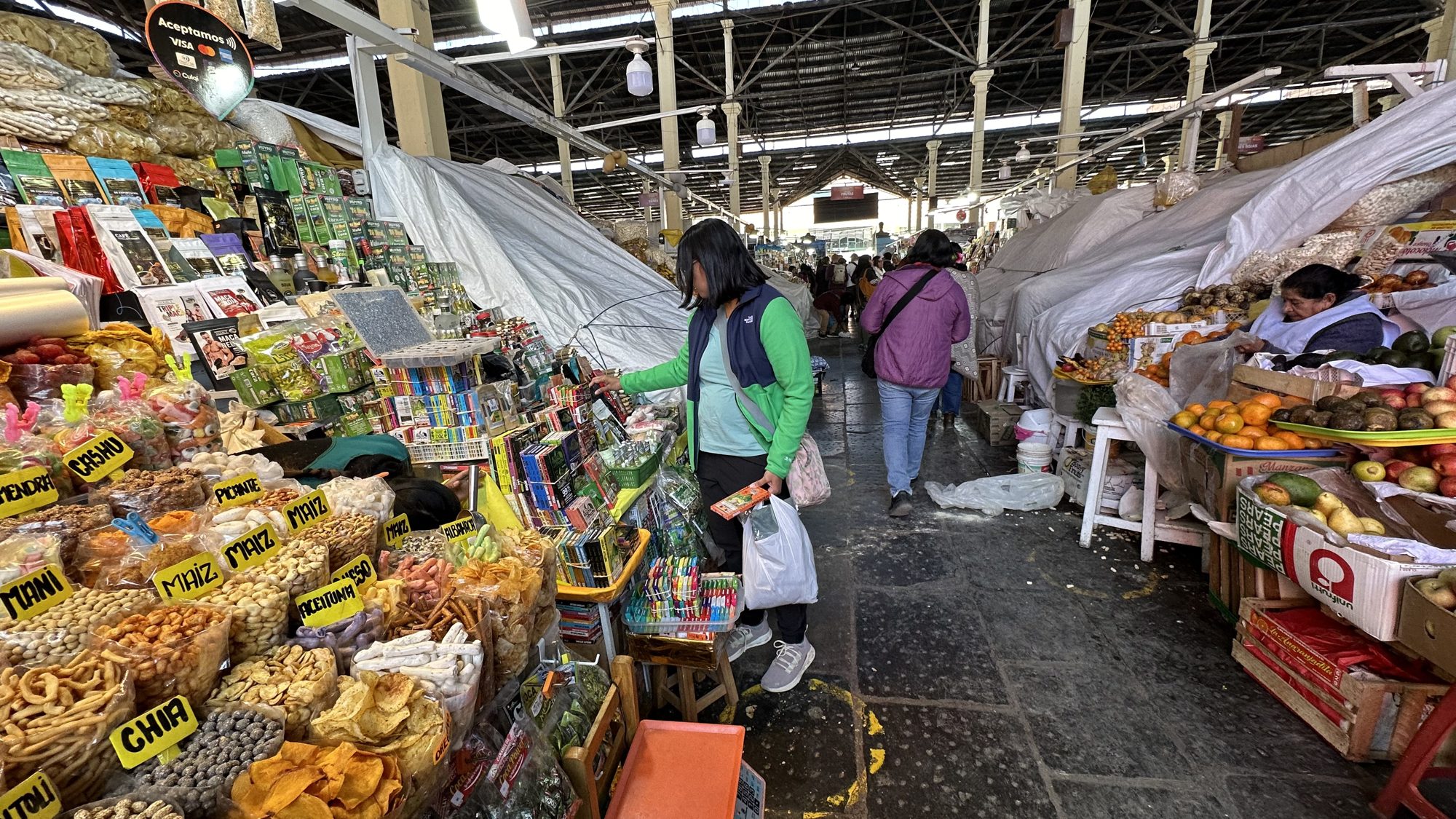
San Pedro Market.
After shopping, we lugged our purchases to lunch at Gharwal Indian Restaurant, a hole in the wall right next to the local train tracks, about a 10-minute walk from the market. The food took a while, but it was delicious. We enjoyed the freshly made, comforting curries and pakoras, then went back to drop our shopping bags at the hotel.
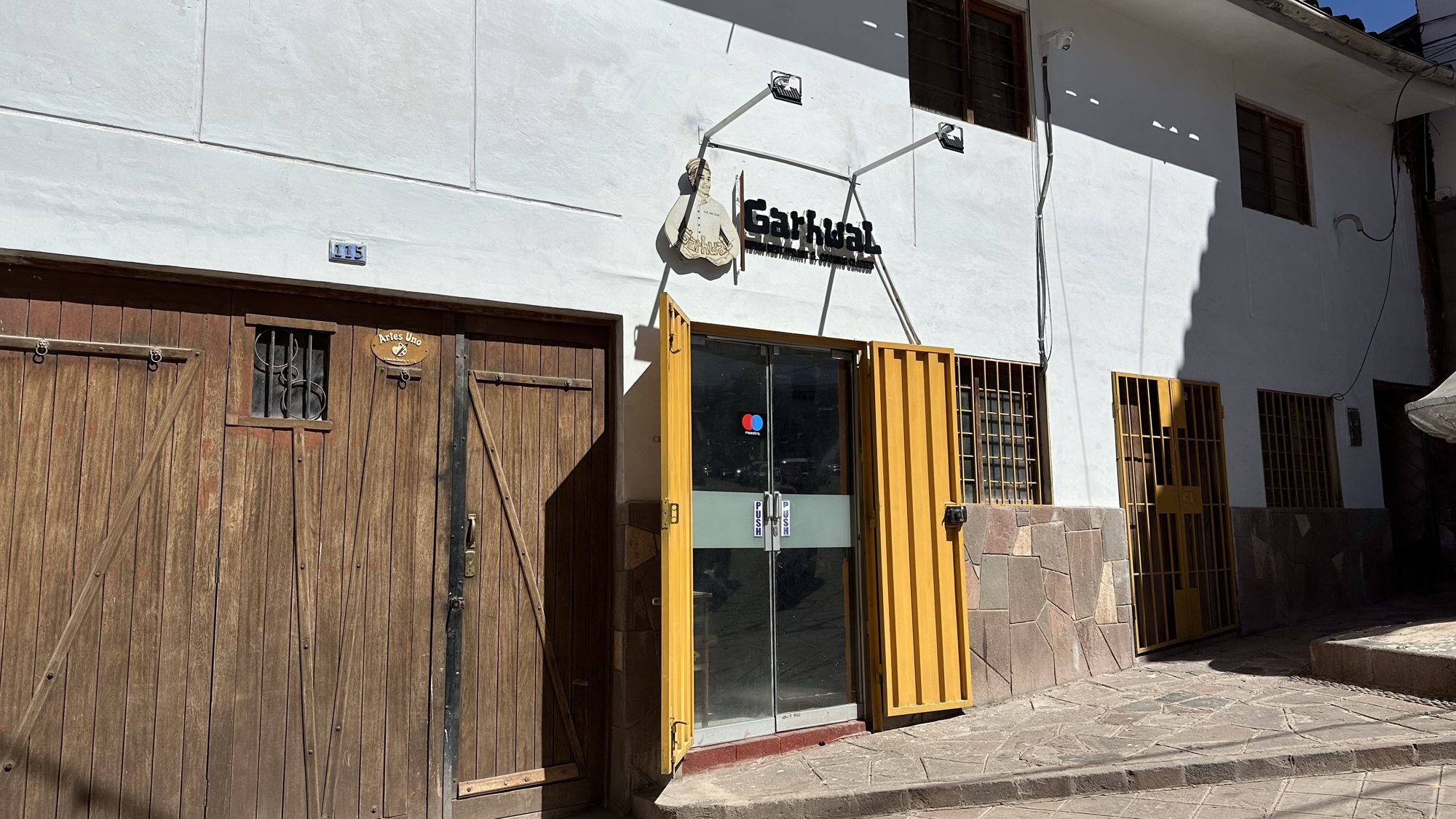
Gharwal Indian Restaurant.
Next we went to the ChocoMuseo in the San Blas neighborhood. Cooking classes are our son’s favorite travel activity, and since there weren’t many kid-friendly vegetarian cooking classes in Cusco, we tried this chocolate-making workshop. Having done a few in-depth chocolate classes in Costa Rica, we chose the short 45-minute workshop. We arrived on time for what turned out to be a private class (we were the only ones), set up at the back of the chocolate shop.
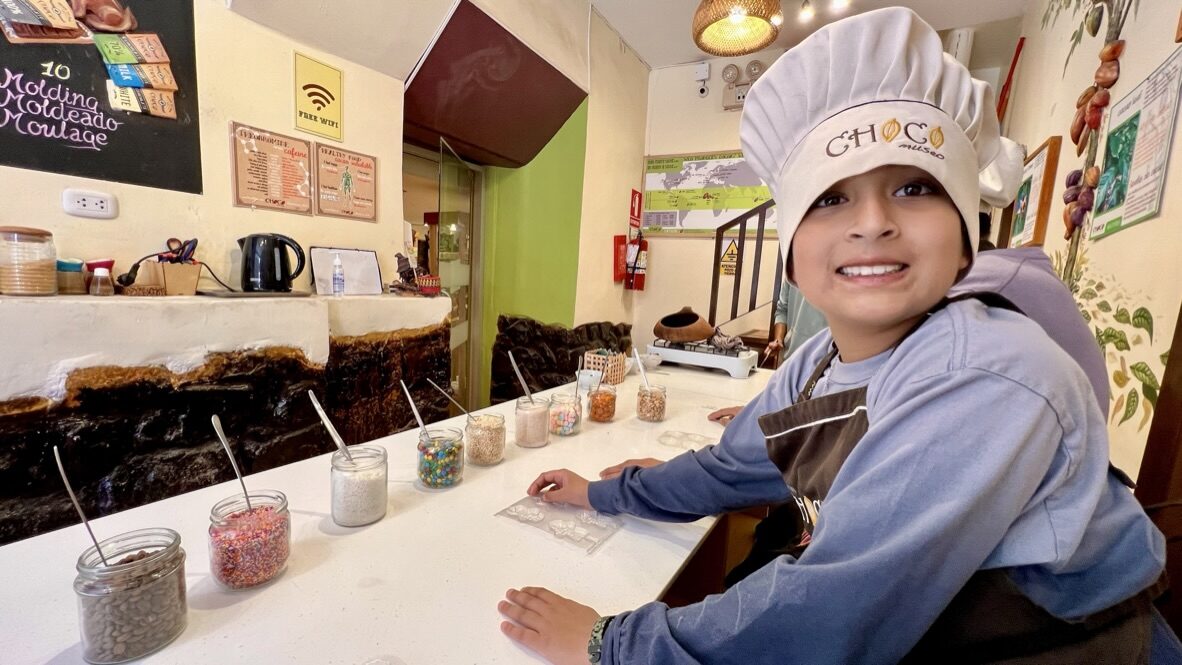
The ChocoMuseo workshop.
Our instructor briefly covered the origin of chocolate, where it grows in the world and how it’s processed. We picked molds from a variety of options and chose milk or dark chocolate. We filled the molds with melted chocolate and toppings like Maras salt, marshmallows, M&M’s, coffee beans, sprinkles and nuts. Each mold sheet made about four to six chocolates. When we were happy with our creations, we handed them back to the instructor to chill for about 45 minutes.
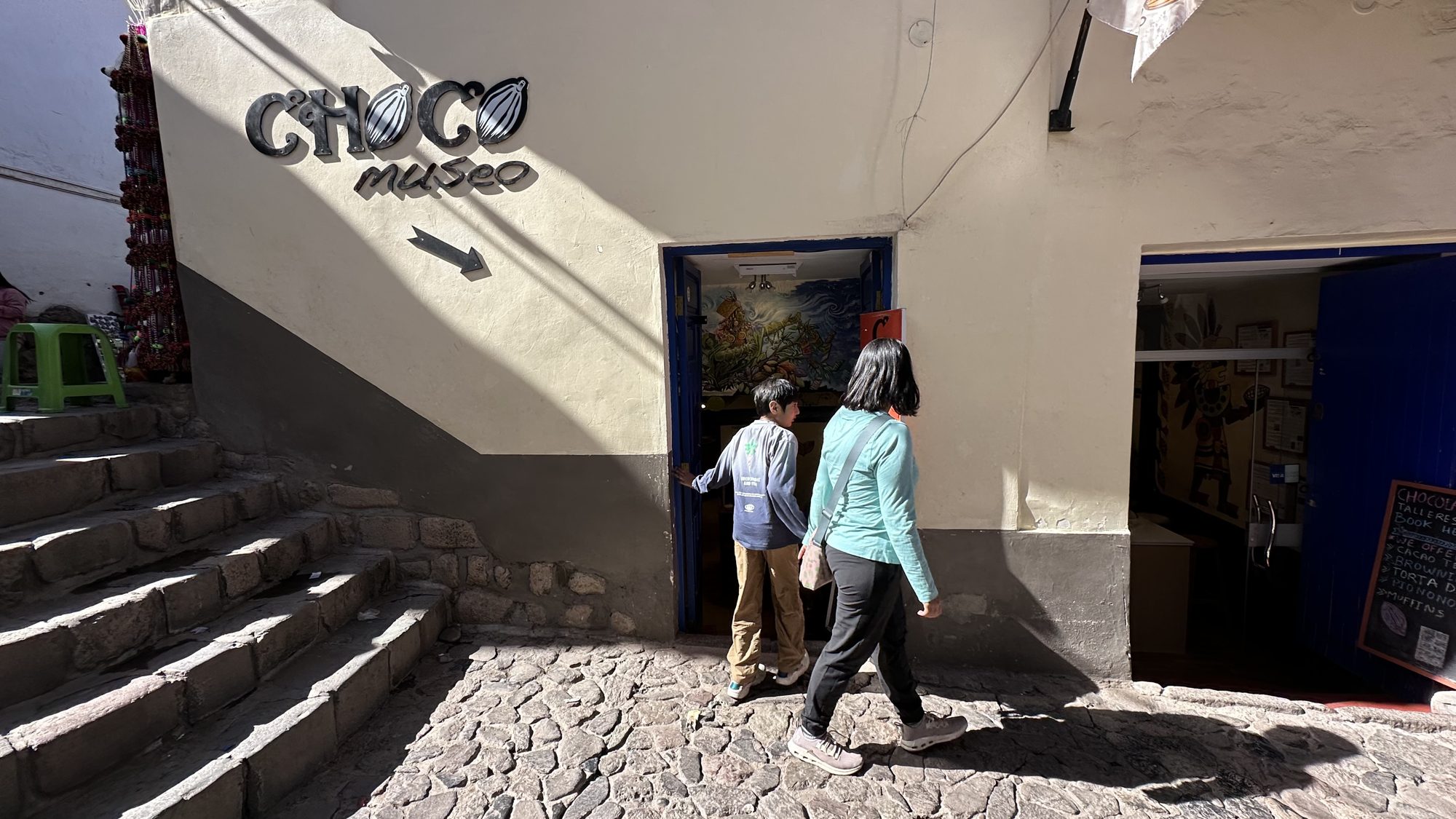
The ChocoMuseo in San Blas.
We used the time to wander around San Blas. The narrow, winding, uphill streets are lined with souvenir and handicraft shops, and we did more shopping. There are many interesting cafes in the neighborhood; we had juice and coffee at one that looked like a garden. The San Blas market was small, with most shops closed. It seemed to be mostly food and housewares, so it felt like a market for people who live nearby rather than for tourists.
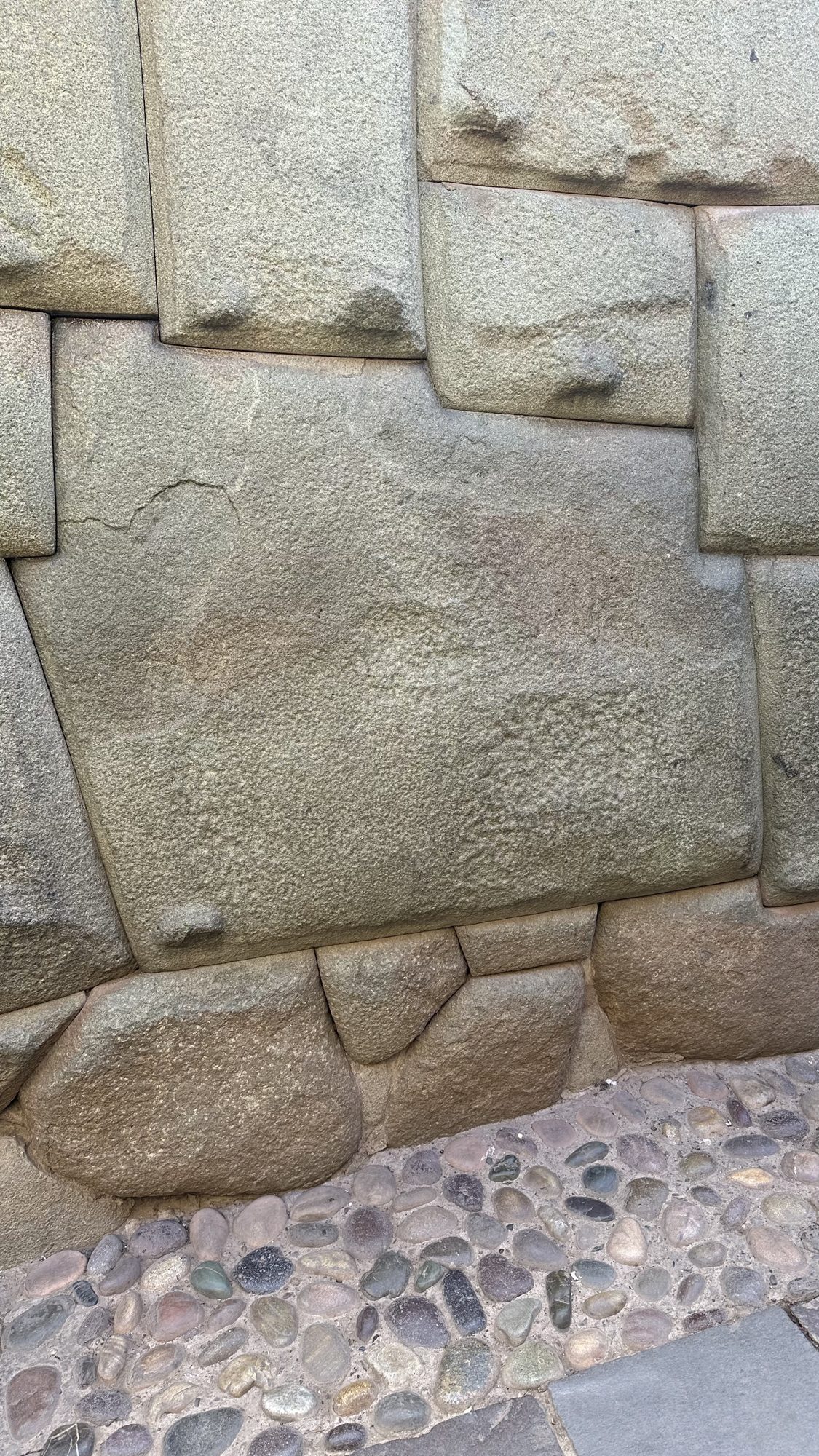
The famous twelve-angled stone, just around the corner from the ChocoMuseo.
After just under an hour of wandering, we picked up our chocolates and walked back to our hotel. About half of them were eaten before we got there.
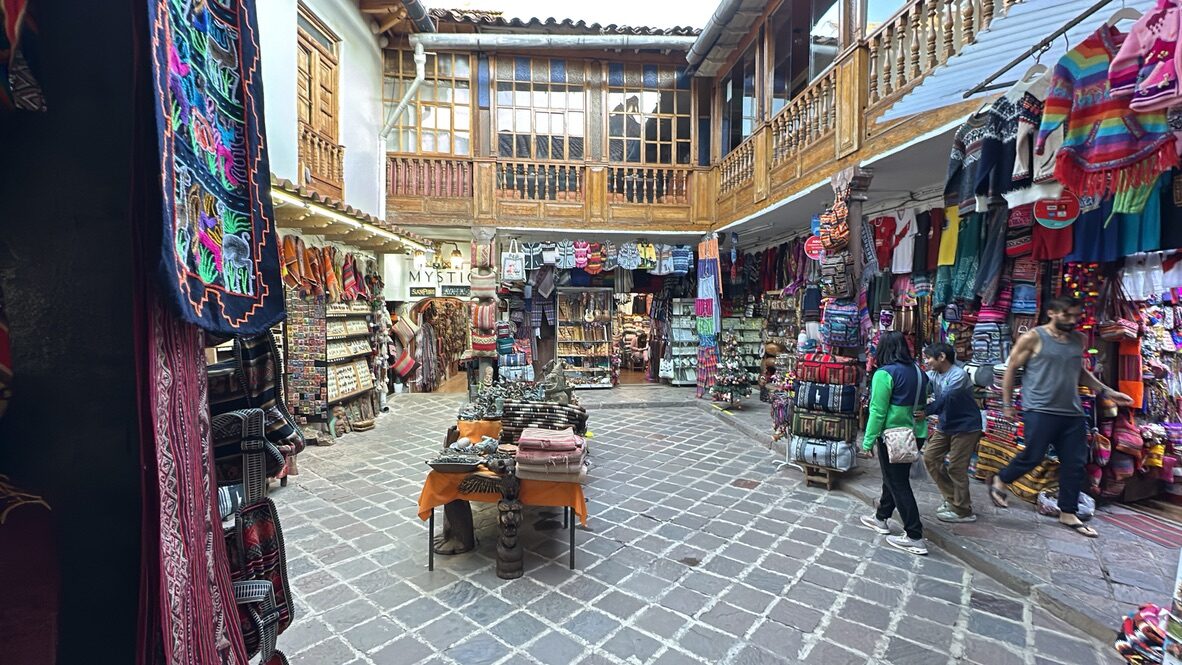
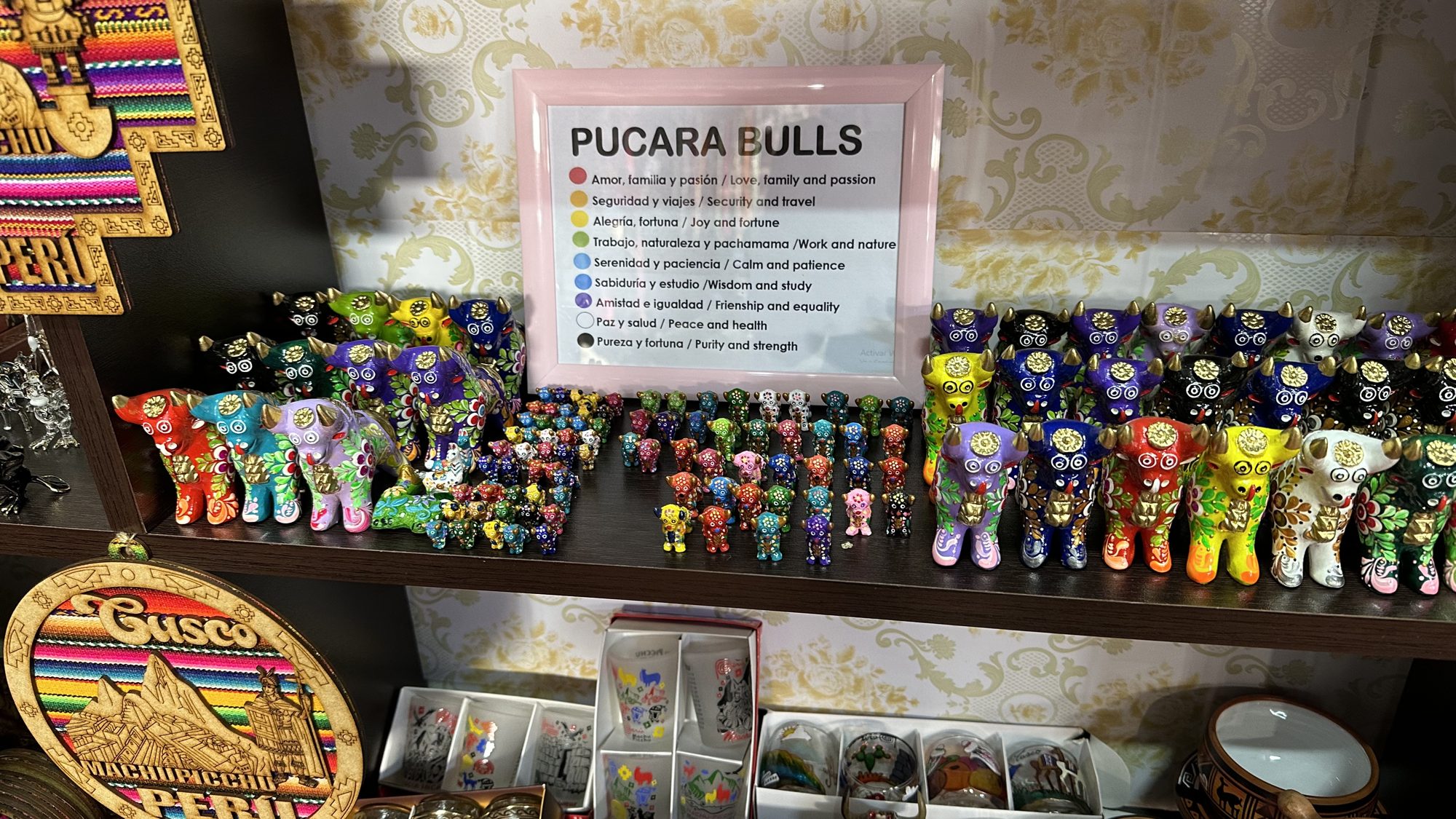
Shopping in San Blas.
For dinner, we wandered the uphill streets again to Green Point, a vegan restaurant beautifully set up inside a greenhouse, with plenty of heaters for warmth. The floor is earth, grass and garden paths, and the tables and chairs feel cozy. We tried the pad thai, ramen and vegan lomo saltado. Everything was nothing short of spectacular. It was not only our best meal in Peru, but our best restaurant experience in a long time: the flavors, textures, setting, service and overall experience were perfect. We highly recommend it. It’s in a nice, more residential neighborhood, with shops and locals out and about.
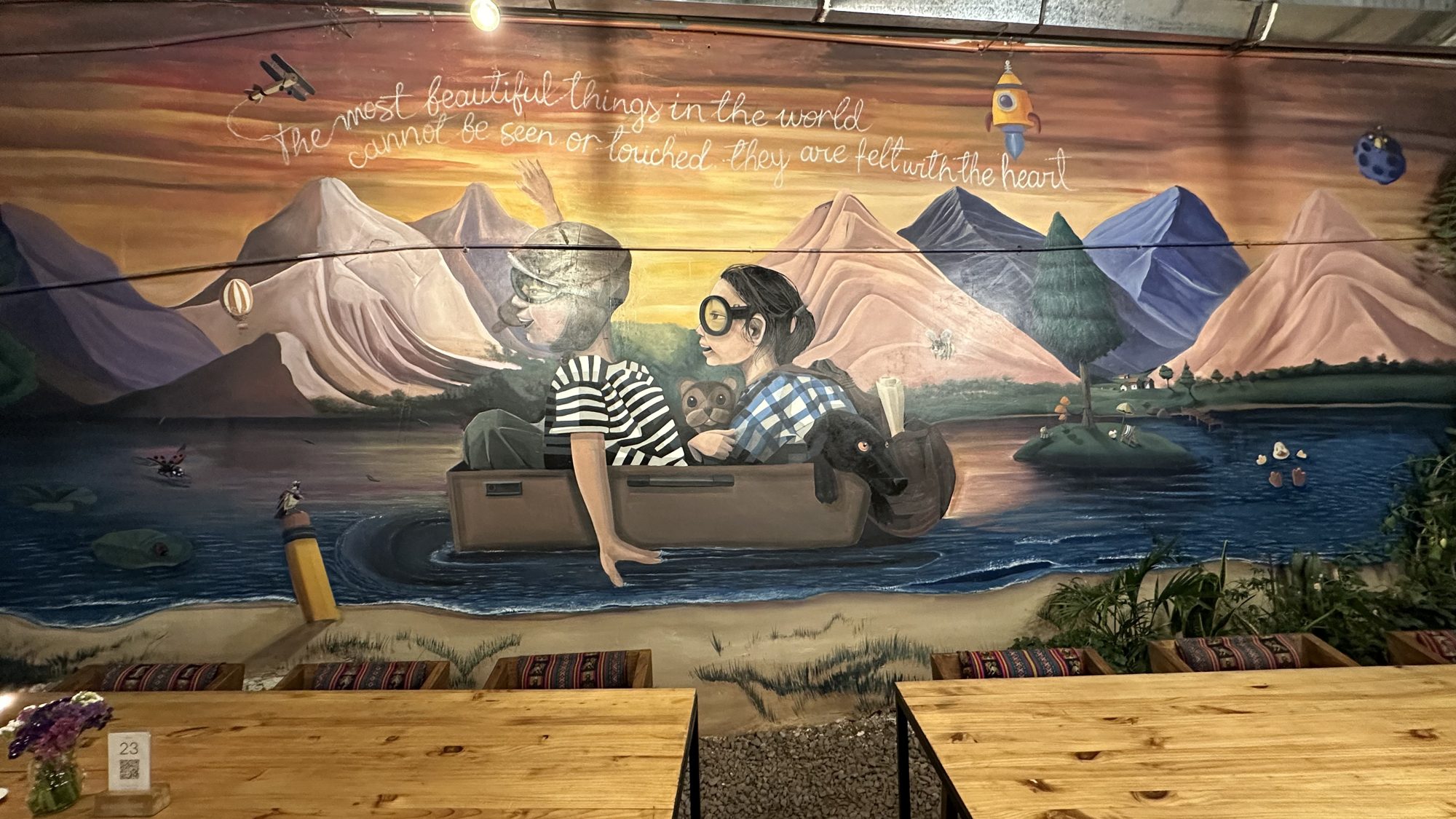
Green Point restaurant.
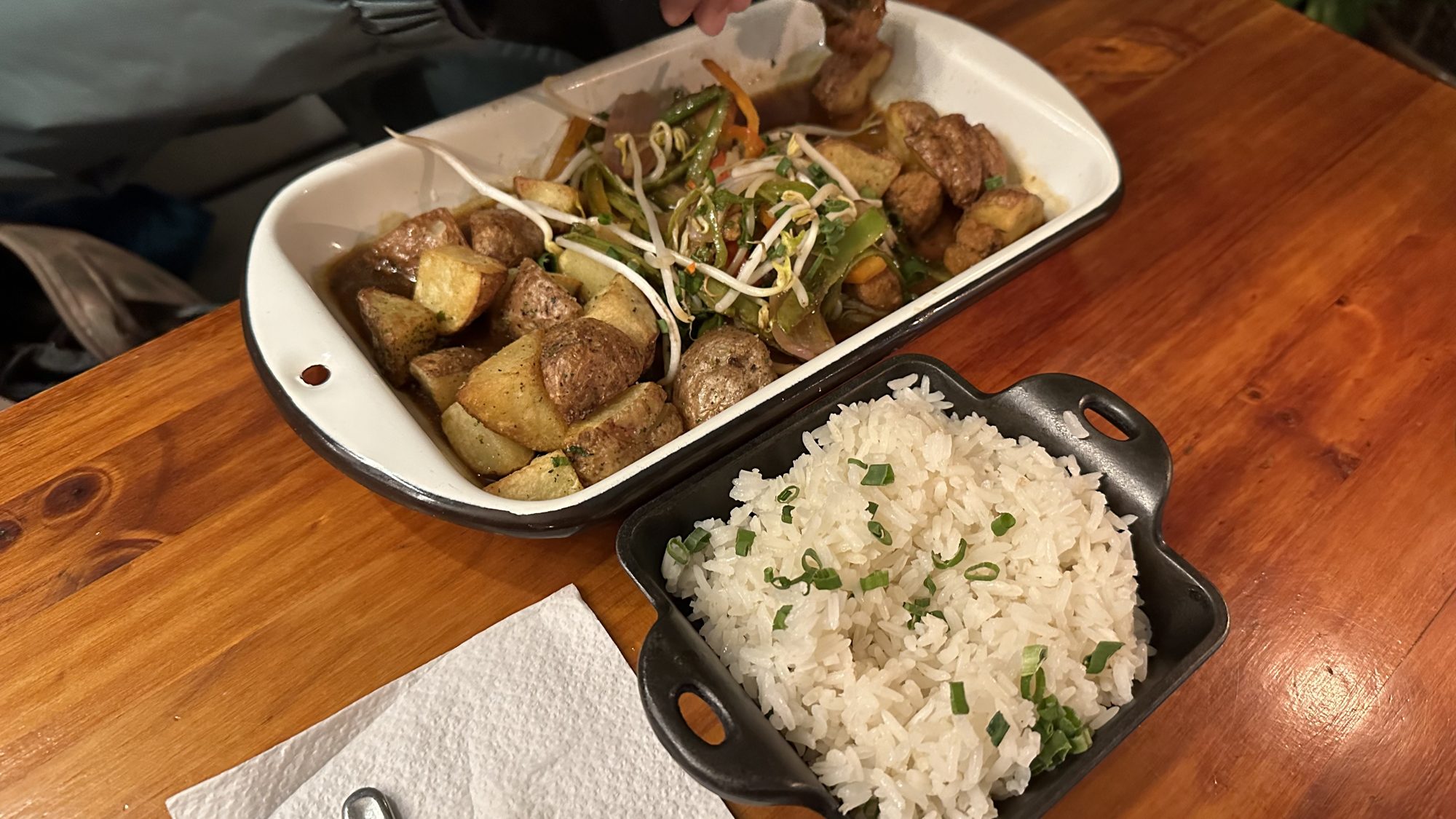
Vegan lomo saltado at Green Point.
Day 7 PeruRail from Cusco to Puno
After a cozy breakfast at our hotel, a taxi took us to the station, 10 soles for a ride of under a minute. Like the Machu Picchu train, this one asks you to check in about an hour before departure, so we arrived early on a brisk morning. Luggage attendants tagged our bags and took them, and ticket attendants checked our tickets and passports and showed us to our seats. We kept our backpacks, but large and small suitcases went in the luggage car.
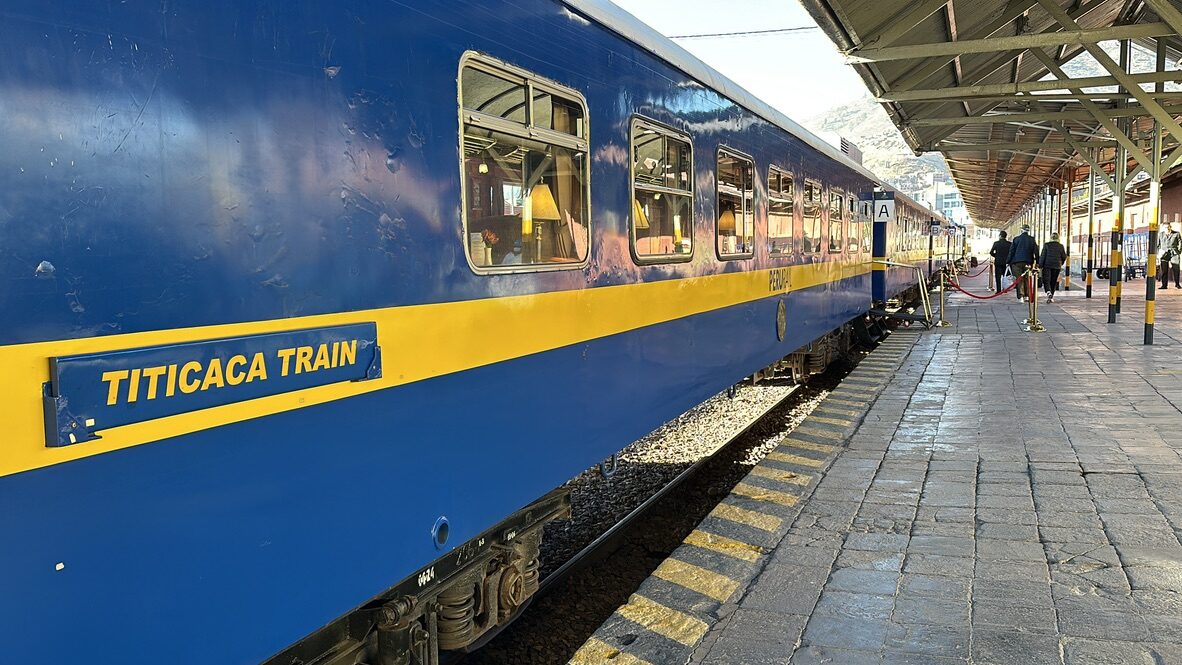
Cusco station.
The seats were in groups of four, two facing two with a table in between, with racks above for backpacks and jackets. The cushioned armchairs were comfortable, even for such a long journey. Before we set off, the servers took breakfast orders, and we had some coca tea to prepare for even more altitude. The train was about 80% full on this mid-June day. It runs three days a week and costs about $170 per person. We booked three months in advance.
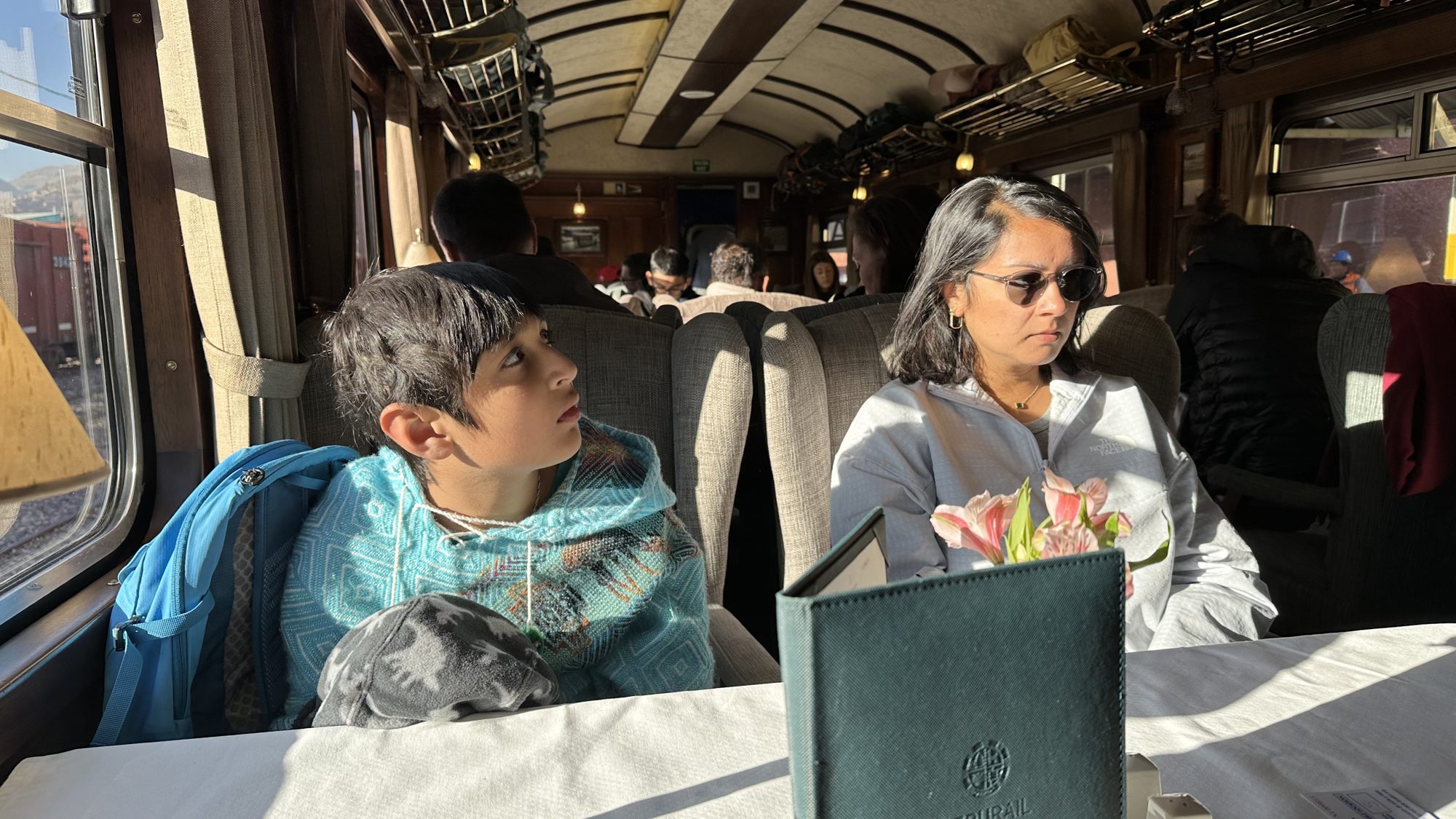
The seats on the Titicaca train.
As the train pulled out of Cusco, the servers took our lunch orders: one meat and one vegetarian option (which all three of us chose), each with bread, appetizers and dessert. As soon as the sprawl of Cusco passed, the view changed to mountain farmland. The best way to spend this journey is watching the ever-changing Peruvian landscape. The train has a beautiful observation car at the back, partly open-air, with couch-like seating for watching the views, reading or getting a drink from the bar. There are two shows during the first part of the journey: traditional music and dance, and a fashion show of alpaca wool clothing. Both were culturally immersive. In more than 10 hours, we passed only a handful of small towns. Llamas and alpacas dotted the vast open plains and farmland.
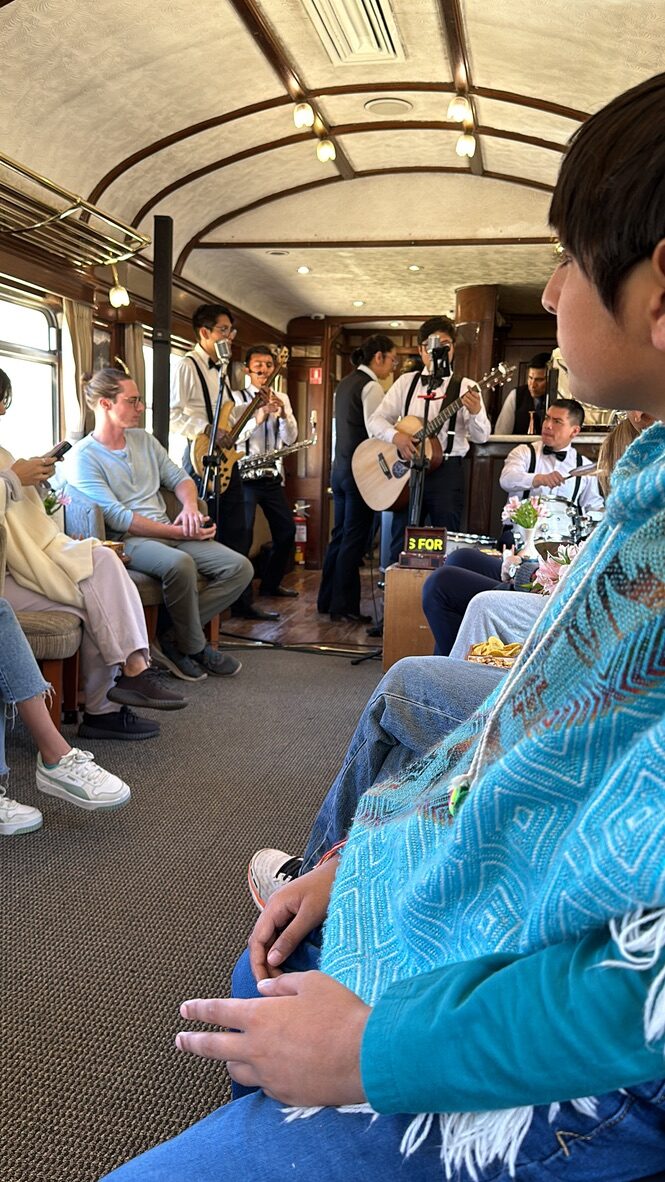
A music performance on board.
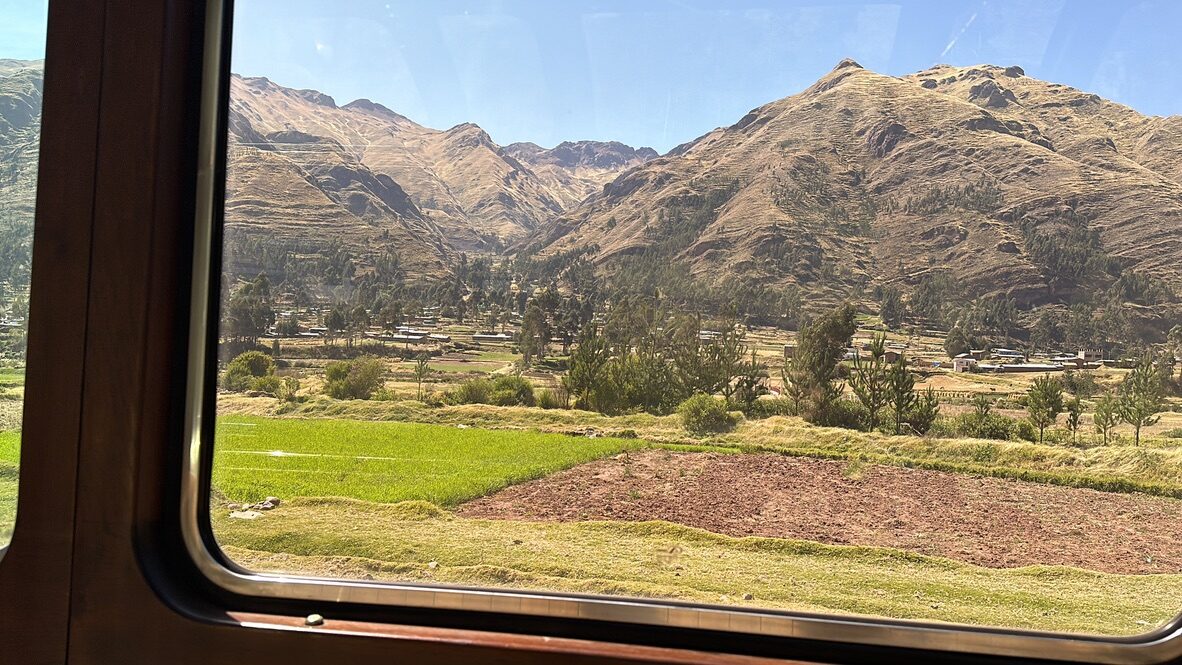
Views along the way.
Around 1 pm, the train stopped in a small village for a short fresh-air break. A handicraft market is set up there just for the train’s passengers, and an old church sits on a small hill. We had about 15 minutes to look around and take photos with the Andes and the train. The area was gorgeous, though the market sold mostly the same things we’d seen in Cusco. Back on board, lunch had started: first bread and salsa. We were incredibly hungry, but service was slow, as they have many carriages to serve. We enjoyed a gorgeous lunch of local quinoa and grilled vegetables, with an amazing chocolate cake for dessert. Afterward, we were ready for a nap. The view flattened out as we approached the Puno region.

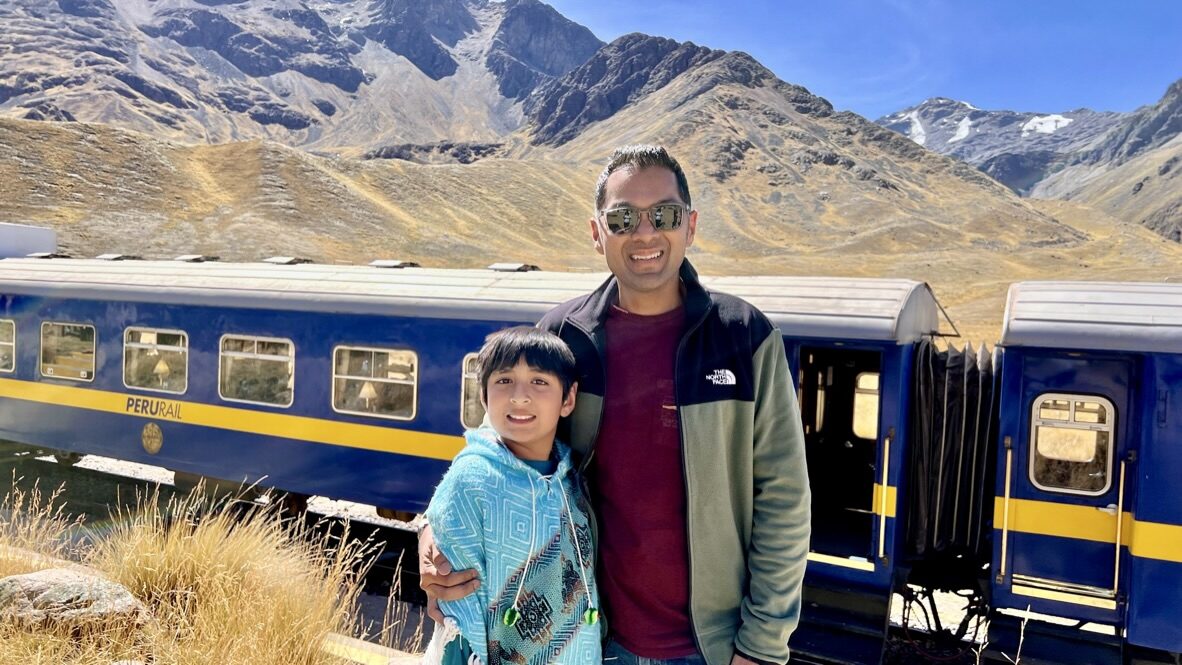
Views from the village stop.
We spent the afternoon relaxing, reading, visiting the observation car and talking about our amazing trip so far. Passing through the town of Juliaca, it was fascinating to watch vendors and small shops move their goods and awnings to let the train through. The narrow tracks run right through the middle of a crowded market (a bit like the famous one in Thailand), and the shops leave just enough room for the train to pass without touching anything.
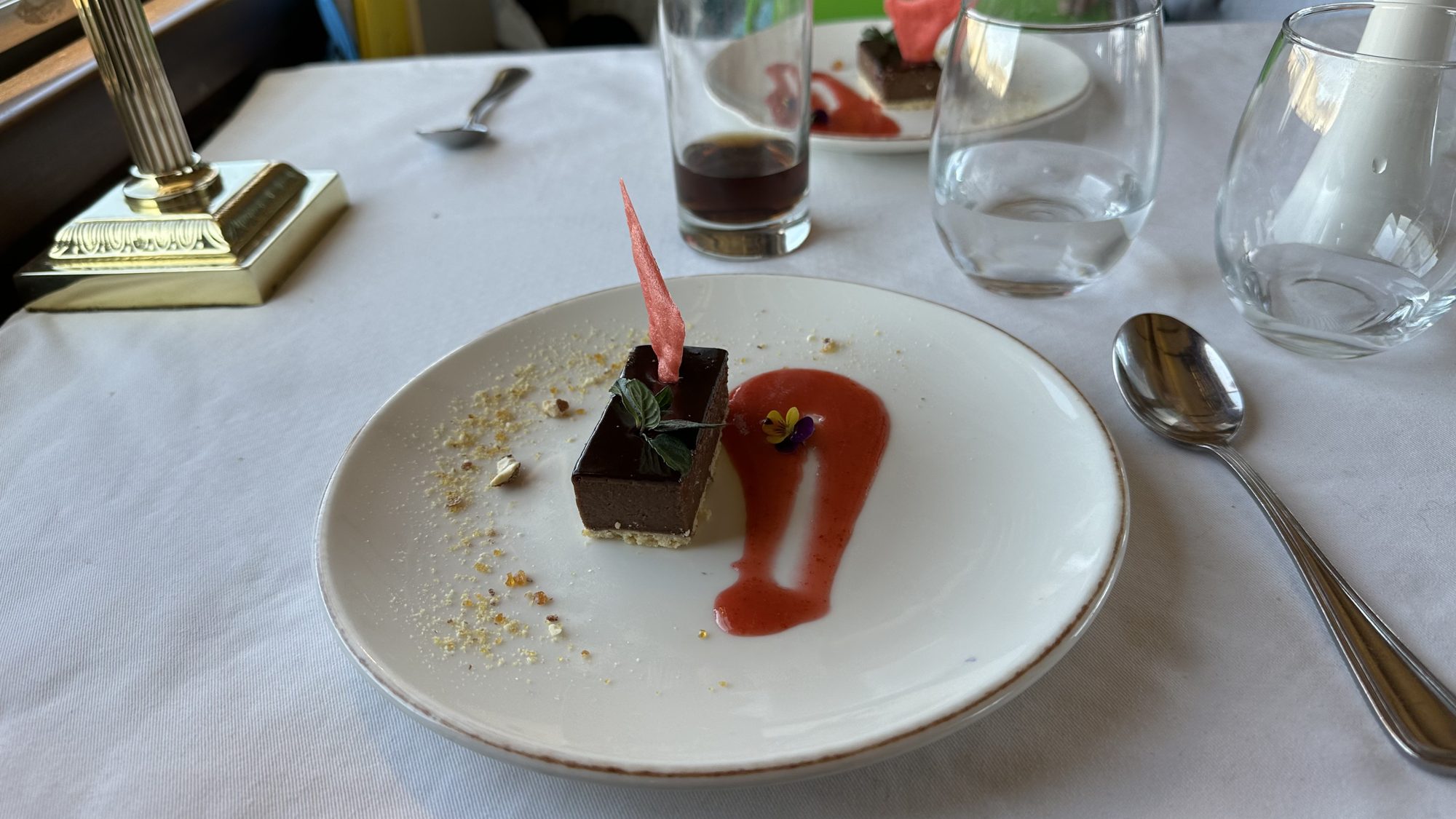
Dessert.
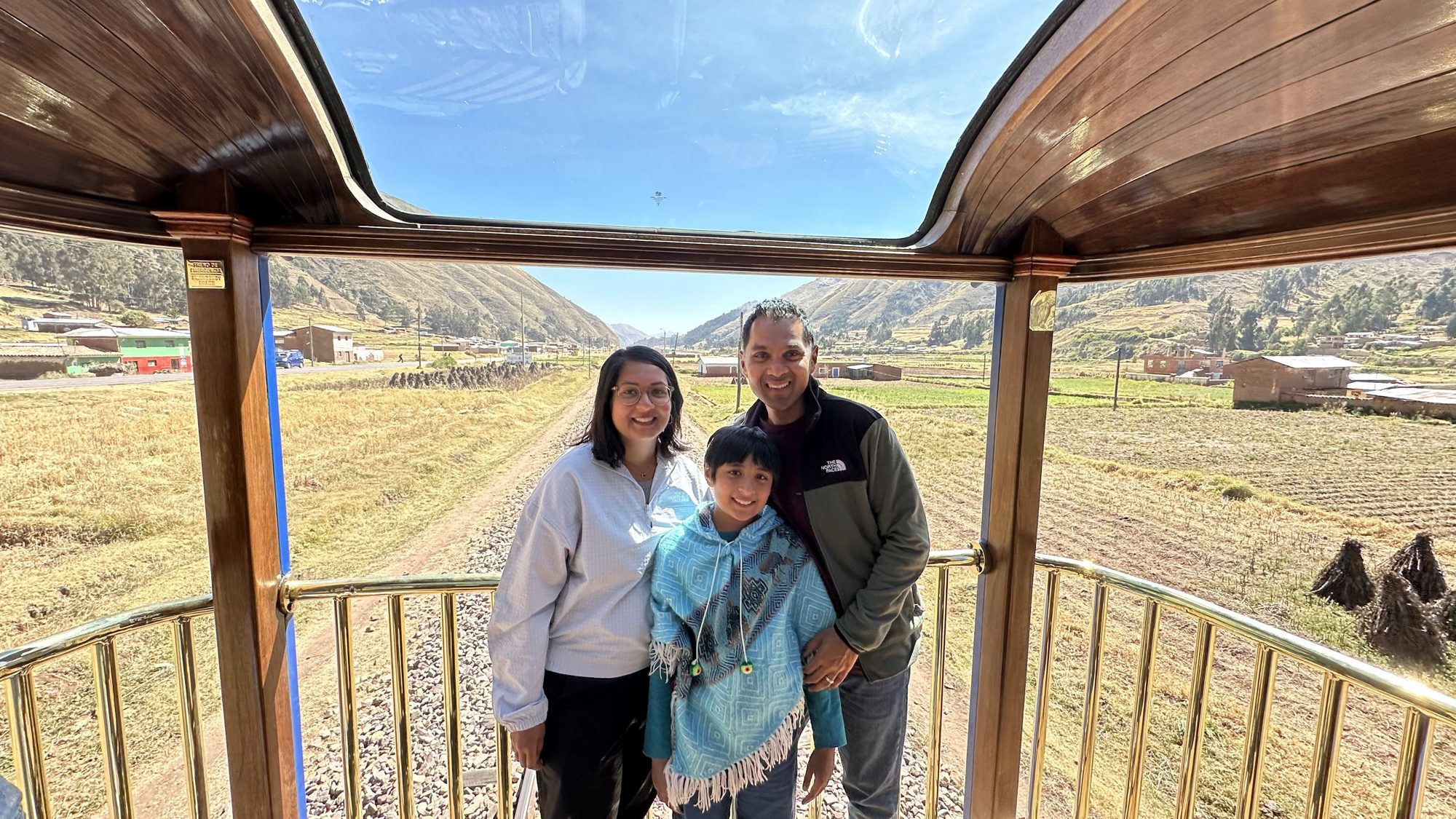
The observation car in the afternoon.
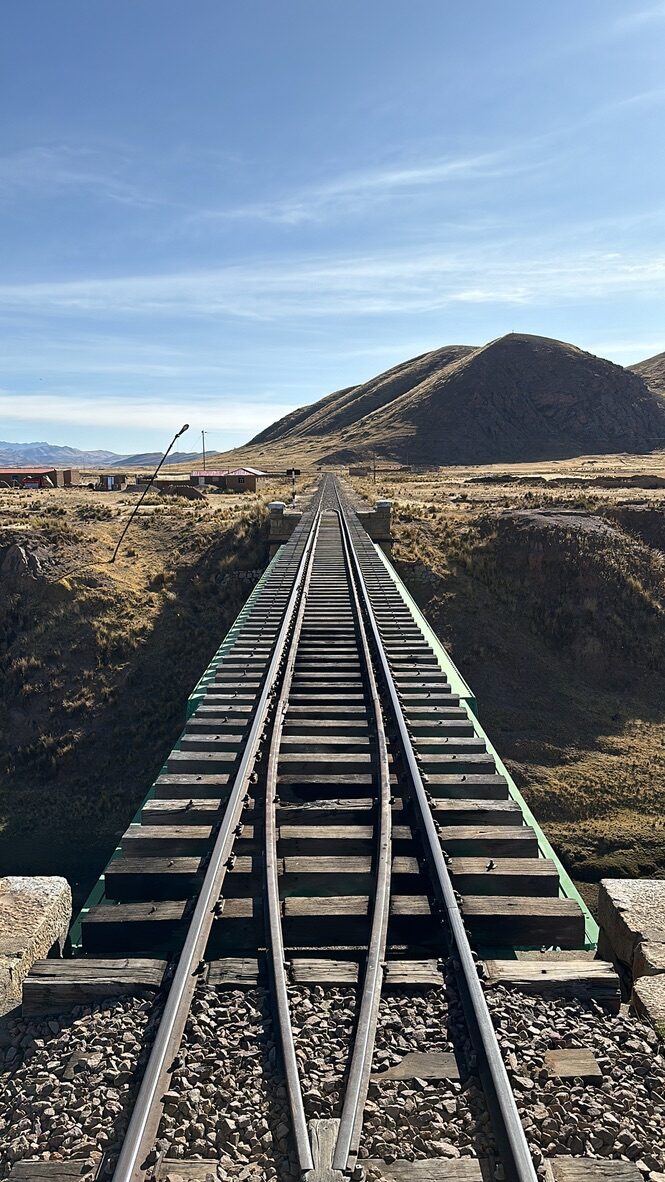
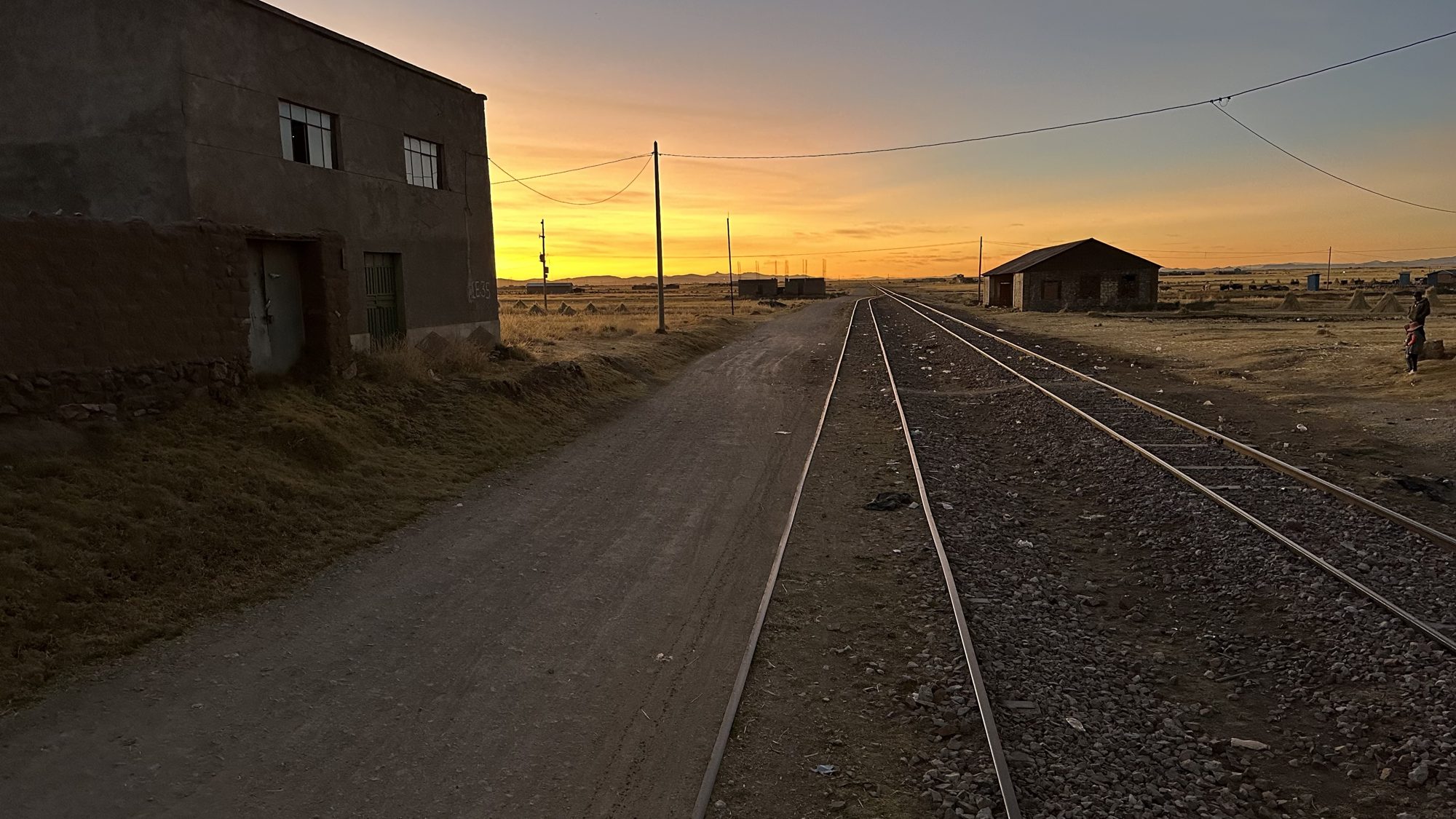
Sunset from the train.
After Juliaca, with the sun low on the horizon, we had teatime sandwiches and drinks, then waited for our arrival in Puno, right on time at 7 pm. We had to stay on board until all the luggage had been unloaded and lined up on the platform. Then we collected our bags and met our pre-booked taxi outside the station. Plenty of taxis are available if you haven’t arranged one.
Our hotel, Sonesta Posada del Inca, was about 10 minutes outside town, right on Lake Titicaca. It was completely dark when we arrived, so we couldn’t see much of the lake. The hotel was old but renovated. Nights here are around 40°F, and Puno is even higher than Cusco, at over 12,500 feet. Breathing was harder; we felt short of breath even sitting still. We settled in briefly, then had dinner at the hotel restaurant: a grilled vegetable sandwich, a pizza and quinoa soup. The food was simple and saved us going back into town. We looked forward to seeing the lake from our room in the morning.
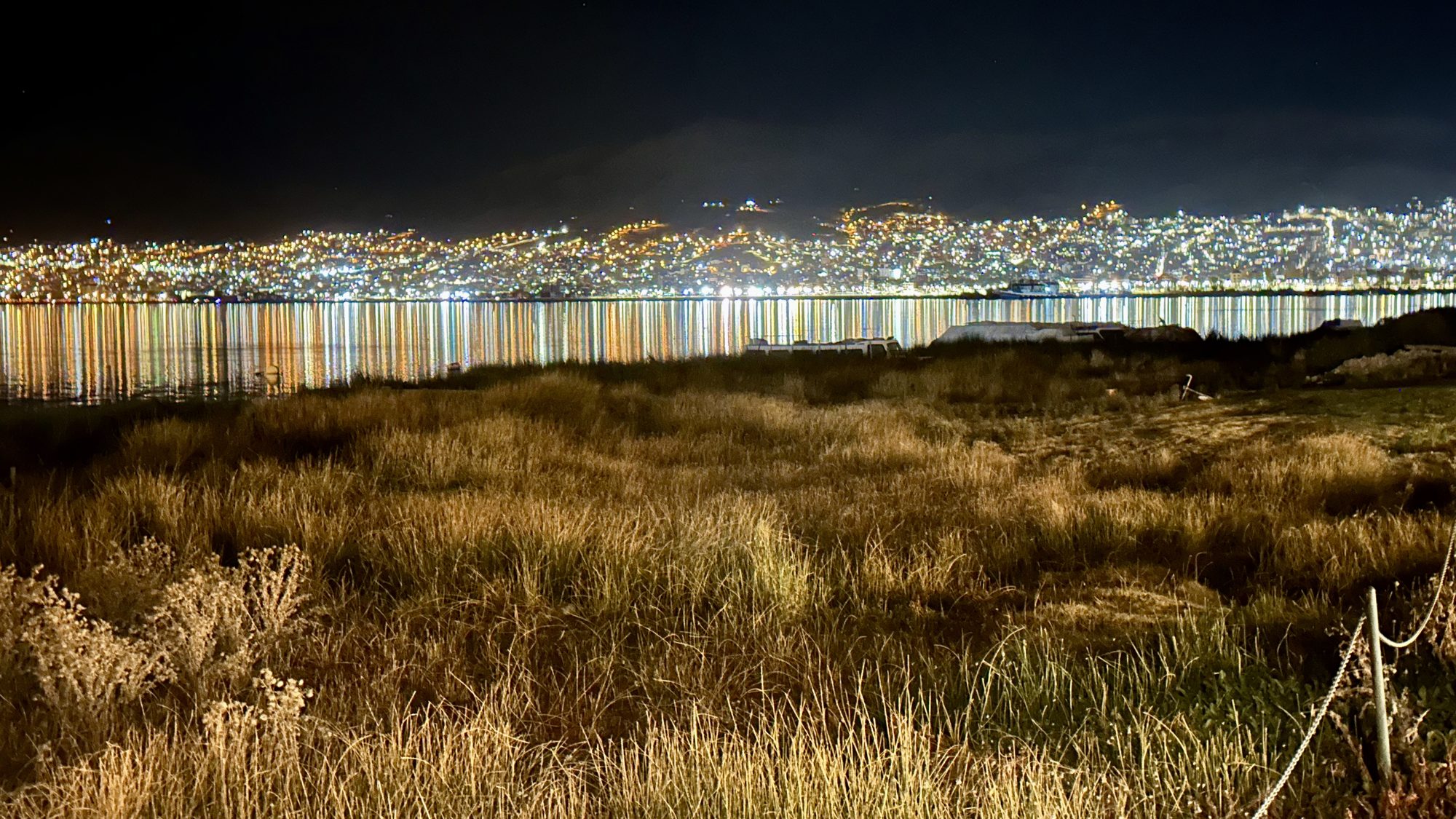
Lake Titicaca at night.
Day 8 Lake Titicaca, the Uros islands and Taquile
We were up early again for a 7:30 am tour pickup, and got our first daylight view of Lake Titicaca right outside our window. We were in awe of the lake’s beauty and excited for our tour. Breakfast at the hotel was pastries, bread, cereal and made-to-order omelets.
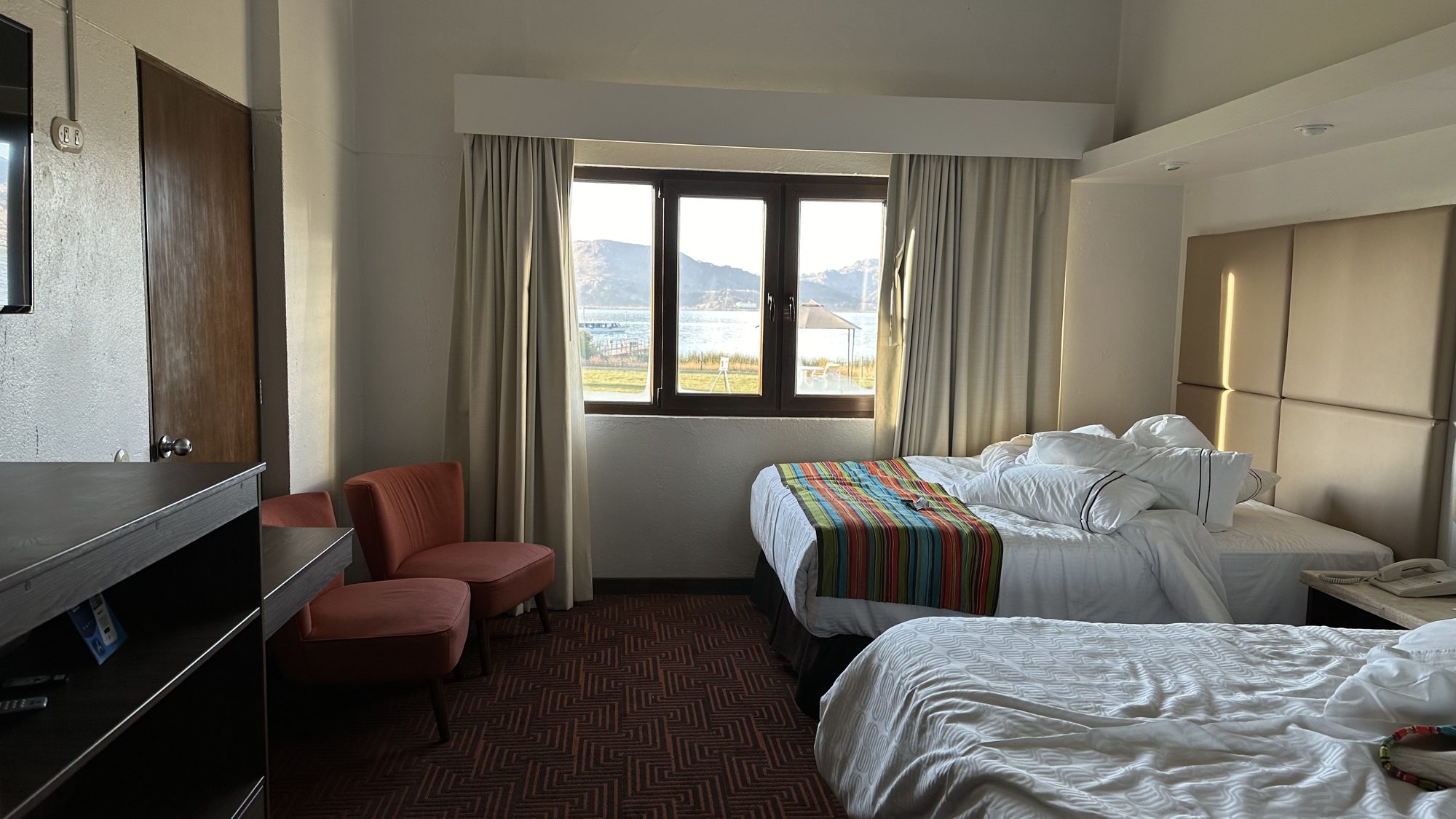
The view from our room.
As we finished breakfast, the taxi booked through the tour company arrived to take us to the dock. It looked pretty beat up, and we wondered how far we’d get before it broke down. As expected, it broke down just as it turned into the dock. The driver walked us to the tour boat, as we were close.
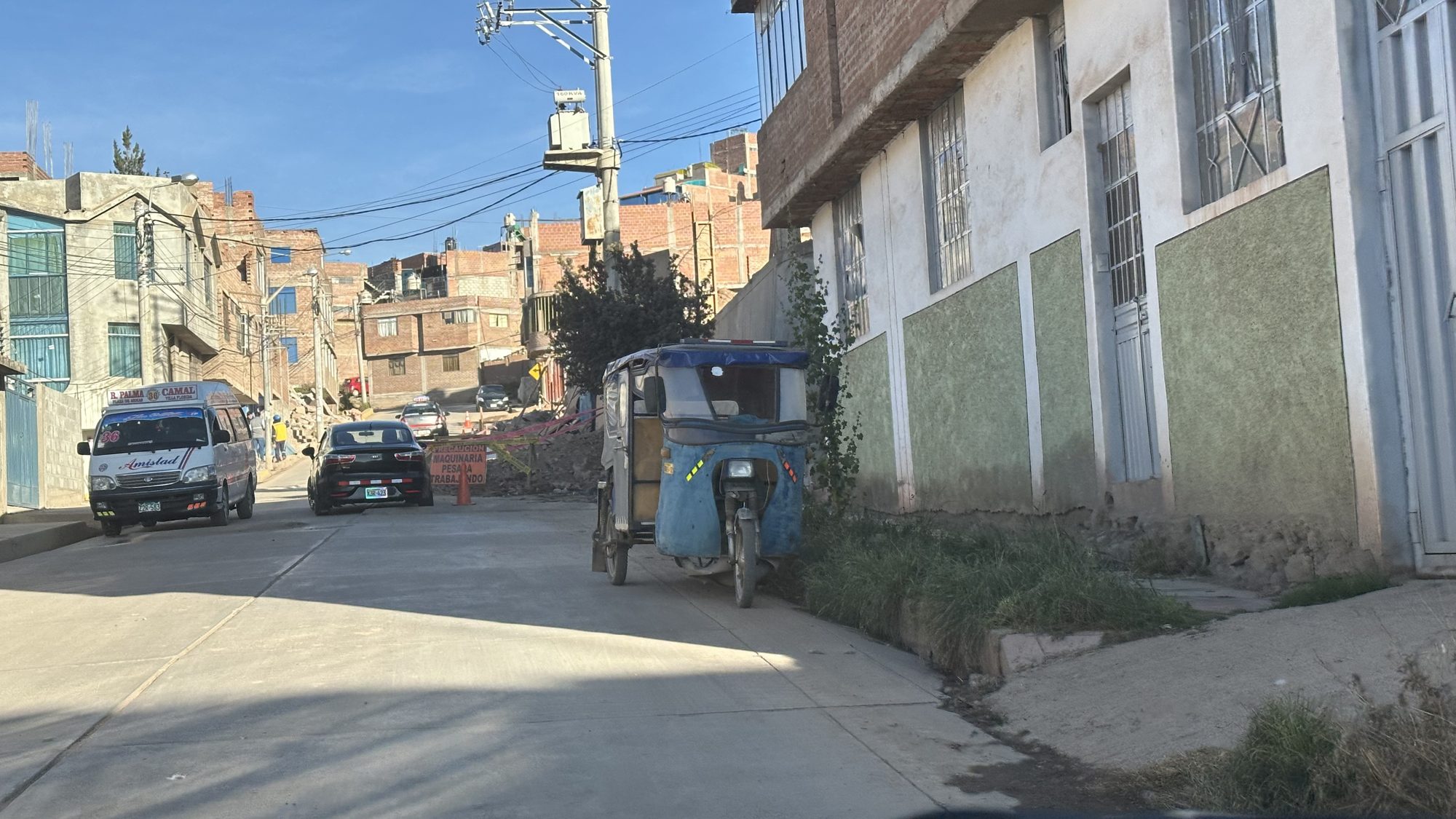
Driving to the port.
The tour boat was comfortable and clean, with a balcony on the top level and a restroom for emergencies only. Once everyone had arrived and paid, we set off. Our group was a mix of Peruvians and visitors from other countries like us. During the 45-minute ride, we learned about the culture of the Uros islands: how they are made and governed, and about the people who live there. Our guide told us that tour boats rotate among the inhabited Uros islands, giving every interested family a chance to host tours. There are so many islands that a boat like ours only visits each family’s island every few months. Touring is a great way to give back to the Uros community, and the souvenirs and handicrafts bought on each island support the family who lives there.
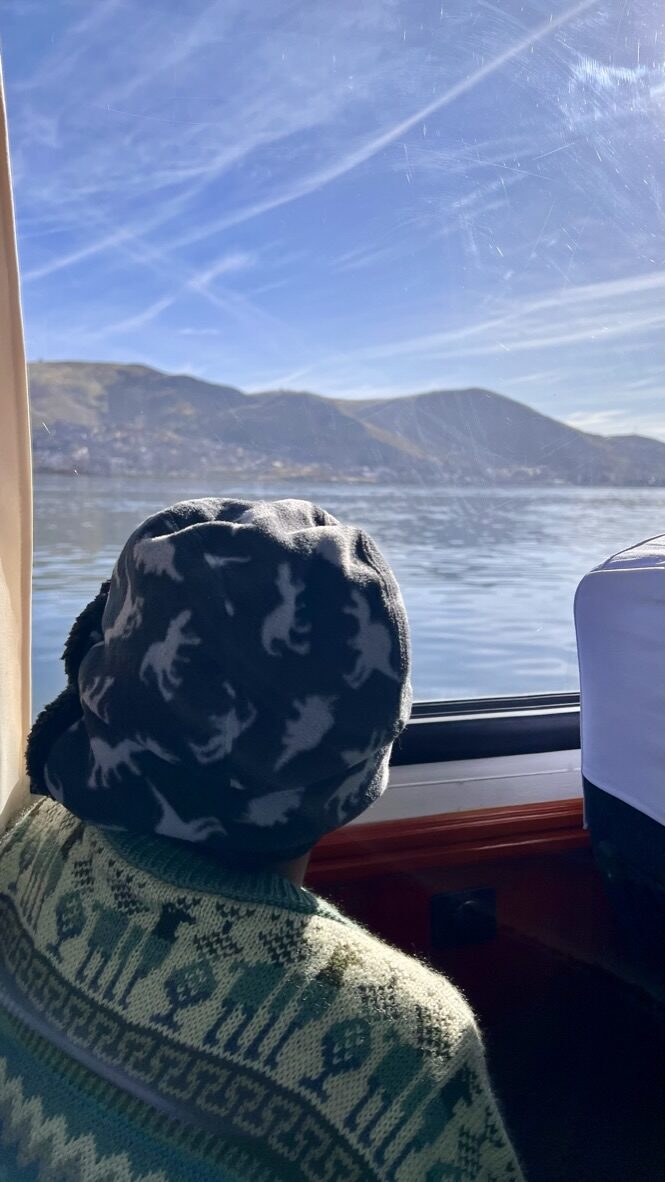
On the boat.
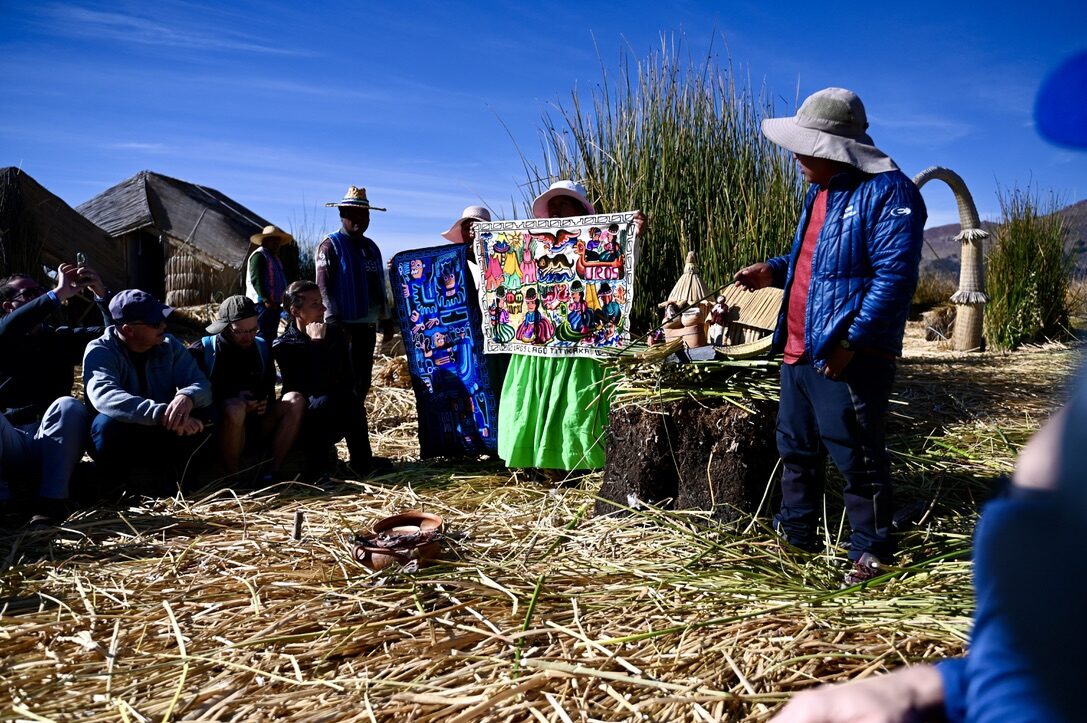
Storytime on the Uros.
When we reached the family’s island, we stepped onto an authentic man-made island, built by hand from the reeds that grow in the lake. The ground felt squishy under our boots but was completely dry. We sat on reed benches while the family greeted us. With help from the guides, they explained how they build, maintain and live on the island, acted out some of it with props, and sang traditional songs. We even tasted some of the reeds used to build the island (parts of them are edible). We were thankful to learn about such a unique culture and way of life.
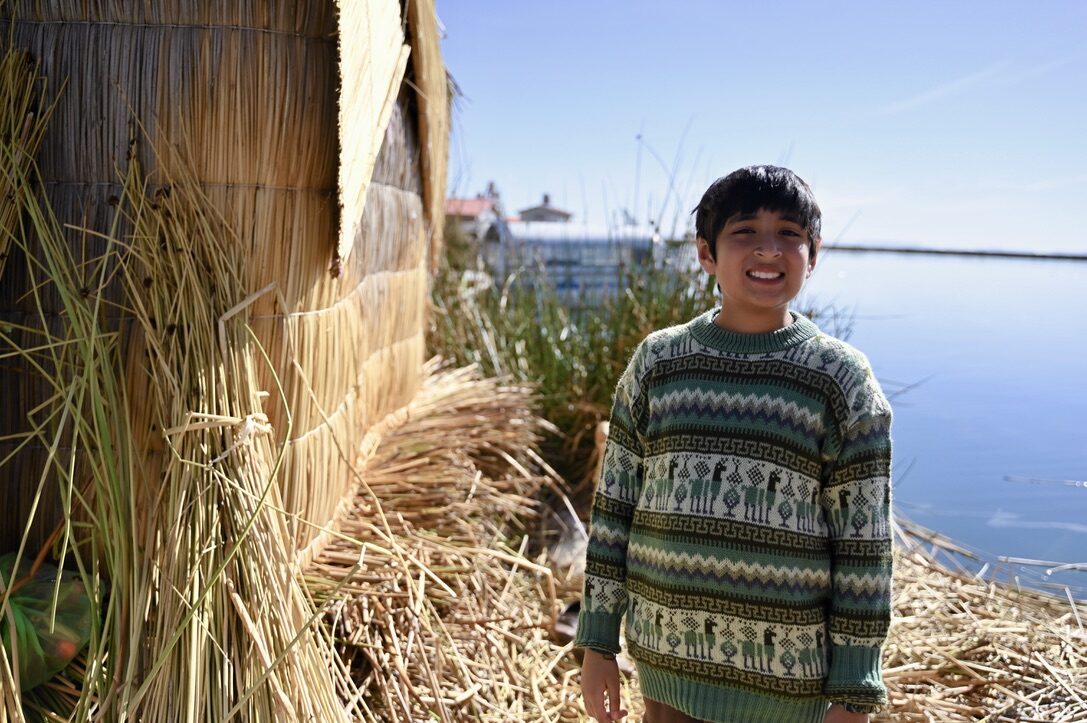
Near the family’s home on the Uros.
Next we were shown the family’s small, cozy huts, with the group split between them. We saw reed furniture covered in warm blankets and other textiles. The women in the family weave textiles, while the men hunt, fish and gather reeds to maintain the island. We had a few minutes to walk around the small island, take photos and buy souvenirs. Then we rode a huge two-level reed boat across the lake to a more touristy island.
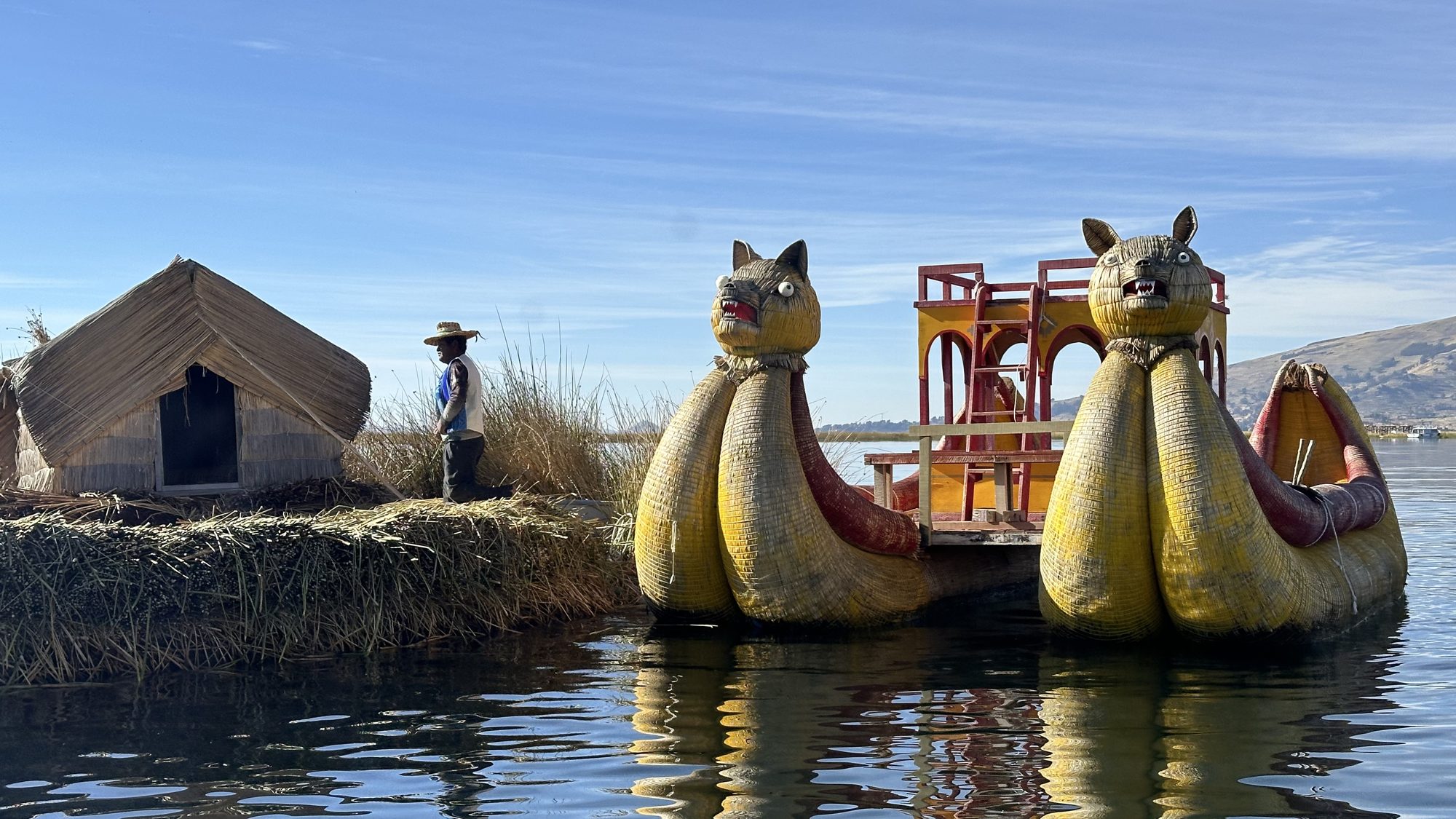
Handmade reed boats.
The ride took about 20 minutes, with a breeze and the quickly warming sun. The island had snacks for sale and paid restrooms. They aren’t fresh, but there are no others until the restaurant on Taquile, so it’s worth using them. After a few minutes, we were back on our tour boat for the 90-minute ride to Taquile Island.
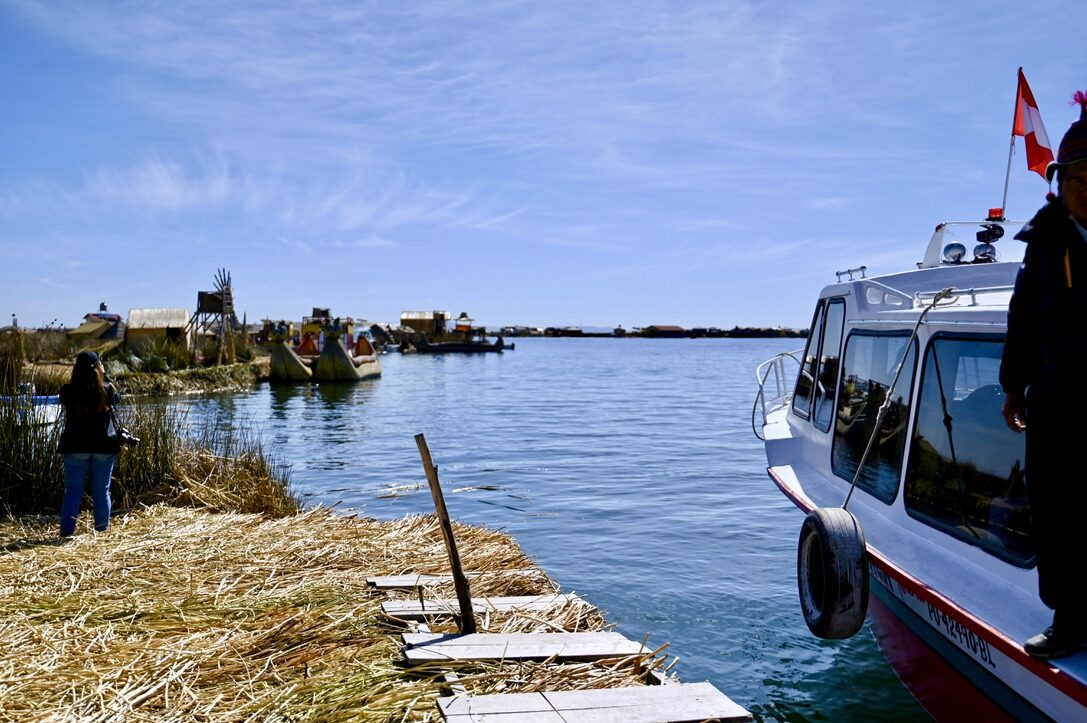
The tourist island of the Uros.
Taquile is recognized by UNESCO for its ancient culture and unique way of life. The islanders are largely self-sufficient: they fish the lake, grow their own produce, weave their own clothes, use local plant-based beauty products and maintain their own homes. Weaving is an important tradition, and the men are the specialist weavers. Belts, hats and bags carry meaning and are exchanged at weddings and other important life events. Our guide briefed us on the culture during the boat ride, and told us the islanders prefer to keep their lives private.
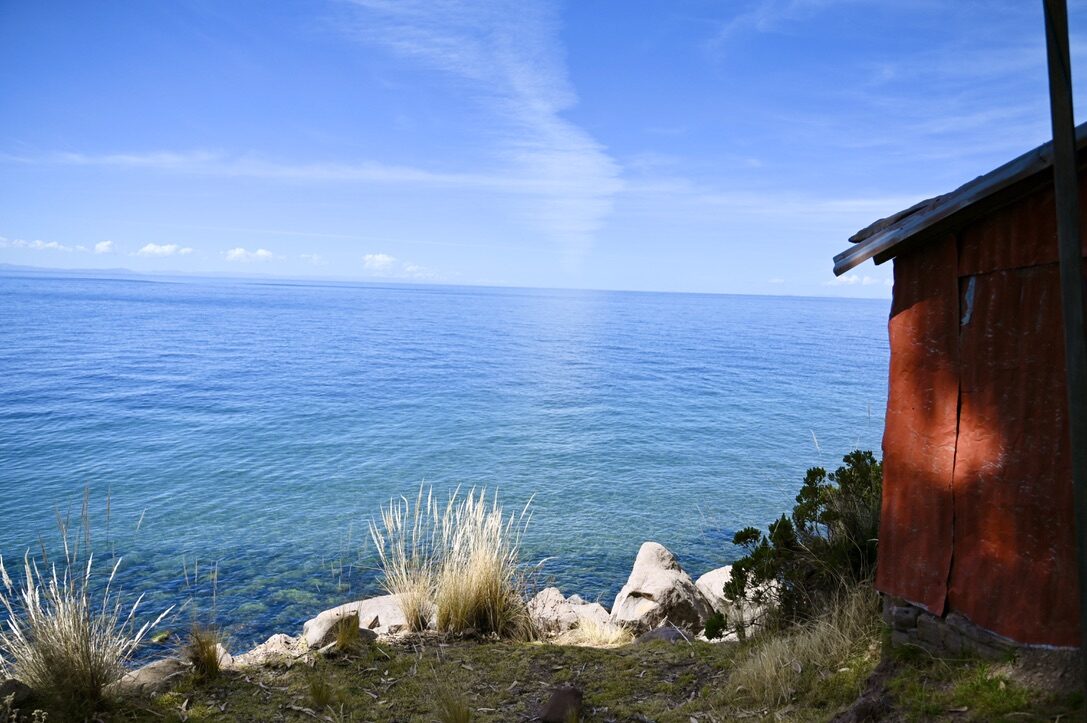
The view from Taquile Island’s harbor.
The island has two harbors and a handful of family homes that serve as restaurants. The island’s managers tell each tour company which dock to use and which family’s restaurant to go to for lunch. An organized tour is the only way to visit Taquile.
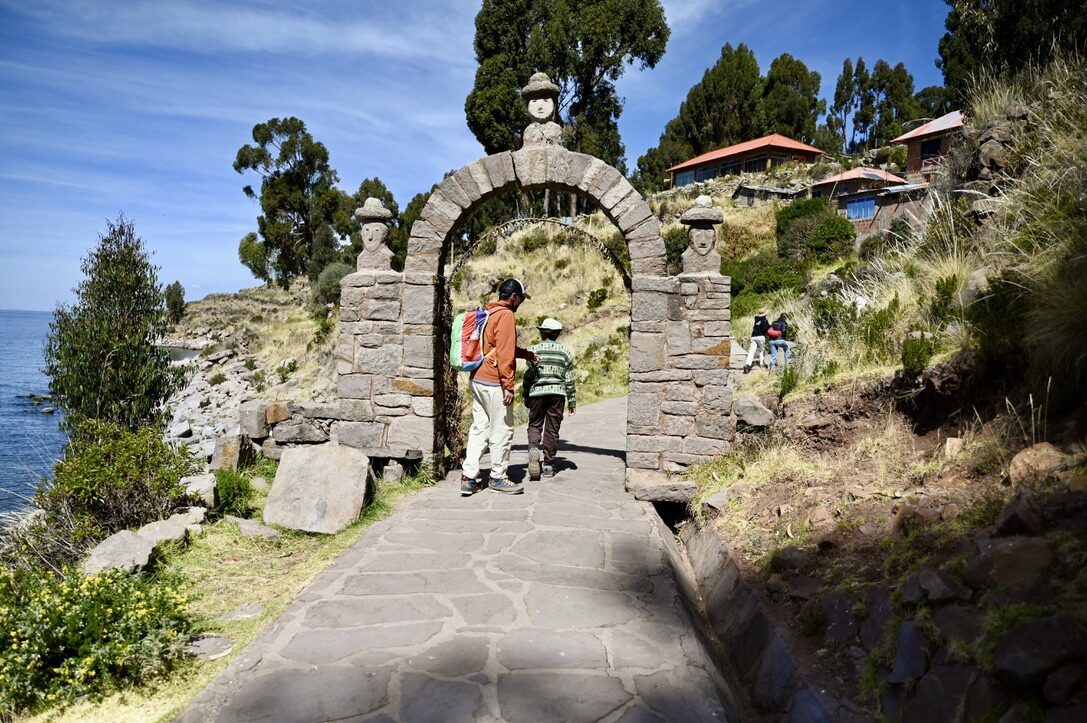
An arch along the path.
From the dock, we walked about thirty minutes uphill to the island’s Plaza de Armas. The climb was brutal at over 12,000 feet; we were huffing and puffing almost immediately. The views on every side were gorgeous. We fell to the back of the group, taking our time to catch our breath. Our guide gave us a handful of wild mint growing along the trail to sniff, to ease the altitude. From the plaza, we admired glorious views of the lake and the local architecture, and the locals gave a small welcome performance. There were other tour groups, but because the routes and restaurants are split up, we never felt crowded.
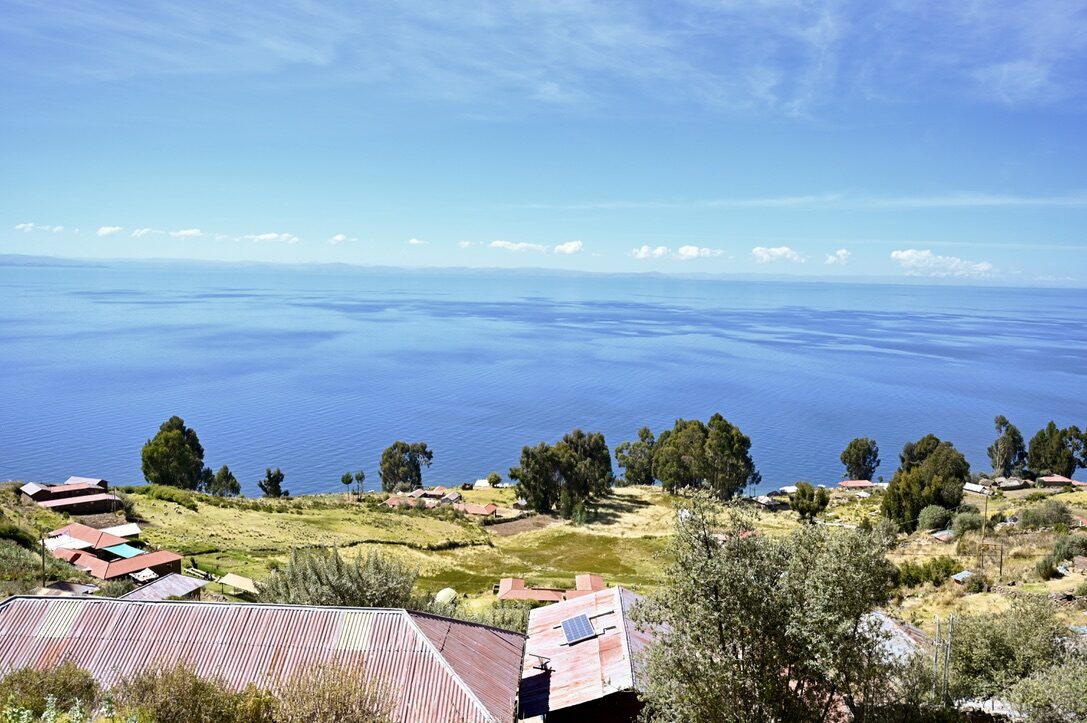
Climbing the trail toward the Plaza de Armas.
From there, the route to the restaurant was mostly (thankfully) downhill, along a cobblestone trail around the edge of the island. We passed village homes with backyards running down to the lake. With stone houses and a deep blue lake that looked more like the sea, this part of the walk gave us Amalfi Coast vibes. It was our favorite part, for the lake views, the local life and the quiet: no cars or electronic sounds at all.
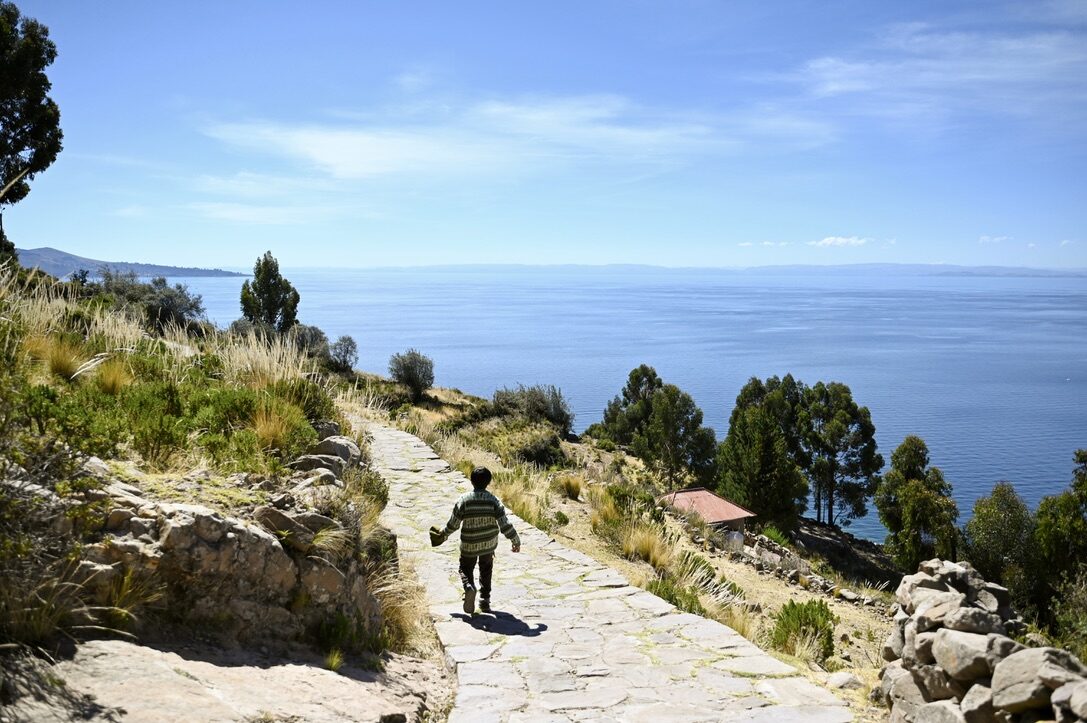
Walking downhill toward the restaurant.
We reached the restaurant for lunch in another 30 minutes. The options were local fish, an omelet, or vegetables and rice (vegan). My son and I had the vegan option and my husband the omelet. Everyone got quinoa soup, bread and salsa, and some fried potato. We ate al fresco on a deck. The weather was glorious, though we were a bit overdressed.
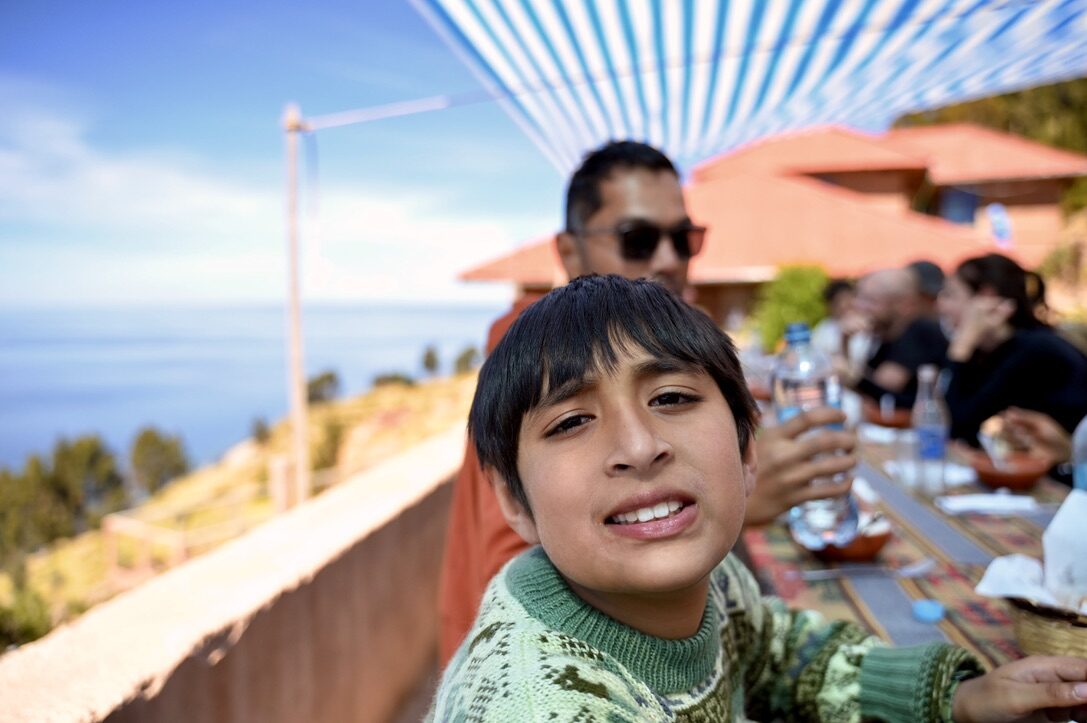
Al fresco dining with an amazing view.
After lunch, the head of the family demonstrated their weaving, the local plants they use as shampoo, and sheep’s wool. Then we walked slowly downhill to the dock on the other side of the island, where a small beach let us dip our feet in the icy water of Lake Titicaca. Once everyone was aboard, we started the roughly three-hour trip back to Puno. On the way, we napped and looked through our pictures from an amazing day of learning about new cultures. My husband and son went up to the top deck for some fresh lake breeze and sunshine.
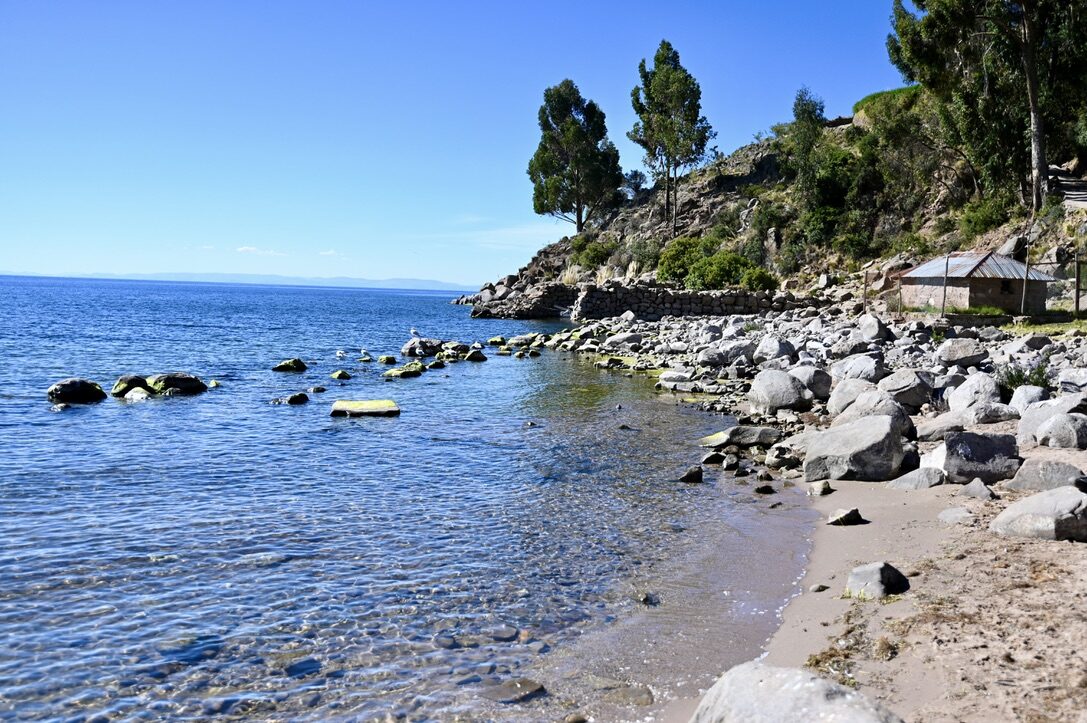
The beach.
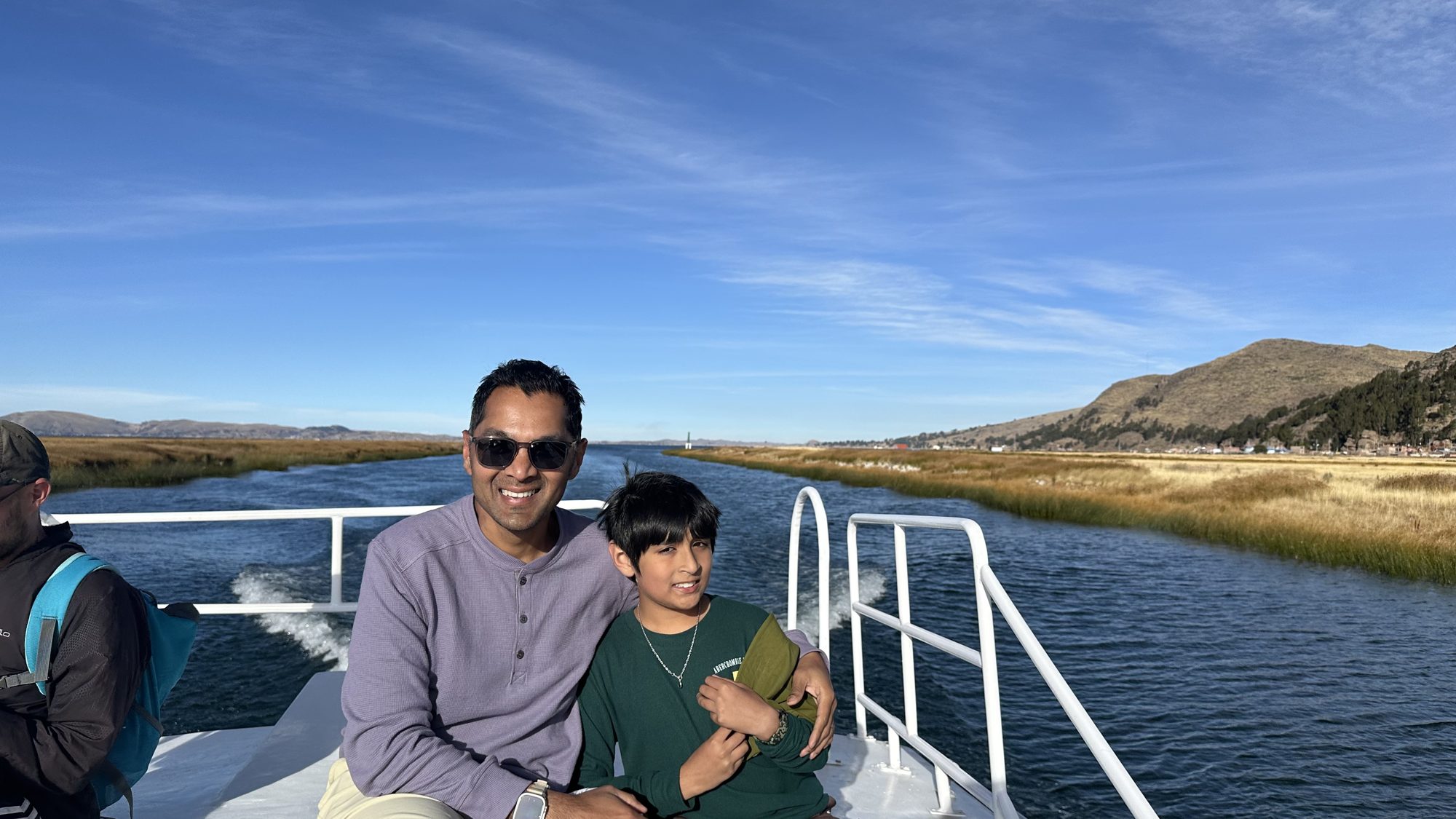
The top of the boat.
Back at the dock, we shopped at the market for about 20 minutes before the tour company’s taxi took us back to the hotel. From our room, we spotted a few alpacas right outside our window. I couldn’t resist photographing the adorable alpacas, so back out we went. We found them in their shed. A hotel employee told us they might not be too friendly, so we kept our distance while taking pictures. It felt like the perfect end to a spectacular day. We had dinner at the hotel restaurant again to keep the evening easy.
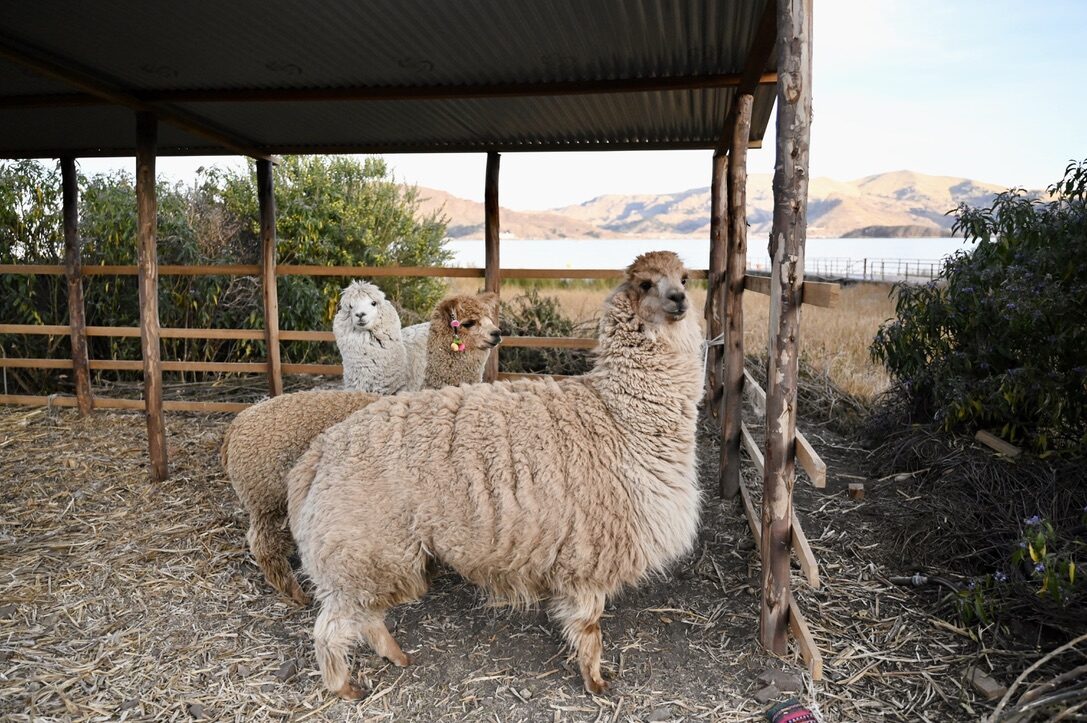
Alpacas at our hotel.
Day 9 Juliaca to Lima
There is no airport in Puno. The nearest is near the town of Juliaca: Inca Manco Cápac International Airport, or Juliaca airport to locals, about 90 minutes by car. We had a mid-morning flight, so we left right after breakfast in our pre-booked taxi.
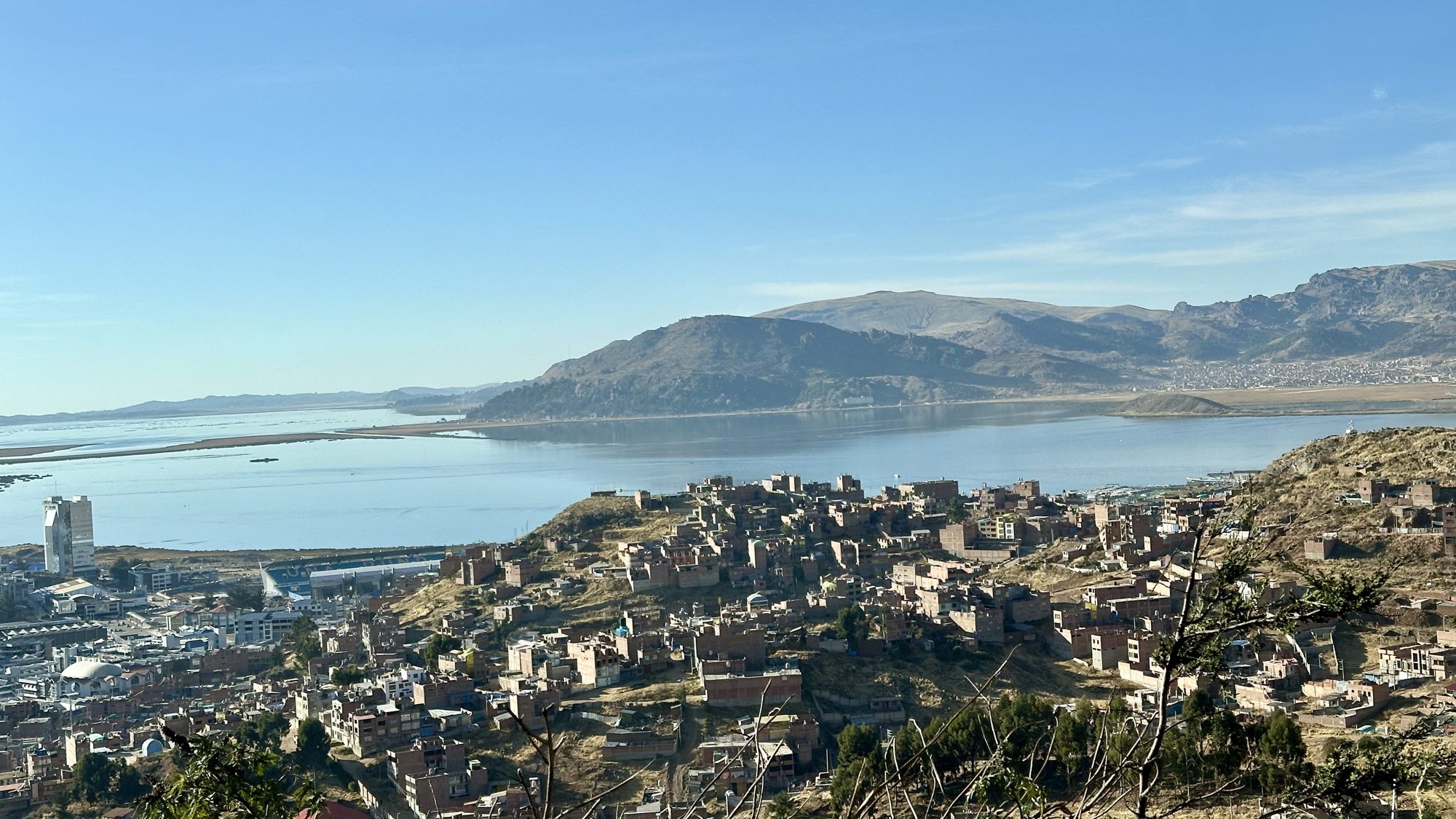
Views from the drive to Juliaca.
The drive took us along narrow country roads, then wound into the large city of Juliaca. It was comfortable, with little traffic until the city. We arrived a couple of hours before our flight, unsure what to expect. The airport is small, with only two working gates and a flight about every hour. Luckily, we had access to the small lounge next to our gate, with snacks and space to relax in the warmth.
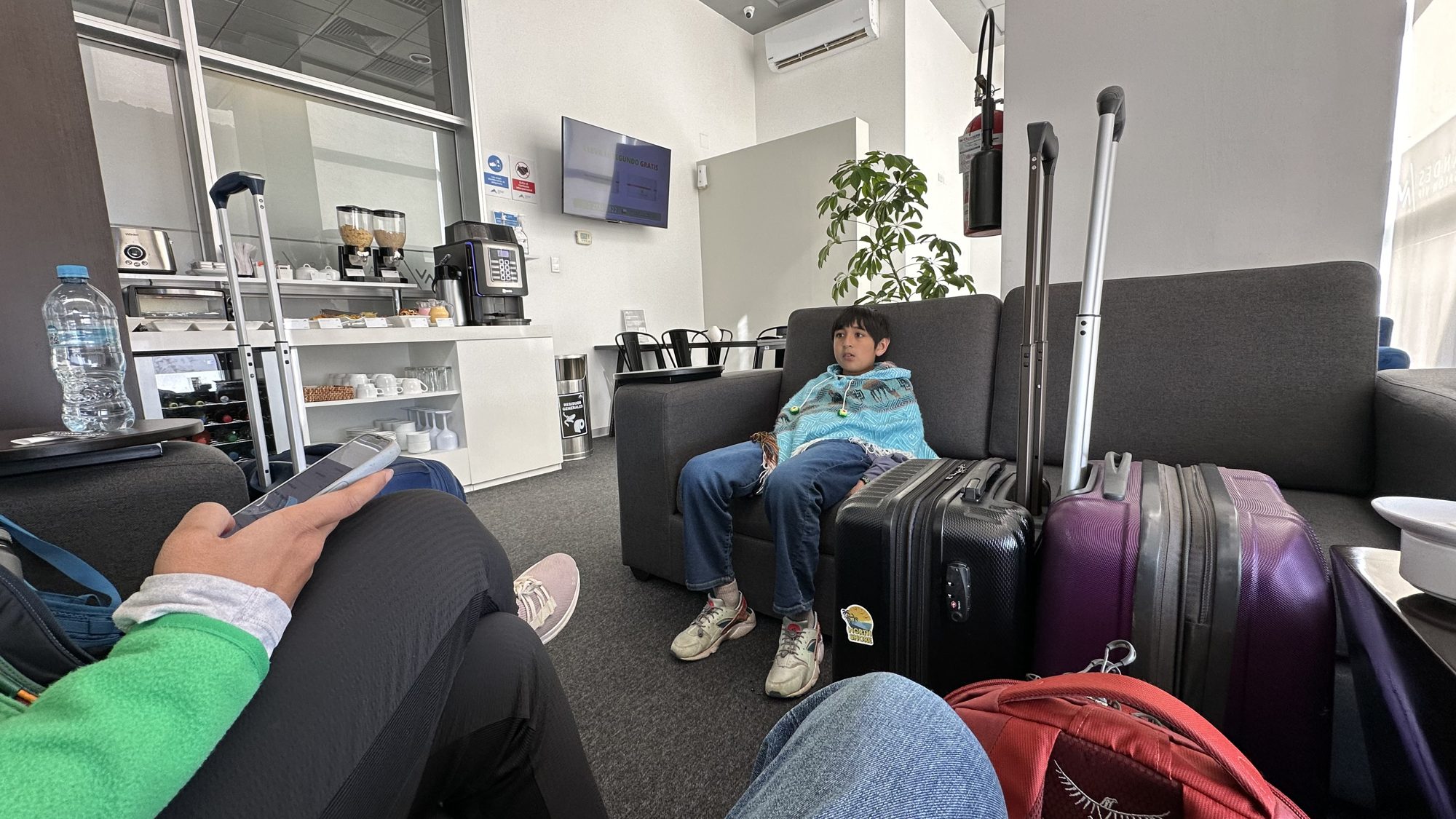
The coziest lounge, at Juliaca airport.
The flight was short and pleasant. In Lima, we looked for the shuttle to our airport hotel. After walking around the whole outside of the airport, asking for help in various places and calling the hotel, we found out we were supposed to request a taxi shuttle at a particular desk inside the airport. It was frustrating to walk around all that time with our luggage and our nervous son. Once we found the taxi, we were on our way; even though it was very close, the drive took about 10 minutes.
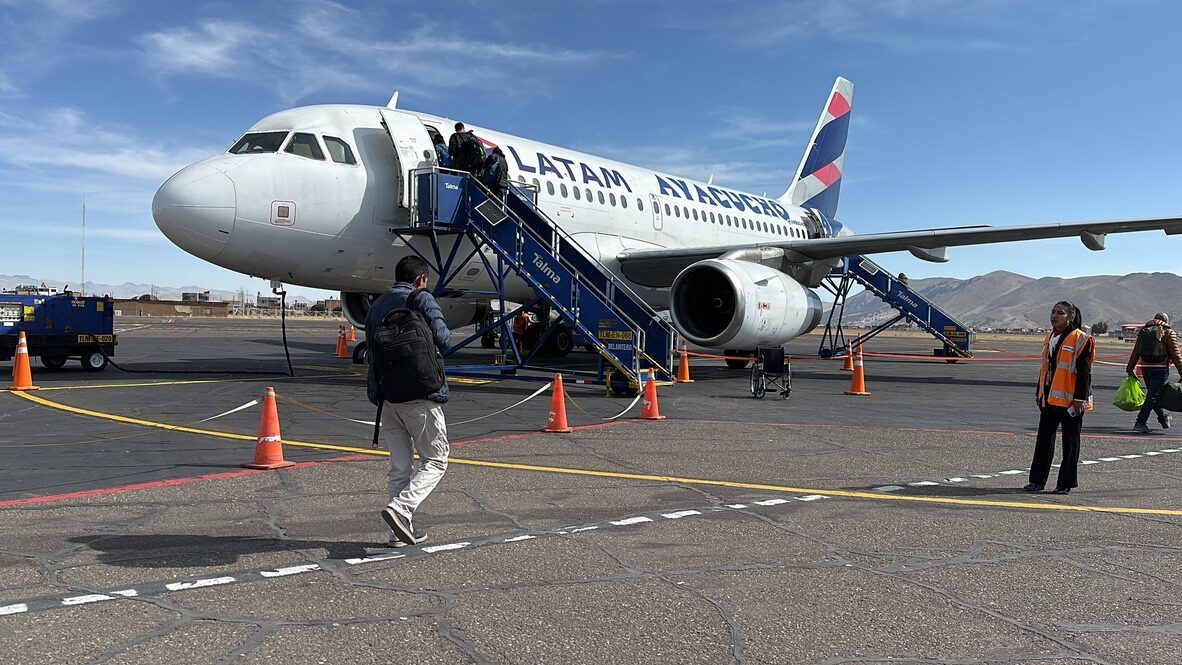
The plane on the tarmac.
Check-in was smooth. We freshened up in our room, and, tired from walking around and hungry, ate at the hotel restaurant. We were surprised by how good the food was: a delicious soup, fresh bread and a fusion quinoa and egg stir-fry. Everything was delicious and satisfying.
After lunch, we wanted to go to Miraflores, about an hour away according to Google Maps. We tried Uber, but the cars never arrived, despite being 3 to 4 minutes away. We spent an hour waiting for three different cars. After wasting all that time, we asked the hotel to call a taxi. It cost about ten dollars more than Uber, but at least it came.
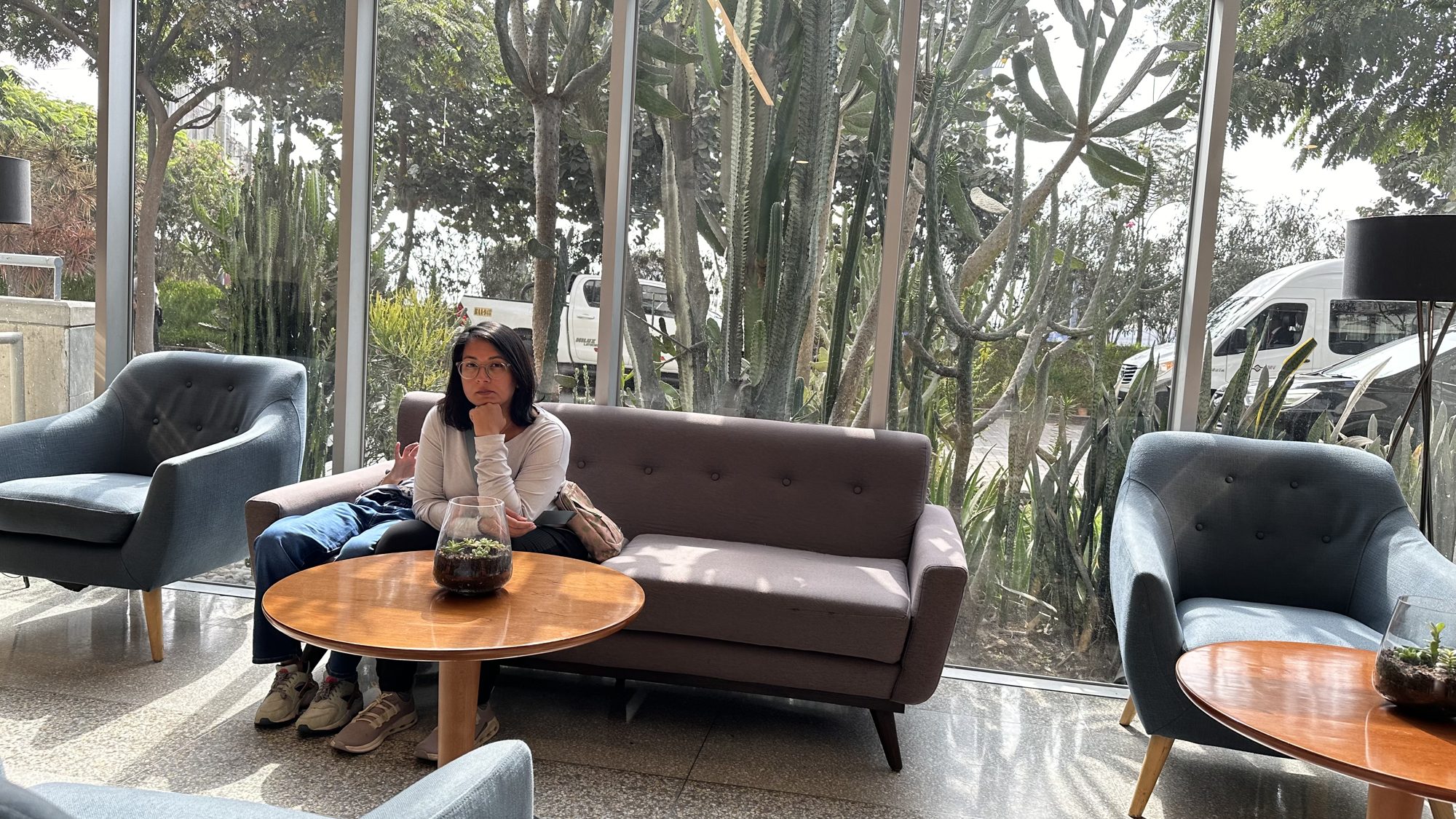
Waiting for a taxi.
We were dropped off at Love Park (Parque del Amor). Miraflores sits on top of black, rocky cliffs above the ocean, and surfers enjoy great conditions below. The neighborhood was clean and safe. We walked along the path to the Larcomar shopping mall.
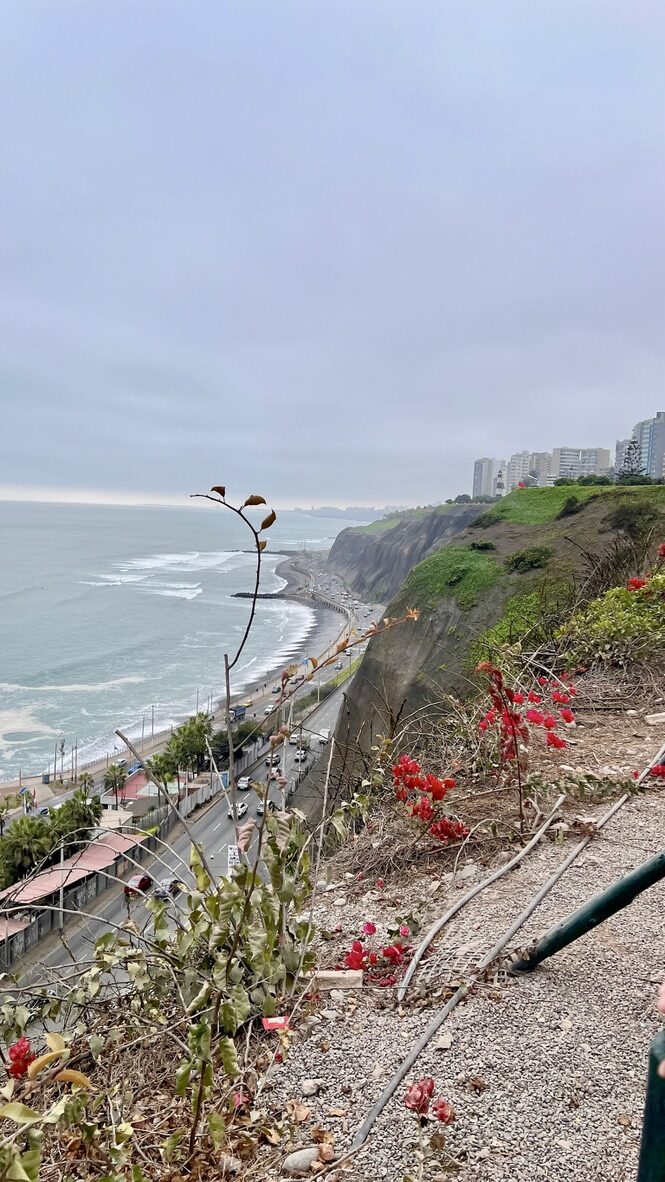
The ocean from Love Park.
The mall has many of the same stores you’d find at home, but it was interesting to see locals enjoying them too. Larcomar sits right on the edge of the cliffs, with views of the highway below and the ocean beyond. We spent some time just staring at the view. The neighborhood is full of high-rise buildings, hotels, high-end shops and restaurants. We didn’t have any big shopping to do, so we explored the whole place: the food court (with so many options), restaurants, movie theater and shops. We picked a restaurant for dinner and went at 5 pm.
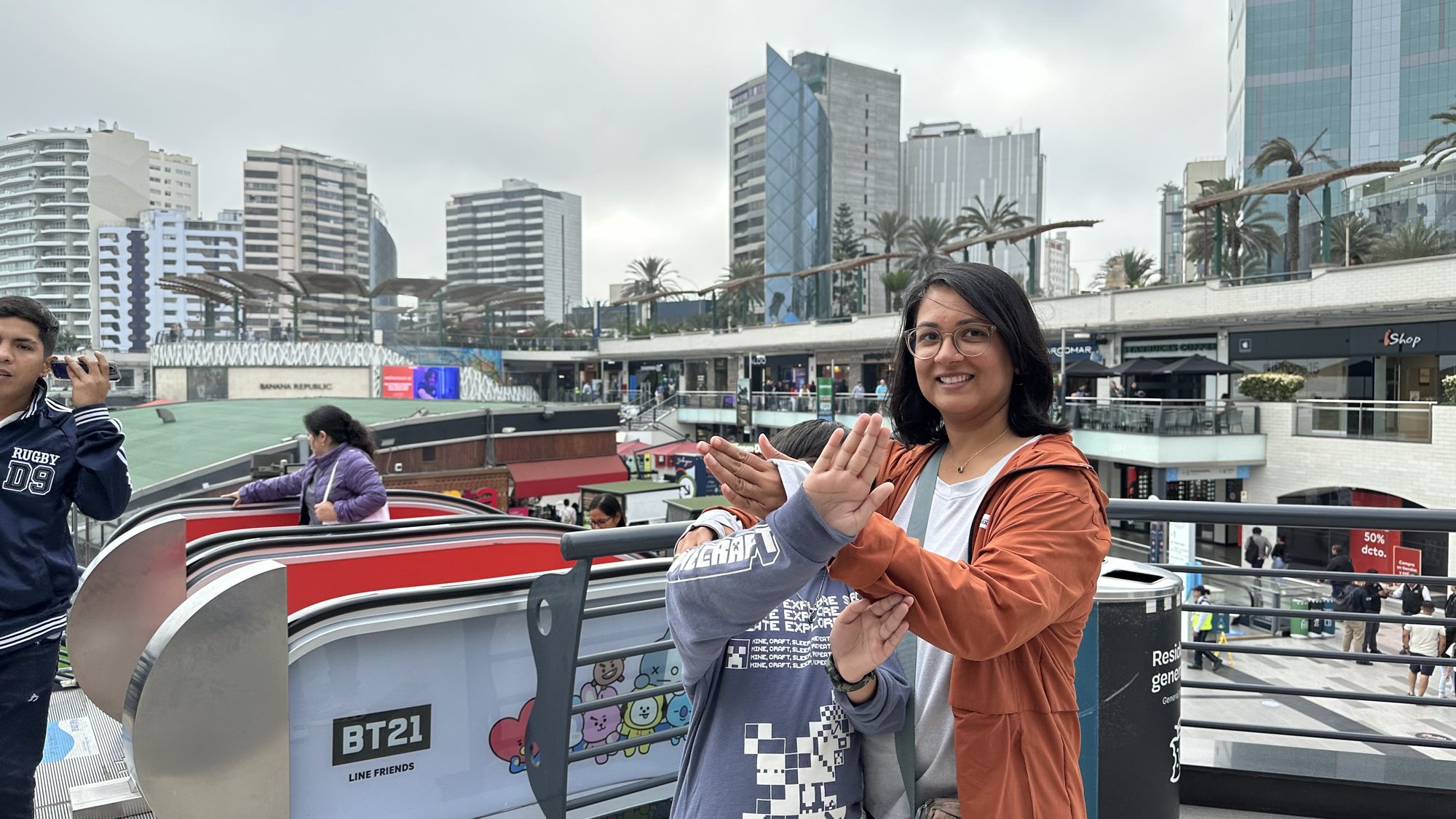
Larcomar mall.
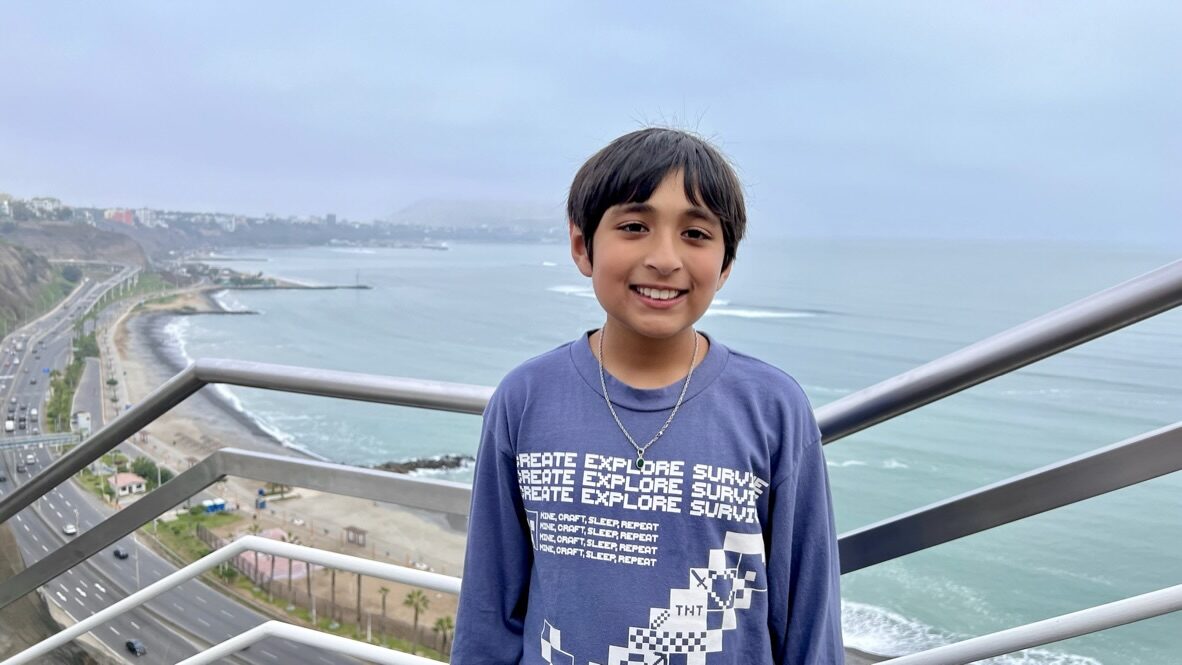
The ocean from Larcomar.
The restaurant was quite empty. We ordered dumplings, noodles and fried rice, and everything was amazing; it was definitely one of the best meals of the trip. After dinner, we headed back, as the highway traffic was starting to worry us. This time we called an Uber, and it actually came. The drive back took about two hours. My husband and son were nervous the whole time about the traffic, the way people drive and how busy some areas were. We were relieved to get back to the hotel.
The evening didn’t get much better from there. The airline messaged that our flight to Miami the next morning was delayed about six hours. We were nervous and very disappointed, after our diversion on the way here. It was hard to get to Peru and hard to leave, but we loved everything in between that made Peru worth it.

The Miraflores coast.